Blog

  • The Subtle Formula for Health (Why Small Choices Matter)

    By Dr. Dana Myatt


    Disease and poor health are rarely caused by a single, cataclysmic event. Most people do not lose their health overnight. Instead, disease and declining health result from an accumulation of poor judgment and unhealthy lifestyle choices. In other words, most disease is caused by a few small mistakes, repeated frequently.

    Why would anyone who knows they are making bad choices or "cheating" on their health be so foolish to keep repeating those bad choices day in and day out? Because the average person doesn’t realize how much small choices matter.

    Individually, our small daily indiscretions don’t seem that important. A slight bit of overeating here, forgetting to take supplements a meal or two there, skipping our daily exercise a couple of times a week doesn’t cause any instant or noticeable problem. Most of the time, we escape any immediate consequences of our "slips."

    People who eat too many unhealthy foods are contributing to future health problems, but the temporary pleasure of the moment overshadows the potential consequences of the future. If one is lucky, that over-the-top sugary desert causes a stomach ache and we are not eager to repeat the taste again. Usually, however, there is no apparent consequence for such a "small" bad choice. And so we come to believe that such a choice "doesn’t matter," forgetting that such choices are cumulative. Because there are no apparent repercussions, it becomes increasingly easier to enjoy a sweet desert more often.

    The same holds true for smoking, drinking, skipping exercise, skimping on sleep. One may not feel immediate consequences, but don’t be fooled! The consequences have simply been delayed for a future date. These choices accumulate until the "day of reckoning" arrives. Eventually the price must be paid for our "little" poor choices—choices that didn’t seem to matter at the time.

    Disease’s most dangerous trait is subtlety. Those little errors don’t seem to make any difference. We eat desert every night and nothing bad seems to happen. Our health does not seem to be failing. Because nothing terrible happens over these small choices and no immediate consequence captures our attention, we continue from day to day, repeating the errors, eating the wrong foods, skipping the exercise, forgetting our supplements and making poor choices. The sky did not fall on us yesterday when we skipped our supplements, so they probably don’t have much effect and skipping them doesn’t matter. Since the choice seemed to have no negative consequence, it is probably safe to repeat.

    Wake up and smell the green tea!

    If we ate a rich desert and woke up the next morning with fifty extra pounds of fat hanging off our middle, we’d notice.

    Such immediate feedback would undoubtedly merit an emergency visit to the doctor and a promise to ourselves not to repeat such an act. Like a child who sticks his finger in a flame despite warnings, the instantaneous feedback would have convinced us of the folly of our ways.

    "Just a Little Won’t Hurt"

    An occasional sweet treat probably won’t make a big health difference, especially for those who are doing the other "small things" right on a regular basis. The problem is that many people make these "small exceptions" far more often than they admit. Consider what these "small cheats" can do to you.

    The World Health Organization previously recommended no more than 10% of daily calories from sugar, but now they’re considering lowering that to 5%. For an average, healthy adult, that would mean 25 grams or about six teaspoons of sugar per day. According to the USDA food tables, a single can of Coke has 33 grams of sugar or about the equivalent of 8 teaspoons of granulated sugar. "Just one little soda" per day is way over the recommended limit.

    What’s the big deal with excess sugar? If can damage the heart, increase risk of diabetes, insulin resistance and high blood pressure and is significantly  associated with an increased risk of cancer to name only a few of the long list of problems.

    Read more: http://www.businessinsider.com/effects-of-eating-too-much-sugar-2014-3#ixzz3iSCAzeQY

    Unfortunately, most poor choices don’t holler out warnings or give immediate feedback. This is why anyone aiming for good health, sustained into old age, must be wise enough to recognize the cumulative effects of small daily choices and develop a philosophy of consistently making better choices. With a clear personal health philosophy guiding our steps, we can more clearly see our errors in judgment and also see how those small daily choices really do matter.

    In reverse order, the results of consistent good choices are not always immediately apparent. As one patient recently remarked, "I took those supplements for a whole week and didn’t feel any different!" Positive changes resulting from small, positive choices take time to accumulate and manifest, just like poor choices take time to manifest.

    How Small is "Small”?

    For Regular exercise, "small" is a little as 15 minutes or 1/2 mile per day.

    Fifteen minutes of walking per day increased lifespan by up to three years in elderly subjects. This amount of exercise reduced death from all causes by 14%.

    Minimum amount of physical activity for reduced mortality and extended life expectancy: a prospective cohort study.

    Walking only 72 blocks per week, consistently over the course of 9 years, improved gray matter volume and help preserve cognitive function. Seventy-two blocks per week is 3.6 miles of 1/2 mile per day, not exactly marathon distance.

    Exercising as little as 15 minutes, 3 times per week, reduced the risk dementia among persons 65 years of age and older.

    Fortunately, the formula for health is just as easy as the formula for disease. Good health is a matter of a few simple habits practiced every day.

    One way to make small daily habits a part of our routine is to make a decision to be healthy in the future. Only by caring about our state of health in the future will we be able and willing to make small, positive changes today.

    What do you want your future to look like? When you are old, do you want to be healthy and vigorous, still able to play a keen round of golf or throw a few hoops with the grandkids? If you can see yourself as vigorous and healthy tomorrow, you will have stoked the fires of enthusiasm today.

    Small, consistent use of vitamin supplements yield big benefits

    Daily intake of a multiple vitamin over the course of ten years lowered risk of colon cancer in men and women aged 30-62 years of age.

    Vitamin D therapy significantly decreased all-cause mortality with a duration of follow-up longer than 3 years. Note that the life-extension effects of vitamin D were seen after three years of consistent intake.

    The Iowa Women’s Health Study showed that women who supplemented with vitamins C, D, E and calcium had significantly lower risks of mortality.

    How many good things could happen to your health if you took just a few minutes each day to think about your future?

    The consequences of your repeated actions would become clear to you, and the day-to-day choices would become easier.

    One of the exciting things about this "Health formula" — just changing a few simple habits, practiced every day — is that the results, though not immediate, can be seen quickly. Fifteen minutes a day of exercise, replacing water for soda pop, taking nutritional supplements regularly instead of occasionally — these simple habits will improve our health noticeably in just a few weeks. That positive feedback, combined with our increased awareness and proactivity toward our future, can make a significant difference in our health today and tomorrow.

    Little choices practiced consistently add up to big results, whether for good or ill. Remember,

    "The man who moves a mountain begins by carrying away small stones." — Chinese proverb.

    Will you start today to make "deposits" toward a future of good health?

    References:

    Erickson, K.I.; Raji C.A.; O.L. Lopez O.L., et al. Physical activity predicts gray matter volume in late adulthood:The Cardiovascular Health Study. Neurology. 2010 Oct 19; 75(16): 1415–1422.

    Larson EB, Wang L, Bowen JD, McCormick WC, Teri L, Crane P, Kukull W. Exercise is associated with reduced risk for incident dementia among persons 65 years of age and older. Ann Intern Med. 2006 Jan 17;144(2):73-81.

    E White,  J S Shannon and R E Patterson. Relationship between vitamin and calcium supplement use and colon cancer. Cancer Epidemiol Biomarkers Prev October 1997   6;  769 

    Zheng Y, Zhu J, Zhou M, Cui L, Yao W, Liu Y. Meta-analysis of long-term vitamin D supplementation on overall mortality. PLoS One. 2013 Dec 3;8(12):e82109.

    Mursu J, Robien K, Harnack LJ, Park K, Jacobs DR Jr. Dietary Supplements and Mortality Rate in Older Women: The Iowa Women’s Health Study. Arch Intern Med. 2011 Oct 10;171(18):1625-33.
  • The Straight Scoop On Quality – In Articles, Supplements, And Medical Care.

    By Nurse Mark


    This week I’m going to address a couple of customer / patient comments, and some thoughts that those comments bring to mind.

    While these may be somewhat different issues, they are also related – so bear with me.

    First there was a nasty-gram that accompanied an "unsubscribe" order from last week’s HealthBeat News report on citicoline.

    The writer, from Australia no less, bashed us as being "ugly Americans" for insulting her by discussing in depth a supplement that we also happen to sell. This is not the first time we’ve been taken to task for writing about something that we also sell – I guess the thought that we might make a nickel of profit from by selling a health-giving substance just really upsets some people.

    She then went on to tell us that we had offended her by writing too extensively about citicoline – that we had "talked down" to her somehow by discussing it’s uses and benefits in a lengthy, fully-referenced article. She told us that if we couldn’t "sell" her on something within the first paragraph, then anything more than that simply insulted her.

    Ouch!

    Now I know that recent research  has shown that the average attention span of an American has now reached an astounding low of 8 seconds – fully one second less than a goldfish – but really, I believed better of our Healthbeat News readers which is why we offer you in-depth, fully researched articles and not just flashy sales "puff-pieces."

    Next there were some questions from someone who is considering taking one of the infrequently available spots in Dr. Myatt’s concierge medical practice. As most of our readers know, Dr. Myatt has for a number of years been limiting her practice to around a dozen or so patients at any given time. Most of her private practice patients stay under her intensive care for 6 months to a year or even longer, but when they achieve their health goals and "graduate" to less intensive needs Dr. Myatt can offer an opportunity to work with her to someone new. This is a big, life-changing commitment for most people and it is not unusual for folks to have questions.

    Here are a few of these recent questions, and my answers to them:

    Question: what are your payment plans?

    Many of Dr. Myatt’s patients prefer to make a single payment. Having said that, others may pay quarterly, or monthly, or in some other arrangement.

    Question: Are you able to prescribe medication through a traditional pharmacy?

    Yes, Dr. Myatt is an NMD – a Naturopathic Medical Doctor – and has all the privileges of any other Medical Doctor. That is, she has a DEA number and can prescribe allopathic patent medicines including scheduled (narcotic) drugs if necessary, she can order lab tests and other diagnostic procedures, and even commit surgery. She is in a better position because of her expanded knowledge, skill, and experience to prescribe thyroid and hormone (especially natural thyroid and  bio-identical hormone) therapy than most “conventional” or allopathic doctors. (This patient was especially interested in Dr. Myatt’s thyroid and hormone programs.)

    Question: how long have you been doing concierge medicine?

    Dr. Myatt began sharply limiting her practice about a decade ago and found that it allowed her to provide much better care and obtain better patient outcomes, so she has continued to do so and has found that around a dozen intensive patients at any one time is a perfect number.

    Question: And is any of this billable to insurance?

    Every insurance plan allows for different services to be billed. Many plans allow “discretionary” spending by the insured for non-allopathic medical expenses as do most “Medical Savings Plans.” You would need to enquire of your insurance plan for answers to these questions.

    We do not participate in any insurance plans as we have found that 1.) most insurance plans are interested in covering allopathic medical treatment only, and , 2.) the amount of time and bureaucratic paperwork involved in satisfying insurance billing requirements requires a doctor to rely on a production line – like practice model that does not encourage the kind of intensive and individualized care that Dr. Myatt wishes to provide.

    Dr. Myatt recognizes that medical care is expensive and she will insist that you also maintain a relationship with an allopathic “insurance doctor” so that if / when Dr. Myatt recommends something that can be covered by your insurance plan (diagnostics, tests, prescriptions, etc.) your “insurance doc” can be called upon to order these things for you.

    Question: Are the supplements you suggest purchase through your wellness club or are they something I get on my own?

    We have a broad range of supplements available through The Wellness Club.

    Dr. Myatt began the supplement side of The Wellness Club many years ago when she found that often her patients were not getting the results she wanted from her recommendations. It became apparent that many were using sub-standard supplements in terms of potency and purity and because of this the suggested supplements were not effective.

    She began supplying carefully selected supplements to address this problem and immediately noted improved patient outcomes.
    She formulates many of her own supplements, and all of the items she offers are subject to an extremely rigorous Quality Control audit. She is known amongst suppliers and manufacturers (behind her back, they believe) as “The Dragon Lady” because of her unwillingness to compromise on quality.

    As always, Dr. Myatt’s patients (and you, our HealthBeat readers) are welcome to obtain supplements anywhere. We offer a variety of supplements that we have vetted for quality and purity, but we also recognize that you might find something similar at Billy-Bob’s Big Box Bargain Basement And Warehouse Outlet at a lower cost. But please be careful – Did Billy-Bob do an extensive Quality Control Audit on those vitamins like Dr. Myatt, or did he get a really great deal on cargo salvaged from the truck that overturned on the interstate last year and sat in a hot warehouse waiting to be released by the insurance company?

    Don’t laugh, it happens!

    We have written about quality in the supplement industry before: Wasting Money to Save Money? Who’s Watching Your Back?

    We reference the importance of quality often in our articles because it is so important to your health and your pocketbook both. Here is what Dr. Myatt had to say in a recent article "7 mistakes people make when taking supplements"

    "I’ve said this so many times that I feel like a broken record, but still a lot of folks just don’t get it. So I’ll keep saying it.
    The nutritional supplement industry is the Wild West for quality. Although things are improving, it is still a jungle out there. More expensive isn’t always better but also be careful of products that are "bargain basement." Our saying at The Wellness Club is "the most expensive supplement is the one that doesn’t work." If you paid $1.99 for two months’ worth of pixie dust, and it doesn’t do anything for you, then you haven’t saved a bunch of money. You’ve wasted $1.99. "

    So, there you have it – a purely informative HealthBeat News article. No products were offered for sale in the making of this article. Hopefully no feelings were offended.

    But – stay tuned, because we are planning to offer you money for giving us a piece of your mind. Here’s the plan: Since we want to give you, our readers what you want and you know what you want better than we do, we are going to be doing a survey very soon to ask you just exactly what you want from us in HealthBeat News.

    We’ll give you an opportunity to tell us what you want, what you don’t want, and how you want it. And we’re going to pay you for your time. How fair is that?
    Watch for it… coming soon.


    http://www.statisticbrain.com/attention-span-statistics

    http://healthbeatnews.com/wasting-money-to-save-money-whos-watching-your-back/

    http://healthbeatnews.com/?s=bargain

  • The Surprising Importance Of Vitamin D

    By Nurse Mark


    Vitamin D continues to be in the news as conventional medicine “discovers” its importance to human health.

    We have been telling you about it for years; you can see some of our previous articles here: Vitamin D – An Old Friend Finding New Respect and here: Vitamin D and Liver Cancer: More Reasons Love Vitamin D but it’s now “official” – Vitamin D deficiencies are common and the problems that this causes are severe.

    What are some of the problems that Vitamin D deficiencies can cause?

    • Bone problems: In children, rickets. In adults, osteoporosis (porous and brittle bones) and osteomalacia (soft bones) along with muscle weakness and increased risk of falling.
    • Heart (cardiovascular) disease including heart attack (myocardial infarction), sudden cardiac death, heart failure, myopathy, high blood pressure (hypertension),  and stroke.
    • Blood sugar problems including glucose intolerance, Type II diabetes, and metabolic syndrome.
    • Respiratory (breathing) problems including upper respiratory tract infections, influenza and even tuberculosis.
    • Brain and mental health problems such as cognitive impairment and low mood.
    • Immunity problems and autoimmune disease including multiple sclerosis, Rheumatoid Arthritis, systemic lupus erythromatosis (SLE or just “Lupus”).
    • Vitamin D deficiencies appear to increase the risk of many cancers and increased Vitamin D levels have been shown to decrease cancer risks.
    • Low Vitamin D levels during pregnancy puts women at risk for developing gestational diabetes, pre-eclampsia, and low birth-weight and sickly infants.
    • Many other diseases are associated with Vitamin D deficiency – such as psoriasis, polycystic ovarian syndrome (PCOS), and inflammatory bowel disease, to name just a few.
    • Even overweight and obesity has been found to be associated with Vitamin D deficiency: See our article Vitamin D – For Successful Dieting?


    How much Vitamin D is enough?

    Vitamin D dosages in this country are generally measured in IU or International Units and according to the United States Institute of Medicine the recommended dietary allowances (RDA) of vitamin D are:

    • Infants from 0–12 months – 400 IU/day
    • Children and adults from 1–70 years – 600 IU/day
    • Seniors over 71 years – 800 IU/day
    • Pregnant or lactating women – 600 800 IU/day


    Remember, the RDA is really more like the minimum needed to prevent diseases of deficiency – it is not what we would consider an appropriate dose for optimal health.

    Since everyone is different, an optimal daily dose of Vitamin D will be different for every person as well. In someone whose Vitamin D levels are sufficient, the minimal daily dose might be enough to keep them well. For another person who is quite deficient, doses of 2000, 5000, or even 10,000 IU per day may be needed to bring Vitamin D levels up to where they should be and to prevent and correct some of the problems of Vitamin D deficiency that they may be experiencing.

    But how can you really know?

    The answer to that is easy – a simple test will quickly tell you your baseline Vitamin D level and provide you with guidance about how much you really need to supplement.

    Dr. Myatt recommends testing, then supplementing with Vitamin D based on the test results, and then re-testing in 3 months to verify the effectiveness of the supplementation and to allow fine-tuning of Vitamin D doses.

    Other authorities recommend starting with 5000 IU per day for 3 months, and then testing.

    Either way, testing gives definitive answers – and Dr. Myatt’s “test-supplement-test-adjust” regimen seems a little more certain and safer.

    Speaking of safety… Can’t you get too much Vitamin D and hurt yourself?

    Conventional medicine has long warned of the dangers of “too much Vitamin D” without actually telling us where they are getting the information to back up these warnings. Certainly, it is possible to consume massive doses of Vitamin D and cause a toxicity known as ‘Hypervitaminosis D” which causes hypercalcemia (high levels of calcium in the blood). To actually achieve this an adult would need to take 40,000 IU per day of Vitamin D for weeks or even months.

    Needless to say, Vitamin D overdose is extremely rare and noted Vitamin D researcher Reinhold Vieth has stated in a research article titled “The Pharmacology of Vitamin D, Including Fortification Strategies” that there is "no evidence of adverse effects from taking 10,000 IU of Vitamin D a day" and he goes on to say that "…cases of vitamin D toxicity with hypercalcemia, for which the 25(OH)D concentration and vitamin D dose are known, all involve intake of (greater than or equal to) 40,000 IU/d."

    The moral of this story? Perform a Vitamin D Test and be sure!

    So, what are the “numbers”?

    The Vitamin D test tells us blood levels of vitamin D measured in nanograms per milliliter (ng/ml) and the results can be grouped like this:

    • Deficiency: less than 20 ng/ml
    • Insufficiency: 20 to 32 ng/ml
    • Sufficiency: 32 to 100 ng/ml
    • OPTIMAL (per Dr. Myatt): 40 to 80 ng/ml
    • Excess (toxicity risk): greater than 150 ng/ml


    Where to get the test?

    Your conventional “insurance doctor” might be willing to order a Vitamin D test for you, and your insurance might cover the cost of it. You will have to give him a good reason to order it though – so you’ll have to hope that he really believes that Vitamin D deficiency is possible (many conventional doctors still haven’t gotten the “news”) and hope that he doesn’t believe that vitamin supplements are a waste of money (“expensive urine” they call it…) and then hope that he will be willing to go along with you taking more than the RDA minimum daily dose of Vitamin D.

    Or, you can just order the test and do it yourself at home. It is a simple “Blood Spot” test, very much like the “finger poke” that diabetics do multiple times daily to check their blood sugars. A drop of blood, off to the lab in the pre-paid mailer, and the results come back in a few days. Then you can get started replenishing your Vitamin D levels, because I’m betting they will be low – since overall, 41.6 % of Americans are Vitamin D deficient, and that number skyrockets to 82.1% of African Americans and 69.2% of Hispanics.

    Learn more about the Vitamin D Spot Test here:

    What about Vitamin D supplements?

    Dr. Myatt’s Optimal Dose Daily Multiple Vitamin formula Maxi Multi contains 800 IU of Vitamin D per day and her convenient MyPacks contain 753 IU of daily Vitamin D – so if you are using these already you may be “covered.”

    If you are deficient and want to increase your Vitamin D levels be sure to use a high quality supplement – Dr. Myatt offers two supplements that have met her standards for quality and you can learn more here: Vitamin D 5000 capsules and Vitamin D 2000 Drops

    In Summary:

    We now know that vitamin D isn’t "just" a vitamin but that it acts more like a hormone that plays a major role in immunity, bone and cardiovascular health, diabetes, overweight and autoimmunity. The “experts” may argue; vitamin or hormone – but whichever, the bottom line is that it’s some seriously important stuff!

    Deficiencies of Vitamin D are common and correcting those deficiencies up to optimal levels is easy to accomplish. Given its importance to so many physical functions, and how easy it is to test levels and get them to "optimal," I recommend that this simple step be taken by everyone. It’s a basic, simple, but oh-so-important step we can take to safeguard our overall health.

    References:

    Full references can be found in our Vitamin D Special Report

  • Where Are The “Cures” From Medical Science?

    So, with all the money that Big Pharma pours into research, supposedly to find “cures” for the ills of mankind, where are those cures? Why do we still battle cancer and heart disease and Alzheimer’s disease and countless other ailments?

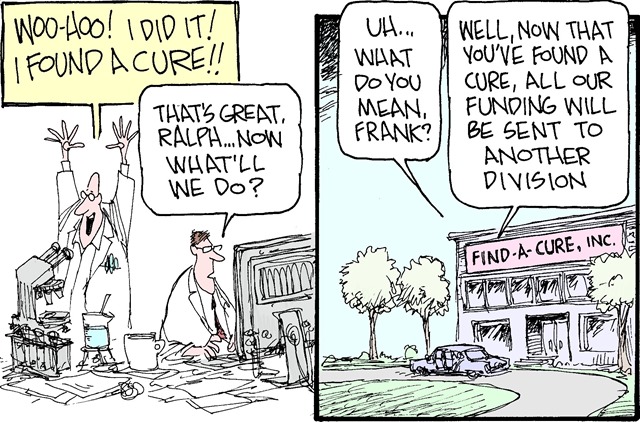
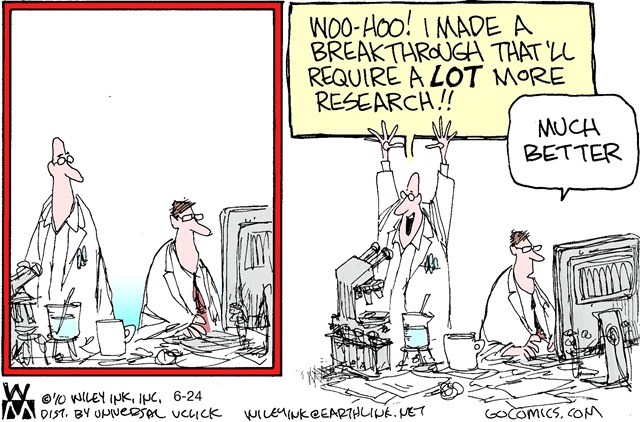
    There are plenty of “conspiracy theories” out there: but here is a look at the issue that we think contains more than just a grain of truth. One of my favorite cartoonists sums up the state of medical research quite nicely:


    WileyCure1WileyCure2


    NON SEQUITUR © 2014 Wiley Ink, Inc.. Dist. By UNIVERSAL UCLICK. Reprinted with
    permission. All rights reserved.

  • 7 mistakes people make when taking supplements

    By Dr. Dana Myatt


    pills Lots of people take vitamins and supplements with the very best of intentions. Yet they often find themselves disappointed with the results (or more to the point lack of results) and give up or even believe that vitamins and supplements are a “waste of money.” Here is a list of some of the common mistakes I see people making when taking supplements:

    1.) Taking "Pixie dust" doses (doses too low).

    Here’s a little pop quiz for you. If you have a heavy cart that will need four horses to pull, and you hitch up two horses and find the cart doesn’t move, does this mean you have weak or lazy horses? I’ll give you a minute to think about this…

    The correct answer is "No." Your horses are probably fine, but you have two instead of the needed four, hence, they can’t get the job done.

    When a study shows that it takes a 200mg of selenium per day to offer optimal immune support, and you take 50mg per day, don’t be surprised if the supplement doesn’t work as expected. The dose is too low.

    Also keep in mind that there is no "optimal potency One-Per-Day" multivitamin. The pixie dust doses in a one or two per day multiple are the lowest amounts needed to prevent severe deficiency disease. For example, you’ll get just enough vitamin C to prevent scurvy.

    If you want to maximize benefit, then you’ll want what I call "optimal doses." These are the doses shown in studies not only to protect from severe deficiency diseases but also to protect against "higher level" problems like heart disease and diabetes.

    For multiple vitamins, expect to take 6-9 caps total per day to get optimal doses of nutrients.

    Note that using an optimal dose multiple like this will save you from taking a lot of separate formulas.

    2.) Not taking supplements consistently.

    Studies that show benefit from supplements, especially multiple vitamin/mineral supplements, also show that these benefits are seen in people who take the supplement consistently over a long period of time.

    "Consistency is key." One day on, three days off, one-half day on, a week off. You get the idea. This kind of "hit-and-miss" approach has not been proven to have nearly as much benefit as consistency.

    If you think about it, this makes sense. Your body needs what it needs every day. It doesn’t take a day off from needing certain nutrients. By taking supplements consistently, you’ll also achieve the "optimal doses" as discussed above.

    How about "I break for illness" (and vacations, or company visiting, or stress… blah, blah, blah). Your body actually uses nutrients at a higher rate during many illnesses. Unless nausea or inability to take them is an issue, continuing during illness is the best course of action.

    As for vacations (and stress)? This is when your immune system is under greater threat. Many of the nutrients in your multiple help keep your immunity in top form. Travel, company and stressful times are actually when supplemental nutrients are more valuable yet amazingly, this is when many people take a "vacation" from their vitamins.

    3.) Taking inferior quality products.

    I’ve said this so many times that I feel like a broken record, but still a lot of folks just don’t get it. So I’ll keep saying it.

    The nutritional supplement industry is the Wild West for quality. Although things are improving, it is still a jungle out there. More expensive isn’t always better but also be careful of products that are "bargain basement." Our saying at The Wellness Club is "the most expensive supplement is the one that doesn’t work." If you paid $1.99 for two months worth of pixie dust, and it doesn’t do anything for you, then you haven’t saved a bunch of money. You’ve wasted $1.99.

    Here’s some back-story on The Wellness Club. Years ago when I was in private practice in an office, I noticed than a lot of patients who should be getting better with my recommendations were NOT getting better. Was it me? Did I prescribe the correct thing?

    I started researching various companies and their quality control measures and decided to carry some of the "best of the best" supplements in my office. They cost more, but I knew they were the right formulas in the right potencies and purity. Patients who took these "doctor’s only" formulas had a much higher success rate than those who bought things willy-nilly or based on price at the health food store.

    That’s when I realized that quality makes a big difference and just because a label makes a claim doesn’t mean that is what is really in the bottle (or that it’s pure).

    So I started The Wellness Club, not as a way to get rich (good thing!) but as a way to make these "doctor’s only" brands available to my patients around the country who couldn’t pop into my office to buy them.

    "But the lady at the health food store said this was a good brand." Really? How does she know? Try this experiment:

    Ask just ONE question from my 15-page vendor quality audit. Try something like, "does this manufacturer do independent testing of raw materials or do they rely on certificates of analysis from the suppliers"? The health food store lady will look at you like you just debarked the Mothership from Mars. Why? Because she probably doesn’t even understand the question much less have an answer for you. So the "this is a good brand" from someone who doesn’t know is worth…. what?

    [Nurse Mark’s Note: Dr. Myatt is known in the nutritional supplement industry as "The Dragon Lady," a title she accepts proudly. She is called that because her quality standards are high and uncompromising. She has turned down many supplements, raw materials and manufacturers because they don’t meet her standards.]

    4.) Taking supplements not well-supported by research.

    This falls under the category of "you can fool a lot of the people a lot of the time."

    Glossy ads with slick copywriting sell products. Unfortunately, many of the promises made about supplements fall far short of the actual research. "Two lab rats lost weight on a bathtub full of raspberry ketones" does not constitute a breakthrough.

    Don’t fall for slick and glossy. Do your due diligence. Is the supplement really supported by good research?

    We at Wellness Club spend a lot of hours per day researching the medical literature in order to bring you the "inside story" about what works and what is over-hyped. I invite you to use our website with its many "look-’em-up" features and references as a good place to begin your fact-finding. www.DrMyattsWellnessClub.com

    5.) Supplements before diet.

    There is a reason we call non-food sources of nutrients "supplements." That is because they are designed to augment — supplement — an otherwise healthy diet.

    Some people mistakenly believe that they can eat an inferior diet and make up the difference with supplements. While taking supplements might help mitigate some of the effects of poor diet, the biggest benefits from supplements are seen in people who eat well AND take their vitamins.

    6.) Timing, Part I (with or without meals).

    For the most part, supplements should be taken with meals. This is especially true of multiple vitamin/mineral formulas. The reason is two-fold.

    First, some of the nutrients in a multiple, such as vitamin A, E, and D are "fat soluble." This means they dissolve and are absorbed in the presence of fat. So taking them with a meal that contains some fat will aid assimilation.

    Second, the act of eating elicits hydrochloric acid and pancreatic digestive enzymes. These digestive factors help with assimilation of nutrients. Calcium, for example, requires stomach acid in order to be assimilated. When you take nutrients on an empty stomach, these are no digestive enzymes or stomach acids present to help assimilation. Not only will the formula be less absorbable, but it will be more likely to cause stomach upset.

    Timing, Part II (how many times per day).

    If you can only see your way clear to take supplements once per day, then once is certainly better than not taking them at all.

    If, however, you can take them twice per day (breakfast and dinner, for example) or better yet, three times per day (breakfast, lunch, and dinner), you will get additional benefit.

    Some nutrients such as B complex vitamins and vitamin C are water soluble. This means that after a dose, they are processed, blood levels elevate and then they are excreted in the urine. By taking these nutrients two or three times per day, blood levels remain at optimal levels throughout the day.

    Again, multiple doses are better but taking your multiple all at once is better than not taking it at all.

    7.) Taking "add-ons" before basics (not taking a multiple but taking a bunch of misc. stuff).

    Your body needs an array of vitamins and minerals. These are called "essential" not only because they are essential to life but also because they must be obtained from outside the body (food or supplements). If your body manufactures a needed substance, even if it is essential to life, it is not called "essential": that is, if it can be manufactured internally.

    Vitamins, minerals and trace minerals are "essential." We must have them and if we go without for too long, physical disease or dysfunction result. This means that vitamins, minerals and trace minerals are the "basics" of what we must have. For this reason, they are also the most important nutrients to supplement.

    I often see people taking a variety of "add-ons," meaning nutrients that are not essential, but still not taking a good multiple vitamin/mineral formula. This is like putting a spoiler on your hot-rod but neglecting to put fuel in the tank!

    First things first. Before you go spending a fortune on a lot of different, non-essential supplements, make sure you are taking an optimal potency multiple vitamin and mineral supplement. In fact, if you are only going to take one thing, make it your multiple. If you can take two things, take a multiple plus fish oil (essential fatty acids).

    And One More – as a bonus…

    8.) Treating symptoms instead of the cause.

    We do this a lot in conventional medicine; putting a band-aid on a disease instead of trying to fix it at the level of cause. I’m not against band-aids. I’ll take aspirin or ibuprophen on occasion for a headache or extreme pain if my natural measures have failed.

    But if that headache or pain were a regular occurrence, bet the farm that I wouldn’t continue taking aspirin without trying to discover the cause of my pain or problem. That is a foundational principle of naturopathic medicine and one of the places where naturopathy differs from conventional medicine.

    Now back to supplements. Some people take supplements but are using them in "allopathic" ways. For example, taking white willow bark instead of aspirin for pain might be more natural but the underlying philosophy is the same as conventional medicine: treat the symptom.

    Remember that any pain or abnormality that persists has a cause and a symptom treatment is unlikely to be addressing that cause. I caution against using natural remedies long-term in a "treat the symptom," in band-aid fashion. Remember the roots and look for the cause.


    Learn More about:

    Maxi Multi – An Optimal Dose daily multiple vitamin

    Maxi Marine O3 – Ultra-high potency fish oil providing optimal amounts of Omega 3 fatty acids


    References:

    1. Fortmann SP, Burda BU, Senger CA, Lin JS, Whitlock EP. Vitamin and mineral supplements in the primary prevention of cardiovascular disease and cancer: an updated systematic evidence review for the US Preventive Services Task Force. Ann Intern Med. 2013 Dec 17;159(12):824-34.
    2. El-Kadiki A, Sutton AJ. Role of multivitamins and mineral supplements in preventing infections in elderly people: systematic review and meta-analysis of randomised controlled trials.BMJ. 2005 Apr 16;330(7496):871
    3. Bailey RL, Fakhouri TH, Park Y, et al. Multivitamin-mineral use is associated with reduced risk of cardiovascular disease mortality among women in the United States. J Nutr. 2015 Mar;145(3):572-8.
    4.) Dong JY, Iso H, Kitamura A, Tamakoshi A; Japan Collaborative Cohort Study Group.
    Multivitamin use and risk of stroke mortality: the Japan collaborative cohort study. Stroke. 2015 May;46(5):1167-72.
    5.)Li K, Kaaks R, Linseisen J, Rohrmann S. Vitamin/mineral supplementation and cancer, cardiovascular, and all-cause mortality in a German prospective cohort (EPIC-Heidelberg). Eur J Nutr. 2012 Jun;51(4):407-13.
    6.) Watkins ML, Erickson JD, Thun MJ, Mulinare J, Heath CW Jr. Multivitamin use and mortality in a large prospective study. Am J Epidemiol. 2000 Jul 15;152(2):149-62.
    7.) Erin S. LeBlanc, MD, MPH; Nancy Perrin, PhD; Jeffery D. Johnson, PhD; Annie Ballatore, MS; Teresa Hillier, MD, MS. Over-the-Counter and Compounded Vitamin D: Is Potency What We Expect? JAMA Intern Med. 2013;173(7):585-586.