Author: Wellness Club

  • How To Stay Healthy For The Holidays

    How To Stay Healthy For The Holidays


    By Nurse Mark


    We get questions like this every year around the holidays – most folks intuitively know that they are increased risk for catching “cooties” over the holiday season – with all the crowds, traveling and stress.

    Here is the question:

    Q: Is there anything specific someone could take to help prevent catching a virus while flying on a plane.  I leave Friday for the holidays to spend with my family and I will be on the plane for about 10 hours going from a warm climate to freezing temperatures.  What can help keep me healthy?

    And here are Dr. Myatt’s suggestions:

    A: Wow! Ten hours on a plane! You probably know most of the drill… be really well-rested before your flight, avoid caffeine and alcohol while traveling, drink plenty of pure water, get up and stretch frequently, wash hands ~VERY~ frequently (remember, all those things that you touch in the terminal and aircraft have also been touched by a gazillion other people!). I have seen some people even wearing paper masks while in public areas and on aircraft (very common in Japan too) but really, most of these bugs are transmitted by hand contact. Be sure to eat high-protein meals and avoid sugars, fruit juices and simple carbs. Protein keeps the immune system strong, sugars and simple carbs suppress the immune system.

    Now to some specifics – you will hopefully have all of this on hand…

    • In addition to your regular daily MaxiMulti (you are taking 3 caps, 3 times daily, right?) you should take an extra 1000 mcg of selenium daily for a couple of days before you leave and have it on hand to take a similar dose for a few days if you suspect that you might be coming down with something.
    • Bromelain, 400 mg of 2400 GDU, one capsule three times daily between meals will help your immune system better resist any bugs, and will also help to prevent blood clots that can form while sitting immobile for a long time on the plane.
    • Dr. Myatt’s Immune System Support – one capsule two times daily, and may increase to 2 caps three times daily for additional support if the immune system is under stress (like when traveling)
    • Echinacea & Goldenseal tincture is a classic herbal immune formula. Dr. Myatt has the most potent available.

    Now, if the above doesn’t keep you from catching something, your herbal “first aid kit” should contain:

    These, taken AT THE VERY FIRST HINT OF A COLD OR FLU can be a big help to your body and can help to lessen the severity and possibly even the duration of the infection.

    Additionally, for nasal and chest congestion you can use Baar Herbal Breathing inhalant formula – formerly known as Inspirol inhalant; 4 to 6 times per day. Inspirol was a tried-and-true favorite for many Wellness Club members, but is no longer available. Dr. Myatt has found Baar Herbal Breathing formula to be every bit as good – maybe even better!

    Have a great trip, and a wonderful holiday.

  • Dr. Myatt Stands With Dr. Mercola!

    Dr. Myatt Stands With Dr. Mercola!


    By Dr. Myatt and Nurse Mark and everyone at The Wellness Club


    Dr. Myatt and Dr. Mercola don’t always see eye to eye, and in fact, Dr. Myatt has never been shy about challenging Dr. Mercola when she felt he was out of line. But on this issue, Dr. Myatt and all of us here at the wellness club stand in solidarity with Dr. Mercola and we are proud to offer him our public support.

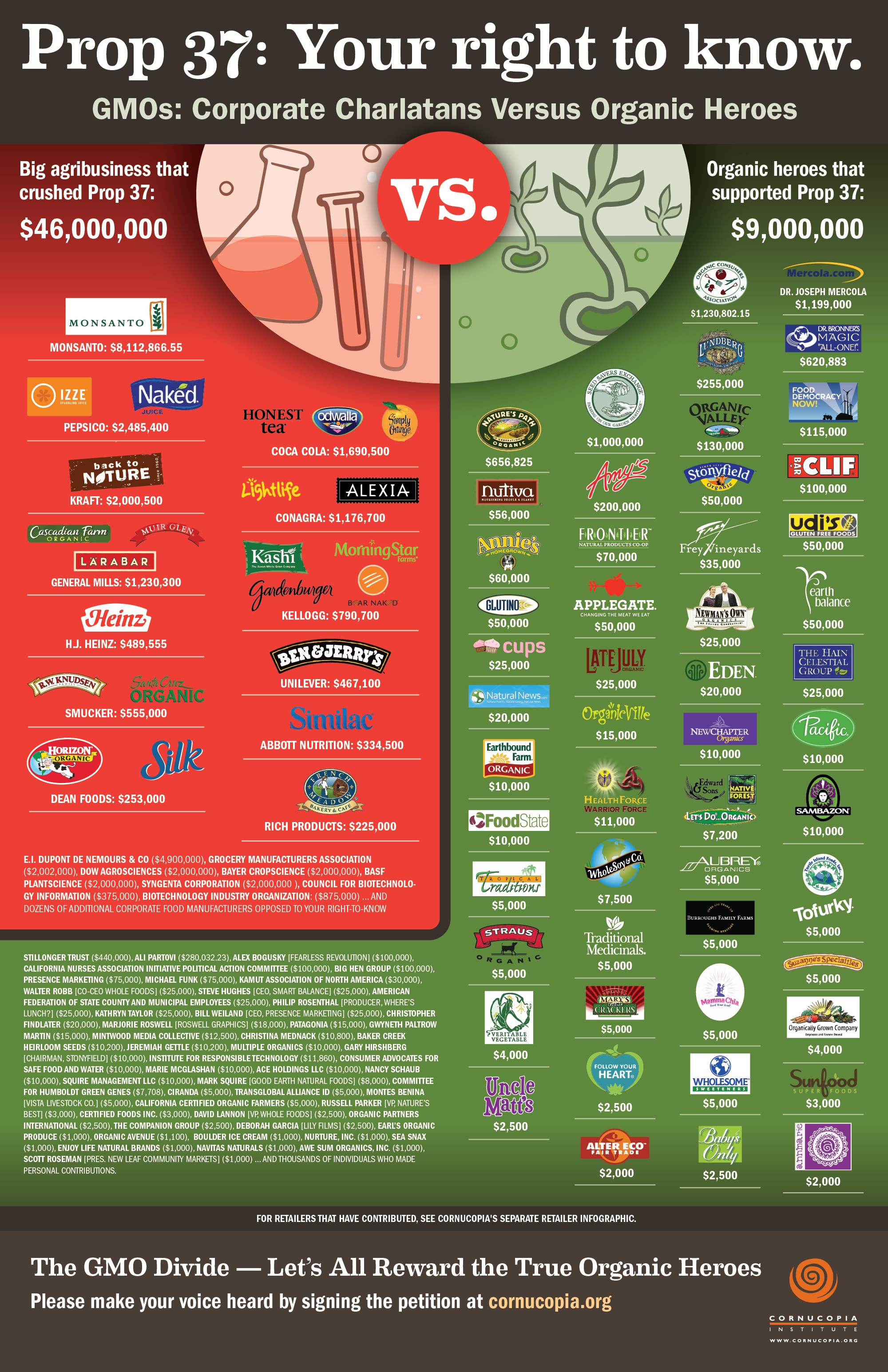
    You see, Dr. Mercola has taken a very public stance on a political initiative in this year’s elections – that is, he is in support of California Proposition 37, a proposition on the ballot in California on November 6 that would mandate labeling of foods containing Genetically Engineered (GE) ingredients.

    The opponents of Prop 37 have engaged in a vicious campaign to discredit Dr. Mercola and to sway public opinion. They accuse Mercola of having spent 1.1 million of his own dollars in support of Prop 37, as if it is somehow wrong for someone to be willing to support a proposition that simply calls for truth in labeling. What they conveniently fail to mention is that agribiz giant Monsanto has spent over $8 million to Mercola’s $1 million.

    And that’s just Monsanto!

    In fact, the “no” side, representing Big Agriculture, Big Food, and Big Biz in general has spent some 41 million dollars fighting the yes side’s $5 million – and the “Yes to Prop 37” side is still winning, according to the opinion polls!

    That’s right, Big Agribiz has outspent the people by 8 to 1, and they still are trailing in polls and are now resorting to smearing Dr. Mercola in online and print ads in their desperate attempt to stifle this truth in labeling proposition.

    Prop 37 isn’t about banning anything. If you like having GMO ingredients in your food you’ll still be able to buy them.

    That is your freedom of choice as an adult American.

    Prop 37 IS about making sure that you can know what is in your food so that you may make an informed choice.

    Dr. Myatt, Nurse Mark and the staff at The Wellness Club urge all California voters to please vote yes to Proposition 37.

    And we all stand firmly with Dr. Mercola in rejecting the lies and smear tactics of the Big Corporate Agribusiness funded “No on Prop 37” campaign.

    Please learn more about this at Dr. Mercola’s website: http://articles.mercola.com/sites/articles/archive/2012/10/31/dr-mercola-attacked-by-biotech-bullies.aspx?e_cid=20121031_DNL_art_1

    And at the Cornucopia Institute website: http://www.cornucopia.org/2012/08/prop37/

    And at the “Yes to Prop 37” website itself: http://www.carighttoknow.org/

  • Mayo Gets It Right – And Wrong Again!

    Which is it Mayo? Are carbs good or are carbs bad?


    By Nurse Mark


    We have written over and over again about the hazards of a high carbohydrate diet – and we have pointed out that even the US Government’s own National Academies of Science, in their massive publication Dietary Reference Intakes for Energy, Carbohydrate, Fiber, Fat, Fatty Acids, Cholesterol, Protein, and Amino Acids, makes the statement on page 275 of this 1359 page document that:

    The lower limit of dietary carbohydrate compatible with life apparently is zero, provided that adequate amounts of protein and fat are consumed.

    Yes, you read that right; you could never eat another carbohydrate again – ever – and you would be just fine. In fact, as long as you are eating plenty of protein and fat you’ll be better than fine – you’ll be far healthier than any of your carb-eating friends.

    Yet we continue to see, over and over and over, so-called “experts” solemnly proclaiming that a “mixed” or “balanced” diet modeled after the carbohydrate-rich food pyramid (now called “MyPlate”) and containing large amounts of high-carb starchy foods is essential for good health. What malarky – to quote a certain politician.

    I recently wrote an article titled Common Food Ingredient Makes You Stupid? in which I talked about a UCLA research paper that showed that sugar impaired brain function in rats, and that Omega3 fatty acids as found in fish oil protected the rats from that impairment. There was really nothing new here, as we have know this all along – and even your grandmother knew it when she was making you swallow that awful tasting fish oil…

    Now we have that invincible, unquestionable, all-wise source of medical knowledge, The Mayo Clinic, telling us that:

    Eating Lots of Carbs, Sugar May Raise Risk of Cognitive Impairment, Mayo Clinic Study Finds

    Wow – if the mighty Mayo Clinic says it’s so, then it must really be true!

    Unfortunately, as we get not very far into the article we get this silly statement from the lead researcher – who is obviously not yet ready to give up on his daily bread, ‘taters, rice, beans, and other assorted carbohydrates:

    “We think it’s important that you eat a healthy balance of protein, carbohydrates and fat, because each of these nutrients has an important role in the body,”

    Hmmm… I guess the good doctor isn’t familiar with that National Academies of Science publication that says there is no need for carbohydrates in our diets…

    Ah, well – so close, and yet so far. When will we break free of this unhealthy notion that we must eat sugars and starches and carbohydrates or we’ll somehow dry up and blow away?

    Mayo is right – eating lots of carbohydrates is bad for you – and Mayo is wrong when they say that carbohydrates are important and must be included for a diet to be “healthy.” Which is it, oh mighty Mayo?


    References:

    The National Academies of Science publication Dietary Reference Intakes for Energy, Carbohydrate, Fiber, Fat, Fatty Acids, Cholesterol, Protein, and Amino Acids is available from The National Academies Press at:

    http://www.nap.edu/catalog.php?record_id=10490

    The Mayo Clinic “news” release can be found here:

    Eating Lots of Carbs, Sugar May Raise Risk of Cognitive Impairment, Mayo Clinic Study Finds

    And to see what a really poor diet is, see the USDA “Food Pyramid” – it’s guaranteed to keep you fat and sickly!

    http://www.nal.usda.gov/fnic/Fpyr/pmap.htm

  • Magnesium… Oil? To Relieve Muscle Cramps?

    Super Concentrated Magnesium Solution from an Ancient Sea Bed Really Does Relieve Muscle Cramps


    By Dr. Myatt


    “What the heck is this and what is it used for?”


    That was my question when I heard about this product at a medical conference and here’s what I can tell you about “Magnesium Oil.”

    First, this product isn’t really an “oil.” There is no fat or oil in it at all. Instead, it is a concentrated solution of magnesium chloride (magnesium salt), mined from the Ancient Zechstein Seabed in the Netherlands. It is used topically (applied to the skin) and it feels oily when first applied but the oily feeling quickly subsides and what is left is a dry, salty residue.

    There is plenty of speculation and lots of claims about what this product does, but little proof. Still, people who have used it seem to feel that it works. I have tried it, and it worked for me. Here’s the back-story.

    Magnesium is a mineral that is involved in energy processes, nerve function, enzyme activation, and protein formation. It relaxes muscles and dilates (widens) blood vessels. It is a prevalent mineral in bone, second only to calcium. Magnesium is known as “nature’s calcium channel blocker” because it dilates blood vessels and lowers blood pressure. It functions in over 300 enzymatic reactions in the human body including the Kreb’s cycle where ATP (energy) is produced. In other words, magnesium is VERY important to normal physical function.

    Magnesium is also estimated to be the single most common mineral deficiency in the adult US diet. An estimated 80% of adults are magnesium deficient. That’s a lot!

    So… we have a big need for magnesium, we can’t live without it, and we don’t get enough of it in our diet. For all magnesium does, and for as safe as it is, it is one mineral that I HIGHLY recommend be supplemented in the diet. That’s why I include a full 500mg of magnesium in my Maxi Multi multiple vitamin/mineral formula.

    Taken internally, magnesium is useful for normalizing blood pressure and cardiac rhythm, strengthening bones and improving energy levels. It is used medically for osteoporosis, chronic fatigue, mitral valve prolapse, cardiovascular disease, calcium oxalate kidney stones, asthma, migraine, PMS, diabetes, COPD, sickle-cell disease, restless leg syndrome and acute muscle spasm. No doubt about it, magnesium is super-important.

    You can take additional magnesium as a supplement, but at higher doses it can cause diarrhea. This tends to limit the amount of magnesium that a person can supplement orally, although I find that most people tolerate therapeutic oral doses quite well.

    The topical form of magnesium — magnesium oil — is said to be a superior delivery system, working in a fast-acting manner to relive muscle aches and pains. If it is indeed absorbed through the skin, then it would also be expected to do anything that oral magnesium would do, only possibly much faster and probably with no chance of diarrhea. That makes the idea of transdermal magnesium quite attractive.

    Ah, but Here’s The Rub

    We know that many substances pass through the skin because the skin is a semi-permeable membrane. Drugs, ingredients in cosmetics and many other topically-applied substances make their way into the blood stream. Not everything applied to the skin can enter, however. That’s the “semi” permeable aspect of skin.

    Proponents of magnesium oil claim that some of the magnesium does in fact enter the body. If true, magnesium oil could be highly effective for use as a muscle anti-spasmodic, delivering the magnesium right where it is needed. It could also be useful in asthma, heart attack and any situation where magnesium’s known effect is needed quickly. That’s because, if absorbed through the skin, the magnesium should wind up in the blood faster than magnesium taken through the digestive processes.

    I cannot find any legitimate study which verifies that a super-saturated solution of magnesium is in fact absorbed through the skin. There is one unpublished study reportedly done by Norman Shealy MD. But a single, unpublished study does not “proof” make. Nor does a bunch of unsubstantiated advertising claims.

    However, Dr. Jonathan Wright, an holistic M.D. that I respect, gave magnesium oil the nod at a recent medical conference I attended. Magnesium oil is inexpensive and non-toxic, so I decided to make it available and start collecting feedback and also to try it myself. So far the results have been promising.

    Some patients who have used it for muscle aches have reported fast reductions in discomfort.

    One patient with asthma, which often responds to IV magnesium, felt quick relief.

    Does it work? I don’t have documented, scientific proof. But if you have any condition which is known to respond to oral magnesium, you might want to give this product a try. And if you suffer occasional muscle cramps, it is definitely worth trying.

    I have been using it myself: Lately I have been increasing my exercise training level, and doing that sometimes causes me to experience leg cramps – painful “charley-horse” spasms of my calf muscles. When one of these annoying cramps struck recently I spritzed on a few pumps of Magnesium Oil and rubbed it in lightly – and the “charley-horse” went away almost immediately! Not only did the cramping stop promptly, but there was almost no muscle ache afterward, and no further cramps since then. Wow – I’m a believer!

    Got kids with post-exercise or nighttime leg cramps or “growing pains”? This could be a safe and fast-acting tool for you to keep in your “Doctor Mom” tool kit!

    “Charley-horse” cramps can be common and distressing during pregnancy – but what pregnant woman wants to risk taking any drug that the doesn’t absolutely have to? Since magnesium is an essential mineral, and often lacking in our diets anyway, Magnesium Oil applied to the skin to relieve these annoying muscle cramps of pregnancy should be very safe.

    Do be sure to email and let me know of your experience with it. User feedback may be all that we have to go on for a long time because the product is inexpensive and unpatentable. (Meaning that no company has any financial incentive to actually perform a study).

    We are now able to offer you:

    Life-Flo Pure Magnesium Oil Magnesium Chloride Brine

    Pure Magnesium Oil is 100% pure magnesium chloride brine from the Ancient Zechstein Seabed in the Netherlands. It can be used daily, is non-greasy, and leaves no unpleasant odor.

    Suggested Use: Spray 4-5 sprays onto your skin and massage the area. After a while you may see a slight white residue forming on the areas where you have applied the spray. That is salt that has stayed behind on the skin and can be wiped or washed off. Add 2 oz to your bath or foot soak and soak for 20-30 minutes. Rinse thoroughly. It can also be used as a deodorant..

    Ingredients: 100% pure magnesium chloride brine from the Ancient Zechstein Seabed in the Netherlands.

    Find it here: N360 – Magnesium Oil – 8 Oz. Spray Bottle. $12.97

  • Breast Cancer Month – And That Little Pink Ribbon Again

    (Why the Little Pink Ribbon Has Me Seeing Red)


    By Dr. Dana Myatt


    October is “Breast Cancer Awareness Month,” and the little pink ribbons are as plentiful as Halloween candy.


    Have you ever given money to breast cancer research or purchased a “little pink ribbon” to show your support and solidarity? If you have, I believe you’ve been duped by Big Pharma’s and Big Government’s bogus “research projects,” and thrown good money toward a losing game.

    Before you shoot the messenger, let me explain why the “little pink ribbon” has me seeing red.

    Problems abound with breast cancer fund-raising and research:

    First, Money often doesn’t go to actual research.

    As much as 90% of revenues can be spent on “administrative” and “fundraising” costs. Depending on which charity your money goes to, the actual money generated for gifting can be less than 10%. That’s ugly.

    To find out which charities retain most of their revenues for genuine research contribution, check out your favorite charity at http://www.charitynavigator.org/

    For example, last year we reported that the Coalition Against Breast Cancer had a very poor record and spent the majority of it’s income on “administrative costs.” This year according to CharityNavigator.org the Coalition Against Breast Cancer has been shut down for fraud:

      • New York’s Attorney General filed a lawsuit to shut down Coalition Against Breast Cancer, calling it a sham charity, for fraudulently raising millions of dollars under the guise of fighting breast cancer, only to funnel the money to organization insiders and fundraisers.
      • In August 2011, The Wall Street Journal reported that two of the people behind this organization plead guilty to grand larceny, scheming to defraud and falsifying business records. They still face a civil lawsuit.

    The American Breast Cancer Foundation spends 76% of it’s income on administrative and fund-raising costs

    The United Breast Cancer Foundation spends 71% of revenues on admin and fundraising

    Even the mighty Komen Foundation has been hit with controversy this last year, and has been accused of overstating the supposed benefits of mammograms while downplaying the risks. Interestingly, General Electric, one of the world’s largest manufacturers of mammography machines, is a major corporate donor to the Komen Foundation…

    And “Think Before You Pink,” a service of Breast Cancer Action, offers some additional tips and insider information about donating to breast cancer research:

    When you “give to the cure,” you might want to verify where your money is going and how much of it is actually being spent on breast cancer research.

    Second, Money funds more conventional cancer research, but conventional research, diagnosis and treatments are not improving cancer mortality rates significantly.

    Conventional breast cancer treatments don’t work. At least not very well. Cancer research organizations that put money into Big Pharma are betting on the wrong horse.

    Despite press releases and proclamations which tell us that we’re “winning the war on breast cancer” (thanks, of course, to all of our collective millions of giving), the truth is that conventional cancer diagnosis and treatment have gotten us next to nowhere.

    According to statistics published by the National Cancer Institute, the breast cancer rate has declined 1.7% between 1998 and 2007. That, they say, is a “significant” change.(1)

    Of course, we are led to believe that this 1.7% drop is due to improvements in diagnosis (mammograms) and conventional treatment. But the statistics show otherwise.

    Instead, the single biggest drop in breast cancer rates of all time occurred in 2002-2003 when women flocked away from conventional hormone replacement therapy (HRT) after news “broke” that it increased breast cancer risk. According to the National Cancer Institute, breast cancer rates fell 6.7% — a heck of a lot bigger drop than the 1.7% being touted – when over 40 million women stopped taking conventional hormone prescriptions. (2) Actually, the association between HRT and breast cancer was known as early as the 1960′s. (3) For shame.

    In Canada, a 9.6% drop in breast cancer rates was noted when hormone replacement therapy use declined.(4)

    Whether it be a 6.7% or a 9.6% drop, that’s a much bigger improvement that our 1.7% “statistically significant” decrease claimed in the US as a result of millions of dollars of mammogram screenings and expensive chemotherapy.

    The single biggest drop we’ve seen in recent years in breast cancer happened when women flocked away from conventional hormone therapy in droves. In other words, the best thing that conventional medicine has done to stem the tide of breast cancer is to have women “just say no” to a breast-cancer-causing conventional hormone treatment!

    So, the “significant” 1.7% decrease in breast cancer rates in over a decade includes the 6.7% drop in breast cancer due to women discontinuing conventional hormone replacement therapy. Instead of a new drug or surgical treatment being responsible for this modest decline in breast cancer rates, the decline is actually due to women avoiding a dangerous conventional drug.

    This also begs the question — if we are to believe that a 1.7% drop in cancer incidence is “significant,” how come the 2.7 increase between 1995-1998 was not also “significant”? And how come the 6.7% drop when millions of women stopped conventional HRT isn’t WAY significant? (1) Are we perhaps over-selling the “winning the war” statistics in order to give people a warm fuzzy and encourage them to keep contributing?

    Much more is known about how to prevent cancer than how to cure it.

    Of the millions of dollars raised and donated to conventional cancer research, how come none of this money — nay, not even a little bit of it — is spent educating women on prevention? After all, an ounce of prevention really IS worth a pound of cure.

    Forget the measly 1.7% decline in breast cancer rates over the past 9 years, let’s talk about what is known about prevention. The preventive aspects of breast cancer, and how much the risks can be lowered, make the “statistically significant 1.7%” look even more ridiculous. Consider the truly huge improvements in breast cancer rates that could be achieved with known preventive measures.

    Overweight/obesity. Fat cells manufacture estrogen. We already know about the estrogen/breast cancer connection. The fatter a woman, the more breast cancer risk, at least for post-menopausal females. How big is this risk?

    Women who gain 55 pounds or more after age 18 have a 50% greater risk of breast cancer compared with those who maintained their weight. A gain of 22 pounds or more after menopause was associated with an increased risk of 18%, whereas losing at least 22 pounds after menopause and maintaining the weight loss was associated with 57% lower breast cancer risk. In case you missed this, let me repeat, a whopping FIFTY-SEVEN PERCENT DECREASED RISK by losing 22 pounds. (5)

    This is incredible news. Instead of putting pink ribbons on buckets of fast-food chicken, why aren’t these “concerned” cancer organizations telling women to back away from the fried chicken, shed a few pounds and drop their risk of breast cancer like a rock?

    Exercise. Invasive, estrogen-receptor negative cancers (less common, more deadly) can be reduced 55 percent by long-term, strenuous physical activity or 47% by long-term moderate physical activity. This amounts to 5 hours of exercise per week. (6) Let’s see…. a 47% drop compared to a 1.7% drop? “Long-term means you start exercising when you are a young woman and continue weekly exercise throughout life. Shouldn’t some of the “little pink ribbon” money be spent educating young women about the profound reduction in cancer risk from a modest amount of exercise, instead of just selling annual mammogram screening?

    Even if you didn’t start exercising as a younger woman, it’s never too late to benefit. In one study from the Women’s Health Initiative (WHI) as little as 1.25 to 2.5 hours per week of brisk walking reduced a woman’s risk by 18%. (7) Let’s see… 18% vs. 1.7%… Did you hear any of this from the “little pink ribbon” sponsors?

    Alcohol contributes a small additional risk. Women who drink 2-5 drinks per day have 1 1/2 times the risk as non-drinkers. The effect is magnified in women who use conventional hormone replacement therapy. (8) This amounts to a small increase in risk, but remember — all the millions of dollars of “little pink ribbon” money have amounted to only a small decrease in risk.

    Why should you and I fund Big Pharma’s search for newer, deadlier, ineffective drugs that they are going to profit from? Fund your own darned drug studies I say …

    Alrighty, so you run your butt off in a “race for the cure,” to raise money to assist drug companies in researching more drugs. Some of these drugs cost upwards of $10,000/month to the patient (while costing the drug companies a pittance).

    And then YOU get breast cancer. Do you get a discount because you helped Big Pharma fund a drug that might increase your survival by maybe 8 weeks? NO. You, or more likely your insurer, will be paying full price for your treatment.

    Mike Adams sums this warped situation up succinctly:

    “For most diseases, the race for the cure is really just a way for drug companies to shift R&D costs to suckers. You fund the R&D, and then you get to pay full price for the drug they drummed up thanks to your generous donation. “ – Mike Adams

    Dr. Myatt’s Summary: millions of dollars spent over the last 3 decades and what do we have? A mere 1.7% reduction in breast cancer mortality. And most if not ALL of this decrease is due to declining use of conventional hormone therapy.

    On the other hand, we already know simple ways to slash breast cancer risk by up to 50% and more.

    Until some of the “little pink ribbon” money goes toward public education about how to reduce risks, and some of the money goes to research non-toxic treatments, and until the “little pink ribbon” folks don’t whore their honor by allowing their icons on junk food and toxic perfumes, I’m keeping my money closer to home.

    References

    1.) Altekruse SF, Kosary CL, Krapcho M, Neyman N, Aminou R, Waldron W, Ruhl J, Howlader N, Tatalovich Z, Cho H, Mariotto A, Eisner MP, Lewis DR, Cronin K, Chen HS, Feuer EJ, Stinchcomb DG, Edwards BK (eds). SEER Cancer Statistics Review, 1975-2007, National Cancer Institute. Bethesda, MD, http://seer.cancer.gov/csr/1975_2007/, based on November 2009 SEER data submission, posted to the SEER web site, 2010. http://seer.cancer.gov/statfacts/html/breast.html#incidence-mortality

    The joinpoint trend in SEER cancer incidence with associated APC(%) for cancer of the breast between 1975-2007, All Races Female

    Trend Period

    -0.5 1975-1980

    3.9* 1980-1987

    -0.1 1987-1995

    2.7 1995-1998

    -1.7* 1998-2007

    If there is a negative sign before the number, the trend is a decrease; otherwise it is an increase. If there is an asterisk after the APC then the trend was significant, that is, one believes that it is beyond chance, i.e. 95% sure,

    2.) NCI website accessed 10-26-10:

    http://www.cancer.gov/newscenter/pressreleases/2007/breastincidencedrop

    3.) McCarthy JD. Influence of two contraceptives on induction of mammary cancer in rats. Am J Surg. 1965 Nov;110(5):720-3.

    4.) Breast Cancer , accessed 10-26-10: http://www.breastcancer.org/symptoms/new_research/20100924.jsp

    5.) Morimoto LM, White E, Chen Z, et al. Obesity, body size, and risk of postmenopausal breast cancer: the Women’s Health Initiative (United States). Cancer Causes Control. Oct 2002;13(8):741-751.

    6.) NCI website accessed 10-26-10:

    Ref: http://www.cancer.gov/aboutnci/ncicancerbulletin/archive/2008/102108/page8

    7.) http://www.cancer.org/Cancer/BreastCancer/DetailedGuide/breast-cancer-risk-factors
    8.) http://www.cancer.org/Cancer/BreastCancer/DetailedGuide/breast-cancer-risk-factors