Author: Wellness Club

  • Help – My Neurotransmitters Are Shot!

    Help – My Neurotransmitters Are Shot!


    What to do when your symptoms are telling you “something is wrong!”


    By Nurse Mark


    Regular readers know that we get plenty of questions here – and many of them are heart-wrenching because we can hear the pain of these people when we read their notes. Being unwell is no picnic and feeling mentally unwell is horrible!

    Here is a recent note from one such sufferer.

    Debbie’s email reads:

    Subject: Neurotransmitter = almost nonfunctional
    Message: What does one do, or where to go to restore transmitters. I
    read your symptoms, I have 20 out of the 35 listed.


    YIKES! – Poor Debbie – she must be feeling just miserable!

    I emailed her back with the following suggestions:

    Hi Debbie,

    You should start by reading our pages on Neurotransmitter Restoration at http://www.drmyattswellnessclub.com/NeuroRestoreHome.htm

    Please be sure to follow all the links on the left side – they will explain different aspects of neurotransmitter deficiency and imbalance and how to correct them.

    Please also consider having your neurotransmitters tested: http://www.drmyattswellnessclub.com/medicaltests.htm#NEUROFOCUS 

    This is a very comprehensive look at your neurotransmitters and will allow you to focus your restoration efforts instead of using guesswork based on symptoms.

    [Nurse Mark note: “Guesswork” is how most Big Pharma head-meds work – for example, in the case of Zoloft or Prozac or other SSRI drugs they are guessing that serotonin levels are low thus causing symptoms of depression. Unfortunately, serotonin is only one of dozens of neurotransmitter hormones and their intermediaries! “Pin-the-tail-on-the-donkey” is not a good way to practice medicine…]

    Your symptoms are telling you that something is wrong – but symptoms alone cannot tell you what is wrong or out-of-balance.

    The Neurofocus Profile is easily collected at home – you will simply collect and send a urine sample to the testing lab.

    You should also consider a Brief Telephone Consultation with Dr. Myatt: http://www.drmyattswellnessclub.com/BriefConsults.htm

    Dr. Myatt is not accepting “new” patients, but she does still find time to provide brief consultations – and a brief consultation is often enough to answer difficult questions, clear up confusion and get someone headed on the path to good health!

    Hope this helps!
    Cheers,
    Nurse Mark


    Postscript:

    I sure hope Debbie is OK – this exchange took place several weeks ago and that was the last we heard from Debbie.

    But that is not a surprise, really, for often when people discover that it is going to require them to make an effort beyond just asking for help, or that help will require them to pay out-of-pocket since our services are not covered by “insurance” we never hear from them again. Oh, well… I sure hope Debbie is getting some help from someone…

  • 7 Instant Health-Boosters:

    7 Instant Health-Boosters:


    Dr. Myatt’s 60-Second Rejuvenation Routine


    Who says better health has to be expensive, complicated or time-consuming?


    Imagine better circulation and nerve flow, a relaxed back, neck and shoulders, plus better thinking and attitude, in only 60 seconds!

    By stringing together 7 simple “mini exercises,” Dr. Myatt’s 60-Second Rejuvenation Routine can make a profound positive impact on your health.

    All together, this series of moves takes about 60 seconds. No exercise equipment or gym membership is required. No special clothing. Doesn’t matter the weather.

    Sixty seconds. Free. Easy. Let’s get going…

    Dr. Myatt’s 60-Second Health Rejuvenation Routine

    We will be combining the following 7 techniques: posture, deep breathing, stretching, visualization, affirmation, smiling, laughing

    Here is the sequence:

    Stand with feet shoulder width apart, knees slightly flexed. Take a deep breath. Exhale.

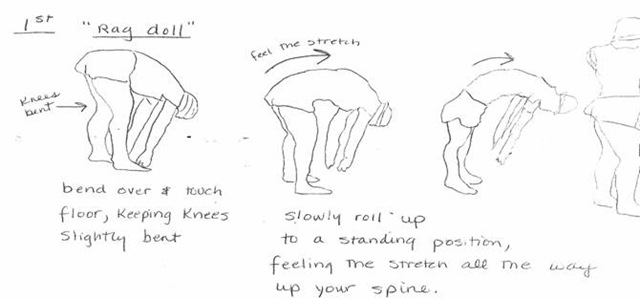
    1.) Stretch (rag doll roll-up). Keeping your knees flexed, slowly bend and touch the floor (or at least aim for the floor). Feel the stretch in your legs (back of) and lower back. This should feel good. Let yourself hang like a “rag doll.”

    Then slowly roll your way up to a standing position, feeling the stretch as it moves up your spine.

    At the top of the stretch, assume a tall-standing, straight posture. (see #2 below).

    clip_image002

    Why it Works:

    This stretch engages the hamstrings (back of legs), paraspinal muscles (muscles on either side of the spine), shoulders and neck. It limbers the entire back and helps counter the effects of prolonged sitting. This stretch also helps prevent and correct low back pain, which can be due to a tightening of muscles from sitting in a fixed position for long periods.

    This exercise isn’t about keeping the knees straight and touching the floor; it is about feeling a good stretch in the back of the legs, lower back and spine all the way up. Pay attention to these areas as you perform the stretch.

    Although it is possible to injure a body part by “too much stretching,” I have never seen this happen when a person pays attention to the stretch and does it to the point of “this feels like a good stretch.” By paying attention to how your body, especially your lower back and spine, feel when you perform the exercise, you are far less likely to “hurt” yourself. This is not, after all, an inherently “dangerous” stretch.

    Do the stretch slowly and listen to your body. If it says “stop,” stop. Don’t push it. This is not a competitive sport. You don’t win points for touching the floor with locked-straight knees. If you push too hard, this won’t feel wonderful (like it should) and it is possible to hurt yourself. Go slow and enjoy the stretch.

    Do It Right:

    Consult a physician before doing this move IF you have any history of low back injury or disc herniation. Although this type of stretching usually helps low back pain, even the type of pain caused by disc herniation, it is best to work with an orthopedic physician and get “clearance” for this move if you have a history of back injury. That and “go slow and enjoy the stretch” are really the only two caveats.

    Be SURE to stop the exercise OR bend you knees more if your feel pain. A good stretch should feel good, not bad. Try flexing your knees more if you feel pain in your back or legs. Stop if discomfort persists.

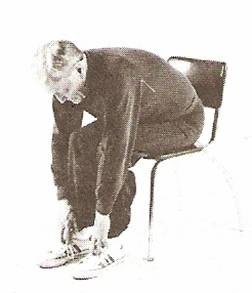
    If you are too fat, inflexible or for whatever reason can’t comfortably perform this exercise standing, try one of these variations:

    I.) Standing stretch while hanging on to furniture (or exercise bar):

    clip_image004

    II.) Same stretch, sitting in a chair:

    clip_image006

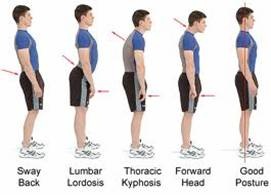
    2.) Posture: at the top of the “rag doll roll-up,” rotate shoulders to a full / tall upright standing position, tuck hips under and assume good posture.

    Why It Works

    Good upright posture allows the internal organs to assume a normal position. This in turn allows them to function normally.

    Sitting tends to encourage slouching. Slouching compresses the diaphragm and internal organs and leads to shallow breathing.

    Using the muscles of good posture exercises them, encouraging better muscle tone and more good posture.

    Good posture gives an instant “body lift,” making you taller, flatter (pulls the belly in), decreases appearance of double-chin. In addition to the health benefits of good posture, you get an immediate “good looks” benefits. What’s not to love?

    Do It Right

    You may want to assume this posture in front of a mirror a few times in order to get the “feel” of standing up straight. Look at the following picture and make sure you are aligning yourself correctly.

    clip_image008

    3.) Breathe: Take 3 deep breaths as follows.

    Breathe in as deeply as you can through your nose, hold for a count of 3 or 5 or whatever is comfortable, then exhale as completely as you can through your mouth. Repeat two more times.

    Do It Right

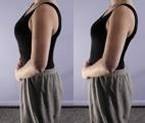
    Place one hand on your stomach at waist level. Breathe in slowly through your nose. Your stomach should expand with your breath. Feeling this expansion with your hand ensures that you are breathing deeply. When you exhale, you should feel your stomach get smaller like letting the air out of a balloon. After you are familiar with how it feels to deep breath, you will not have to put your hand on your stomach for the breathing part of the exercise.

    clip_image010

    Pic 1: the exhale. Pic 2: belly should expand on inhalation.

    Why It Works

    People tend to breathe shallowly when under stress. Sitting for prolonged periods also contributes to shallow breathing. Shallow breathing leads to decreased oxygenation.

    Deep breathing helps increase oxygenation, giving the body a near-instant “oxygen boost.” If this makes you feel light-headed, you are probably oxygen-deprived. Enjoy the natural buzz. It is a good sign that you are getting more oxygen.

    4.) Visualization – Think an uplifting thought —- even something simple like “I’m taking one minute to do a good thing for my health and it feels good.”

    Why It Works

    “We create what we think.” Think a bummer thought and you send a blast of “bummer” nerve energy and hormones throughout your body. Send a blast of worry or fear and you do the same. But this “thought shot” works both ways.

    Think an uplifting thought —- even something as simple as “I’m taking one minute to do a good thing for my health and it feels good,” and you create a blast of goodness —- neurotransmitters and nerve flow — that give you a “shot” of upliftment and refreshment.

    In other words, regardless of whether you think a positive thought or a negative thought, you give yourself a little chemical and nervous “shot.” Make this work to your favor by taking time to think a good thought.

    Do It Right

    Thoughts translate directly into physical function. In order to understand this better, please get a copy of my presentation “The Body/Mind Connection” DVD and watch it. I guarantee you will have “ah ha!” moments or your money back. And when you understand how the Body/Mind connection really works (the scientific understanding), your visualizations will become even more powerful.

    5.) Affirmation – Speak or whisper a positive thought — like “Good for Me!” — out loud. (That would be your “insider code” for “That felt good and I’m glad I did it because it was good for me”). Or use any similar, positive phrase that feels right to you.

    Why It Works

    What we say — the actual act of speaking aloud — “feeds back” into our subconscious mind is a manner similar to visualization.

    Do It Right

    Some studies have shown that affirmations don’t work when we say things we don’t believe. The subconscious mind apparently rejects such affirmations as untrue. So aim small — and true.

    “Good for Me” is a statement of fact. “That felt good and was good for me” might be another. “I absolutely LOVE this job” (that I’m taking a break from) if you DON’T love the job will not be as helpful as a simple uplifting thought, spoken with conviction. Don’t lie to yourself. It doesn’t work.

    As I mentioned with visualization, I recommend that you get a copy of my presentation “The Body/Mind Connection” DVD and watch it. I guarantee you will have “ah ha”! moments or your money back. And when you understand how the Body/Mind connection really works (the scientific understanding), your visualizations and affirmations will become even more powerful.

    6.) Smile – “just do it.”

    Why It Works

    Smiling has been found to have positive health benefits including improved mood, even when participants gave a “fake smile.” Scientists believe this may be due to nervous system connections we develop from earliest childhood. Most people appear to have an “automatic” connection between a smile and a good feeling behind it.

    Do It Right

    Good news. There is no way to do this wrong. “Just do it” — smile — and you’ll reap the benefits.

    7.) Laugh. Out loud. This doesn’t have to be a belly laugh (although it can be!), a chuckle will do. Like the relationship between visualization and affirmation, laughing is the companion to smiling.

    Why It Works

    Unknown. However, laughing appears to be a deep human emotion-response, crossing language barriers. This may mean that the act of laughing is something associated with good feeling, right down to the level of our DNA.

    Some studies have shown that laughing decreases blood pressure, increases immune globulin (improves immunity), decreases anxiety, increases circulation and oxygenation and gives the diaphragm and breathing apparatus a work-out.

    Although results are inconclusive about the many benefits, no negative effects have ever been identified in association with laughter. In other words, it will either help you or it won’t, but it doesn’t hurt!

    Do It Right

    Good news again… There is no way to do this wrong. “Just do it” — laugh — and you’ll reap the benefits.

    If you’re having trouble getting started, imagine a humorous situation, recall a funny joke, or think about how ridiculous it is to be laughing by yourself over nothing. Or just fake a laugh, like an actor laughing for a part.

    8.) BONUS point if you have a mirror and you smile at yourself OR you smile at another person upon completion of the exercise, give yourself a bonus point. Remember, “Keep smiling. It makes people wonder what you’ve been up to!”

    Summary

    There you have it. Seven simple, free, nearly instant things you can do to improve your mental and physical health. When you string them together, you have a “mini rejuvenation” program in just around 60 seconds.

    Try the exercise at least 3 times per day to start. (Wow, a whole 3 minutes a day to help yourself feel better. Can you afford the time?)

    Don’t rush. Take your time and enjoy the wonderful feelings of a good back stretch, a tall posture, a deep breath, a good thought and affirmation, topped with a smile and a laugh.

    All free. All easy.

    All in just 60 seconds.

  • About Those Health "News" Articles I Read…

    About Those Health “News” Articles…


    Sometimes popular media news articles are more confusing than helpful!


    By Dr. Myatt


    When it comes to “News” articles found in the popular press, all is not always as it seems – many of these articles are written by well-meaning but otherwise ill-informed reporters who often have minimal knowledge of medicine, biochemistry, or even how to critically read a medical paper. This causes people no end of worry, as this exchange with “Jenny” demonstrates.

    Jenny wrote to ask:

    I am trying to stay away from large doses of E because I am afraid that E feeds blood vessels that might feed cancer tumors.  My friend’s oncologist told her to stop taking E for this reason.  A little E is ok for me, but is there any way that I can order CoQ10 without E on your website??

    I wrote back to Jenny:

    Hi Jenny:

    You can order Vitaline CoQ10 with or without E. Here is a link to the Vitaline page.

    I teach doctors in the field of holistic oncology and have never seen any credible evidence that vitamin E causes a problem or increases the spread of cancer. If you have any medical journal citation or other credible evidence besides “an oncologist said…,” I’d be most appreciative if you could forward it to me.

    A ketogenic diet is the single most powerful tool for controlling cancer. I have stage IV cancer patients alive and well WAY beyond what is usually expected, including several doctor patients, because of this diet.

    In Health,
    Dr. Myatt

    Jenny wrote back to take me up on my request for credible evidence against the use of vitamin E and to provide some further background information regarding her concerns:

    Hello:

    Congratulations on extending the life of very sick people.   I know that these patients and their families very much appreciate your talents beyond what they could ever express.

    The oncologist was associated with the Swedish Medical Center Cancer Institute here in Seattle.  My friend had nasal esphophgeal cancer.

    I have read other articles regarding breast cancer and lung cancer and vitamin E.  A very, very recent study was conducted at the University of Washington and concluded in Feb 2010.  Below are some of the articles I have seen….since estrogen receptor positive breast cancer runs on both sides of my family, I am nervous about encouraging any type of cancer, particularly that form.  I did read an article about how vitamin E PREVENTS estrogen receptor positive cancer…but then I see other articles about a correlation between high doses of vitamin E and cancer….so I am one confused woman…I don’t know whether to stop eating soy too for this very reason.  I much prefer it to killing animals just so I can eat.

    BTW, thank you so much for making the CoQ10 available and affordable.  After I started taking it, I noticed my cognitive abilities improving significantly.  I have significant visual snow and visual disturbances that never go away, and what my docs call “persistent migraine aura without headache”.  Brain fog and tinnitus are associated with the condition.  the CoQ10 got rid of the brain fog (but none of the other symptoms), and I want to take higher doses to see if it will help with my other symptoms, hence my request for CoQ10 without Vitamin E.

    Jenny included links to several articles which damned the use of vitamin E. Here is what I had to say about that:

    Hi Jenny:

    Thanks for your info. “Credible” being the keyword to watch for. Many lay publications (most, in fact), do a miserable job of reporting what the actual medical studies say. I don’t think journalists even do research these days!

    For example, the “VITAL” study quoted in the “vitamin E and lung cancer” article did not examine vitamin E AT ALL. The only mention of vitamin E in this study was to quote a previous study, the CARET study. The VITAL study looked only at beta carotene, lutein, lycopene and retinol. Unless my medical password is needed, here is the original article: http://www.medscape.com/viewarticle/709053

    SO, the VITAL article reported in the “The Daily” is 100% phonus balonus (that’s Latin for phoney baloney ), but it’s a classic example of how the actual studies get twisted when they are reported in the lay news.

    The second study cited does not say that vitamin E increases risk of cancer; it says the study found “no effect” (no benefit), but also no hazard.

    The third citation isn’t a study, it’s comment on the first study (VITAL) which did NOT even look at vitamin E!

    This is a good example of how, if one wrong thing gets commented on the internet, the same wrong thing can then be repeated a thousand times. A falsehood is still a falsehood no matter how many times it is repeated. But when one doesn’t realize that the original report was false, the many additional comments can lend a false legitimacy.

    Numerous studies have found benefit in taking all antioxidants including vitamin E. Several studies that found a possible inverse effect used dl-tocopherol, an unnatural form of vitamin E that interferes with the body’s use of the 8 other forms of naturally-occurring vitamin E.

    It is difficult if not impossible for a layman to make sense of medical studies, especially when they are twisted all out of shape as reported in the media. No wonder my cancer patients, including a number of physicians, reply on my team and I to read the actual medical studies and make comment for them!

    Now, this is such a good example of how confused people can be over bad journalism that I should probably use our back-and-forth in an upcoming edition of HealthBeat News. It may very well save some other unsuspecting patient from making themselves crazy over trying to make sense of conflicting information!

    There is nothing in any of the articles you sent which should make you afraid of vitamin E. I’m not trying to convince you to take it, just hoping to help you understand how better to read and interpret medical studies.

    For best information, always try and read the actual original medical study, not the media’s reporting of it. Again, they usually do a shameful job when it comes to translating what the studies really found.

    For additional information about substances that have been well-proven to aid in cancer control, please visit our cancer page.

    I teach doctors in the field of oncology. If my work wasn’t well-researched and supported by the medical literature, rest assured they would eat me alive during a presentation!

    Once more with feeling: please remember that supplements are just that – supplemental in the treatment of cancer. A ketogenic diet should be the primary method of treatment and prevention, supplements are the adjunct. And if you don’t have cancer and are simply interested in prevention, that should be a slam-dunk. A diet low in carbs, or even ketogenic if you have weight to lose, is your best (and breast!) friend. I mention weight because fat cells manufacture estradiol, a known risk factor for many cancers, not just breast cancer. Maintain a normal weight if breast cancer prevention is your aim.

    In Health,
    Dr. Myatt

    P.S. Just got an email this evening from my patient with metastasized liver cancer. Her lab values (liver function tests, hs-CRP, ferritin) all continue to improve and are handily within the normal range, down from sky-high in Sept. Her Yale University doctors are pleased but still wondering what in the heck happened! One of our major treatment strategies for her is the use of metabolic ketosis to starve her cancer.

  • A Prayer For 2011

    From one of our patients…


    Dear God:


    My prayer for 2011 is for a

    fat bank account and a thin body.


    Please don’t mix these up

    like you did last year.


    AMEN!!!

  • The 5 Most Important Supplements For Health and Longevity

    The 5 Most Important Supplements For Health and Longevity


    By Dr. Dana Myatt


    Many nutritional supplements and herbs have documented value in maintaining health and possibly also extending lifespan. The following list of recommendations comprises my picks for the 5 most important supplements the average person should take to preserve or reclaim optimum health and vitality.

    I have chosen this list based on what I call the “preponderance of evidence” (scientific data). Although many substances have proven value for various conditions, this list includes only those that have a substantial amount of scientific study and data behind them. Substances tested for 3 weeks in lab rats do not make my list. Neither do supplements tested in only poorly-controlled or small samplings of people. The supplements and substances on my “A” list have all been thoroughly tested and proven, and the body of scientific documentation leave little doubt as to their importance.

    The list is given in order of priority. Please keep in mind, however, that an individual might need a specific nutrient lower on the list or something not on this list at all for the prevention or reversal of a particular illness. For most healthy people, these are the nutrients of highest importance if one is concerned about maintaining health and promoting longevity.

    The Five Most Important Supplements For Health and Longevity

    1.) Optimal Potency Multiple Vitamin / Mineral / Trace Mineral Supplementation (Maxi Multi) including:

    I.) Broad-spectrum vitamin & mineral formula. Many Americans take nutritional supplements for good reason. A wide variety of illnesses have known links to nutritional deficiencies. Adding certain nutrients in supplemental form is an inexpensive insurance policy against some of the worst diseases of modern times. Here are just of few of the known deficiency / disease connections:

    A deficiency of antioxidant nutrients (especially beta carotene, vitamins C & E, and selenium) is associated with higher incidence of cancers of the colon, breast, prostate, mouth, lungs and skin. Some researchers believe that antioxidant deficiencies may be related to higher incidence of all cancers.

    A mineral deficiency, especially magnesium and potassium but also calcium, is associated with high blood pressure.

    Deficiencies of vitamin E, C, B6, B12, folic acid (a B vitamin), and bioflavonoids are associated with cardiovascular disease. The connection between vitamin E and heart health is so well established that conventional medical cardiologists are instructed to recommend vitamin E to their patients.

    Healthy bones, and the prevention of osteoporosis, depend on sufficient levels of minerals, including calcium, magnesium, boron, zinc, copper, B vitamins, and vitamin D.

    In males, benign prostatic hypertrophy is associated with decreased levels of zinc. Zinc deficiency also correlates to decreased immune function. Hypoglycemia (low blood sugar) and diabetes (high blood sugar) occur more frequently in people who are chromium deficient. After diabetes is present, low levels of vitamin A, C, E, plus zinc, selenium, choline, bioflavonoids and B complex vitamins are associated with more complications from the disease.

    This list could go on for pages, but you get the idea. Deficiencies of key nutrients are correlated with disease. Such deficiencies are also common in the modern American diet. Depleted soils result in lowered nutritional content in produce AND Americans eat less fresh produce than ever before. Much of our food is highly processed, removing not only nutrients but also fiber and enzymes.

    The best health insurance may not be an expensive medical policy, but the addition of sufficient nutrients to fill in the gaps in our day-to-day nutritional status.

    II.) High potency antioxidant formula (“ACES”: vitamins A,C,E, and selenium and bioflavonoids). Antioxidants are molecules which “quench” and render free radicals harmless. Free radicals are unstable molecules that steal electrons from other molecules and thereby cause damage to normal cells. The damage they cause in the body is called oxidation, and it is the body-equivalent to rust on a piece of tin. Free radical damage is linked to heart disease, atherosclerosis, Alzheimer’s disease, arthritis, cancer, cataracts, macular degeneration, immune suppression and aging in general.

    Although the body produces many of it’s own antioxidants (such as CoQ10 and glutathione), exposure to environmental chemicals in food, air and water, plus the effects of stress, smoking excess alcohol and sunlight can generate more free radicals than the body’s antioxidants can “quench.” Internal antioxidant production also declines with age. Since so many diseases are associated with declining antioxidants and numerous studies have proven the benefit of keeping these levels high, it is recommended that a high potency antioxidant formula be a part of every basic supplementation program.

    III.) Calcium / magnesium / boron / vanadium (bone nutrients) Calcium and magnesium are the primary minerals comprising bone, and inadequate levels can lead to osteoporosis. In combination with trace mineral boron, vanadium and vitamin D, these nutrient serve to protect bone health. Calcium and magnesium have a much more widespread function in the body than preserving bone health, however.

    Calcium and magnesium are necessary for normal heart function and blood pressure. Deficiencies of either can lead to heart disease and high blood pressure. Magnesium is necessary for normal energy processes including nerve function and enzyme activation. Deficiencies are associated with cardiac arrhythmias.

    Insufficient calcium has recently been shown to be associated with colon cancer, and people who have generous calcium intakes are less susceptible to this condition.

    These two major minerals are frequently insufficient even in a “good” diet. Because they take up a lot of space in a capsule, it is impossible to get an optimal daily dose in any “one-a-day” formula. A suggested daily dose is 1,000 -1,500mg per day of calcium and 250-500mg magnesium for both men and women.

    IV.) B Complex vitamins (higher doses than in most multiples). B vitamins are used in the body individually and in combination with enzymes to help release energy from food. They are also of extreme importance to the nervous system. B vitamins are required by the metabolic pathways that generate the energy. Every system in the body depends on these vitamins for their role in energy production, and a deficiency of even a single B vitamin can have widespread and serious health consequences. Unfortunately, the B complex vitamins are routinely deficient from the Standard American Diet, because these nutrients are removed when grains and sugars are processed. Deficiencies of B complex vitamins are too numerous to mention here, but the most serious consequences include heart disease (B6, B12 and folate), depression, neuropathy, high cholesterol, cataracts, atherosclerosis, osteoporosis and fatigue to name only a few. Because deficiencies of the b vitamins are so common even in a “good” diet, they higher potency formulas should always be part of a basic multivitamin supplement program.

    Recommendation: Maxi Multi is a superior formula of vitamins, minerals, trace minerals, flavonoids and high potency antioxidants that provides the optimal nutritional levels of all four formulas listed above in a single supplement. Whether you take four separate formulas or enjoy the convenience and savings of Maxi Multi, this Optimal Potency Vitamin / Mineral / Trace Mineral program should be the cornerstone of any supplement program because it provides so many well studied nutrients. Dose: 3 caps, 3 times per day with meals (9 per day total) or as directed by physician.

    2.) Green Food Herbs and Veggies (Maxi Greens)

    The Federal government, the USDA and multiple other government agencies are advocating that Americans consume more fruits and vegetables for a healthier life style. As we discussed in the last issue of HealthBeat, however, the nutritive value of these foods has declined dramatically within the last 30 years. In addition to this, few Americans obtain the daily recommended target of 5 fruits and/or veggies.

    Plants contain hundreds of non-vitamin, non-mineral substances known as “Phytonutrients” (Phyto=plant). Although not absolutely essential to life like vitamins and minerals are, these plant-derived nutrients never-the-less perform many important functions. Phytonutrients act as detoxifiers, antioxidants, oxygenators, immune stimulators, and anti-mutagenics (Preventing cancerous changes in cells). The typical American diet is far too low in produce, and the produce we do eat is nutritionally deficient, so plant-derived nutrients are often lacking.

    Some examples of phytonutrients include:

    Indole-3-carbinol (IC3) from cruciferous vegetables (broccoli, cabbage, cauliflower and Brussels sprouts). This phytonutrient has been shown to prevent cancer through multiple mechanisms including I.) Protecting the genomic structure of DNA. II.) Converting dangerous estrogens (16-alpha-hydroxyestrone) that cause the development of cancer into safer forms of estrogen (2-hydroxyestrone) that prevent the development of cancer. III.) Blocking estrogen receptor sites on the membranes of breast and other cells. IV.) Inducing apoptosis (programmed cell death) of cancer cells. V.) Protecting cells against the effects of pesticides and other environmental pollutants including dioxin that mimic estrogen in the body. VI.) Slowing the propagation of aberrant breast and prostate cells.

    Pycnogenols (OPC’s) and resveratrol from grapes seed and skin exhibit 50 times more antioxidant power than vitamin E and 20 times more than vitamin C. They easily cross the blood-brain barrier and prevent free radical damage to the brain and nervous system. OPC’s bind to collagen and help increase elasticity of skin, muscles, tendons and ligaments. It also acts as a smooth muscle relaxant in blood vessels. OPC’s have antihistamine effects that make it useful for allergies and asthma.

    Catechins from green tea have been shown to neutralize cancer-causing agents and prevent cellular mutations leading to cancer. In addition, green tea prevents abnormal blood clotting, reduces total cholesterol, aids high blood pressure and protects arterioles.

    Silymarin from milk thistle has been the subject of over 100 clinical trials. It powerfully protects the liver from the effects of environmental toxins. Is also stimulates liver cell regeneration and is useful for all types of liver disease including the liver-toxic effect of many drugs.

    Flavoglycosides in ginkgo biloba are one of the most well-studies herbs for age-related memory changes. ginkgo is a potent antioxidant that increases circulation to small-diameter blood vessels (such as those in the brain and extremities) Studies have verified ginko’s effectiveness in early-stage Alzheimer’s, multiple infarct dementia (“mini strokes”), age-related depression, glaucoma, impotence, vascular insufficiency and MS. It has anti-allergy effects that make it useful for chronic respiratory allergies and asthma.

    THIS IS JUST A SMALL SAMPLE of they types of “phytonutrients” found in herbs and vegetables.

    Recommendation: Take specific herbs for any medical condition you may have, but for general prevention and health maintenance, Maxi Greens combines a broad spectrum of these important plant substances. Daily dose: 2 to 3 caps, 3 times per day with meals.

    3.) Omega-3 Essential Fatty Acids: Maxi Marine O3, Max EPA or Flax Oil

    On May 27, 2003, The White House urged government health agencies to encourage Americans to increase their consumption of foods rich in Omega-3 fatty acids and decrease their intake of trans fatty acids. The release from the Executive Office of The President stated:

    “Health researchers have found that Americans can significantly reduce the risk of heart disease with a modest change in their diets. The government should make this life-saving information as widely available as possible.”

    This Executive initiative is based on the new guidelines of the American Heart Association which now recommends eating cold-water fish at least twice a week and other oils and food sources high in omega-3 fatty acids. (Fish and flax oil are the richest sources). The Office of The President also cited the “growing body of scientific evidence, both experimental and epidemiological, that suggests that consumption of trans fatty acids increases the risk of coronary heart disease.”

    Recommendation: Americans eat far too little Omega-3 fatty acids and far too much trans fat (any amount of “trans” is too much). Eating or and/or supplementing Omega-3 fatty acids (fish oil and flax oil) is known to help prevent over 60 illnesses including heart disease. Dose: 1 TBS. of flax oil OR 6 capsules of flax oil OR 3-6 capsules of MaxEPA (fish oil) OR 2 TBS. ground flax seed meal daily. Some people lack the enzyme to convert flax oil to EPA & DHA (the “active ingredients” from these oils). These people should use the fish oils (Maxi Marine O3, MaxEPA) exclusively.

    4.) CoQ10 (ubiquinone)

    Coenzyme Q10 is a potent antioxidant produced by the body. It functions as an “energizer” to the mitochondria, the body’s energy producing units. Dr. Michael Murray says to think of CoQ10 as the body’s “spark plugs.” Mitochondria, which produce energy, require CoQ10 to “spark” their production on energy units (ATP). Muscles, and the heart in particular, have high requirements for CoQ10. Although it is manufactured in the body, aging humans produce only 50% of the CoQ10 that young adults do. This finding makes CoQ10 one of the most important nutrients for people over 30. Cholesterol-lowering drugs including statins are known to lower CoQ10 levels.

    CoQ10 is beneficial in ALL types of heart disease (mitral valve prolapse, angina, atherosclerosis, cardiomyopathy, high blood pressure, arrhythmia), periodontal disease, immune deficiency, cancer, chemotherapy side-effects, overweight and obesity, muscular dystrophy, fatigue and for enhancing athletic performance. The suggested dose is 50mg per day for health maintenance and 100-400mg per day for heart disease, cancer and weight loss programs.

    Recommendations: For primary prevention, 50-100mg CoQ10 daily should be used. Higher doses (100-400mg) are recommended for heart disease, cancer, and overweight/weight loss programs.

    5) Melatonin

    Melatonin is a hormone manufactured from serotonin in the pineal gland. This hormone helps regulate the sleep/wake cycle and set the Circadian rhythms (24-hour cycle) of the body. This, in turn, regulates the release of all other hormones.

    Melatonin is a potent antioxidant that helps protect the central nervous system from disease, free-radical injury and aging. Melatonin increases the production of immune cells and is used in cancer medicine for its immune-enhancing and antioxidant effects. (DO NOT use in leukemia or lymphoma until more is known). Recent studies have shown that melatonin helps reduce high blood pressure.

    Many researchers consider melatonin to be one of the most powerful anti-aging substances available, but like many other hormones, secretion of melatonin declines with age.

    Recommendation: A typical preventative dose is 3mg at bedtime, although higher doses are used (10-20mg) in cancer and certain advanced disease states. Anyone with a neurological disease should certainly be taking melatonin.