Blog

  • Diabetes Drug Causes Diabetes?

    By Nurse Mark


    Not likely…

    We have often warned that it can be easy for the uninformed to become confused and miss-interpret things that they find on the internet. In fact, it is so easy to do that even people who should know better can embarrass themselves.

    Such is the case with a recent article by a prominent doctor and internet personality.

    Now, we follow this doctors work because he often has some good things to say. But in a recent article damning the Big Pharma drug metformin the author got it wrong by 180 degrees. How embarrassing!

    Notice that I said “the author” and not “the doctor.” It’s fairly common practice for many of the more prolific doctor blogs and newsletters to have many of their articles written by staff or outside writers and not by the doctor on the masthead. This is because if the doctor actually wrote all those articles there would be no time left to look after patients!

    So, while it may be OK for a busy doc to use others to do some writing, it is also important for that doc to proof read the material and ensure that it is accurate. That obviously didn’t happen in this case!

    You see, this article makes it’s case for metformin being the “cause” of diabetes by quoting studies that prove just the opposite. How does the author do that? Through a simple misunderstanding – a basic lack of knowledge – of how the thyroid gland works. This is basic endocrinology taught to every doctor early in their schooling, and that is what makes us think that this doctor neither wrote nor proof-read this article.

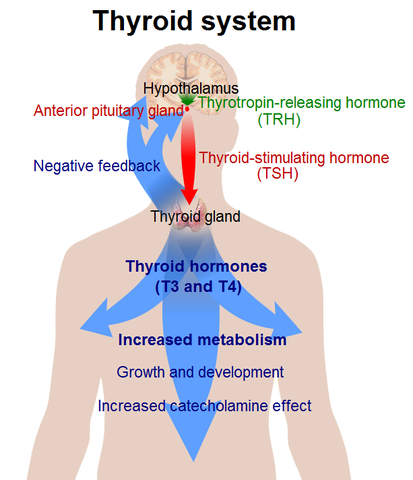
    By Mikael Häggström - All used images are in public domain., Public Domain, https://commons.wikimedia.org/w/index.php?curid=8566743The article confuses thyroid hormones with a hormone produced by the pituitary gland.

    The thyroid gland makes two hormones – triiodothyronine (T3) and thyroxine (T4).

    It does this in response to stimulation by the hypothalamus and the anterior pituitary glands.

    When those glands sense the need to boost thyroid function they produce a hormone called, appropriately enough, Thyroid Stimulating Hormone (TSH). When thyroid function is adequate, they stop making TSH so that the thyroid does not over-produce its T3 and T4 hormones. It’s a fairly simple negative feedback system: when thyroid function is low, TSH is high and when thyroid function is high, TSH is low.

    Think of it like your automobile: If you are not going fast enough you “stimulate” your car with more pressure on the gas pedal. When you are going too fast, you remove that pressure on the gas pedal to remove the “stimulation” and slow down. When you are going just fast enough you keep a light, steady pressure on the gas pedal to keep your speed just right. TSH is the gas pedal for the thyroid gland. Low TSH doesn’t mean that the thyroid is not working – it means the opposite, that there is plenty of thyroid hormones and the pituitary has “taken its foot off the gas pedal.”

    Now, let’s look at what the famous doctor’s article claims:

    First, the author references a study that shows that, in people with high TSH levels (that is, the pituitary is making more TSH to tell the thyroid to work harder) taking metformin results in a lowering of TSH levels.

    Next, the author references another study that shows that people with low TSH levels are at much higher risk of developing diabetes.

    Then, the author connects the two to claim that taking metformin increases the risk of developing diabetes.

    Oops!

    Do you see what just happened? The author of the article just confused Thyroid Hormone (that would be T3 and T4) with Thyroid Stimulating Hormone (TSH).

    Remember, when TSH is high, thyroid function is low. TSH is high because the pituitary is telling a low thyroid to wake up and work harder.

    Yes, taking metformin seems to help a sluggish thyroid work better – as evidenced by reduced TSH levels.

    Yes, people with low thyroid function are at greater risk for developing diabetes.

    But, low TSH is not low thyroid function – it is just the opposite.

    Low TSH is normal or high thyroid function, and metformin, a very good drug for many other reasons, appears to support thyroid function which reduces the risk of developing diabetes.

    Glad we got that straightened out!


    References:

    Mozhgan Karimifar, et al. Effect of metformin on thyroid stimulating hormone and thyroid volume in patients with prediabetes: A randomized placebo-controlled clinical trial. J Res Med Sci. 2014 Nov; 19(11): 1019–1026.
    PMCID: PMC4310072 https://www.ncbi.nlm.nih.gov/pmc/articles/PMC4310072/
    "In prediabetic people, metformin decreases serum TSH, only, in those people with TSH >2.5 μU/ml and reduces the size of small solid thyroid nodules."
    https://www.ncbi.nlm.nih.gov/pmc/articles/PMC4310072/

    Jason Harris, Endocrinology Advisor, ENDO 2016, Type 2 Diabetes Risk Increased With Low Thyroid Function. April 03, 2016
    “Low thyroid function is associated with higher risk of developing diabetes, but also the progression from prediabetes to diabetes and this is even within the normal range of thyroid function,” said Layal Chaker, MD, of Erasmus Medical Center in Rotterdam, Netherlands.“Low thyroid function as represented by higher TSH [thyroid-stimulating hormone] is associated with a 1.2-fold increased risk of diabetes and a 1.4-fold increased risk for progression from prediabetes.”
    http://www.endocrinologyadvisor.com/endo-2016/endo-2016-hypothyroidism-and-type-2-diabetes-risk/article/487231/

    Thyroid-stimulating hormone. From Wikipedia, the free encyclopedia.
    https://en.wikipedia.org/wiki/Thyroid-stimulating_hormone

  • Is This Mineral A “Holy Grail” For Brain Health?

    Long considered non-essential or even toxic and dangerous, this mineral is receiving some big attention from conventional medicine and the list of benefits attributed to it grows almost daily.

    Lithium Orotate - Protect And Renew Brain CellsUnique and often overlooked it is a naturally occurring alkali mineral in the same family as sodium and potassium. In nature it is found in varying amounts in foods such as grains and vegetables and in some areas drinking water also provides significant amounts of the element. “Taking the waters,” the practice of both drinking from and soaking in mineral rich springs dates far back in history as the ancients discovered the healing properties of water naturally rich in lithium. During the late 1800’s and early 1900’s the consumption of bottled Lithia mineral water was popular and the earliest formulation of the now-popular soft drink “7 up” was called “Bib-Label Lithiated Lemon-Lime Soda" and introduced in 1929 and contained lithium carbonate until it was reformulated in 1948.

    Higher lithium levels do appear to lead to happier people: a 1990 study conducted in Texas found that that the incidence rates of suicide, homicide, and rape were significantly higher in counties whose drinking water supplies contain little or no lithium than in counties with higher water lithium levels. (ref. 33) This and similar studies worldwide has led, predictably, to calls for public drinking water supplies to have lithium added as fluoride is in many jurisdictions now.

    Despite it’s occurrence naturally, and it’s excellent safety profile Big Pharma and Conventional Medicine have managed to give lithium a bad reputation for safety. Most people are familiar with the lithium salts (carbonate and citrate) used to treat manic-depression (bipolar disorder). This form of lithium is not easily absorbed, so extremely high doses must be used (1200mg of lithium carbonate per dose, for example). At these doses, lithium is highly toxic. The toxic salt forms are available only by prescription, and for very good reason.

    Lithium orotate is 20-times more biologically active than other forms of lithium, and is extremely safe. In orotate form, lithium acts as a mineral supplement that may be beneficial for:


    Protecting and renewing brain cells (refs. 1-8, 17)


    Researchers studied patients taking lithium for bipolar disorder and found that brain size, as measured by MRI scanning, increased in as little as 4 weeks of treatment. Another lab study found that lithium helped to enhance neural progenitor function in brain cells, leading to lithium-induced up-regulation of neural proliferation. This is important because as brain cells (neurons) wear out and die they must be replaced through the process of neural proliferation.

    Another study showed that lithium increases the levels of a major neuroprotective protein and increases the regeneration of brain and spine nerve cells and a medical review in 2004 concluded: “The neuroprotective and neurotrophic actions of lithium have profound clinical implications. In addition to its present use in bipolar patients, lithium could be used to treat acute brain injuries such as stroke and chronic progressive neurodegenerative diseases.”

    Alzheimer’s prevention and possibly even reversal (refs. 9-16)


    In 2007 researchers reported that “the prevalence of Alzheimer’s disease in a group of elderly patients with bipolar disorder who were on continuous lithium treatment was significantly less than in a similar group without recent lithium therapy.”

    Another scientific review states “Ongoing clinical trials are evaluating lithium’s abilities to lower tau and beta-amyloid levels in cerebrospinal fluid in Alzheimer’s patients.”

    An extensively researched paper published in 2007 likened lithium to “The Holy Grail” in the treatment of neurodegenerative diseases such as Alzheimer’s citing “Human Evidence for the Neurotrophic Effects of Lithium” and discussing evidence that “Lithium exerts robust neuroprotective effects in preclinical paradigms” and that “Lithium exerts major effects on cytoprotective pathways.”

    Another paper states “Lithium has been shown to exert neuroprotective effects in vitro and to stimulate neurogenesis in the hippocampus.”

    Yet another study concludes “The findings provide partial evidence to support the contention that lithium could offer hope as a preventive treatment for Alzheimer’s disease.”

    Researchers are focusing on the ability of lithium to protect the brain from the amyloid deposits that have been implicated in the development of Alzheimer’s Disease.

    Preventing migraine and cluster headaches (refs. 17-20)


    An article from as long ago as 1984 reviewed 15 clinical trials on the use of lithium for such disorders as Huntington’s chorea, tardive dyskinesia, spasmodic torticollis, Tourette’s syndrome, L-dopa induced hyperkinesia and the "on-off" phenomenon in parkinsonism, organic brain disorders secondary to brain-injury, drug induced delusional disorders, migraine and cluster headache, periodic hypersomnolence, epilepsy, meniere’s disease and periodic hypokalemic paralysis and concluded in part: “There are encouraging results on the use of lithium in cluster headaches, cyclic form of migraine and hypomanic mood disorders due to organic brain disorders.”

    With regard to cluster headaches, researchers “administered lithium carbonate to two patients whose cluster headaches had brought them to the point of contemplating suicide. Both patients responded quite dramatically. Case 1 has now been virtually free of headaches for over two years and Case 2 has been in remission for over twelve months.” Another team of researchers reported: “Lithium was found to be an effective prophylactic agent for chronic cluster headache patients. The effectiveness of lithium was evident in less than a week after the beginning of treatment.” Clearly, lithium has a long history of successful use in treating these often debilitating headaches.

    Treating and preventing depression (refs. 21-24,30)


    Long considered a “mood stabilizer” both historically and more recently by conventional medicine for use in bipolar mood disorders (AKA “Manic-Depression”), a large number of research papers and studies are revealing just exactly how lithium performs it’s magic. All of these papers tend to be complicated, dense, and hard to plow through, but their bottom line is that instead of being a simple neurochemical “fix” or symptom reliever, lithium is exerting actions that protect brain cells from damaging proteins and is actually promoting the renewal and growth of brain cells.

    Improving low white blood cell count (especially after chemotherapy) (refs. 25-27)


    One of the most dreaded side-effects of treatment for cancer is the destruction of normal, healthy blood components that occurs along with the destruction of tumors targeted by both radiation and chemotherapy. Indeed, cancer treatments are limited by the side effects of tumour-destructive therapy, frequently requiring expensive supportive treatments to overcome and treat leucopenia and the immune compromise and often disastrous infections that can result. The conventional treatment for this is to administer IV antibiotics to prevent and combat infections and in the most severe cases to consider the use of recombinant human granulocyte colony-stimulating factor – an expensive “miracle treatment’ costing thousands of dollars per dose.

    Researchers looking for less-costly and less potentially toxic solutions have found that lithium can have much the same effect, one study stating: “Lithium salts have shown that they can increase the number of neutrophil granulocytes quite significantly and, to a lesser extent, the number of eosinophil granulocytes and lymphocytes as well.” and concluding “It can be used to treat patients with chronic leucopenia following chemotherapy or radiotherapy extremely cost-effectively.” Interestingly, they go on to say: “Unfortunately this treatment has not won acceptance in clinical oncology in the face of highly cost-intensive treatment with recombinant CSF.” Translation? As long as there are wildly expensive Big Pharma drugs available to the cancer industry, lithium, a simple and cheap mineral, has little chance. For shame Big Pharma and Big Medicine!

    Improving spatial memory (the "Where did I park my car?" kind of memory) (refs. 28, 34)


    We’ve all done it: Parked the car in a large parking lot (or worse, in a parking garage) and returned only to discover that we have “lost” the car – we can’t remember, for love nor money, where we parked the darned thing. How frustrating, and even frightening. Lithium seems to help with this problem.

    In a study published in 2001, researchers tested the ability of rats to navigate their way through mazes. They gave some of the rats lithium and found that the lithium improved the rats’ spatial memory (ability to find their way through the maze repeatedly) in as little as 24 hours compared to the rats which did not receive lithium.

    We have to admit that this was just one study, conducted many years ago but there have been similar studies into related spatial memory impairment conducted since that hint strongly at the beneficial effects of lithium  for memory. We also have many anecdotal reports from our patients and customers who tell us that  lithium is helping them “focus better” on tasks that require memory and even to allow them to better remember things without needing to write notes.

    Treating alcoholism (refs. 29-31)


    Many people have difficulty with alcohol and their struggles with it and it’s effects can be lifelong for some. In addition to AA groups, “treatment clinics’, and other self-help strategies there have been seemingly endless attempts by Big Pharma and Big Medicine to find quick and easy drug treatments, generally with little success.

    Lithium researchers on the other hand report great success in helping alcoholics get and remain abstinent from alcohol, and also find that the lithium has a number of other health-positive ‘side effects.” Researchers in one large clinical study noted: “Lithium orotate proved useful as the main pharmacologic agent for the treatment of alcoholism.” and went on to say “Further advantages for this lithium therapy were noted, i.e., improved liver and cardiovascular functions, reduction (and in some cases abolishment) of migraine headaches, alleviation of the Meniere’s symptoms, and amelioration of seizures. There were increases in the white blood cell counts in the patient with chemotherapy-induced leukopenia and reduction of edema and ascites in patients with liver cirrhosis, as well as the pleural effusions and lymph node swelling in the patient with lung cancer. No manic episodes occurred during lithium orotate treatment in three patients with this affective disorder. The hyperthyroid condition was also improved in four patients.” That seems like a very long list of positive effects for such a simple mineral.

    Improving Meniere’s syndrome (ref. 17)


    This disease is both distressing and debilitating, and is characterized by recurrent episodes of vertigo, hearing loss and tinnitus. Episodes may be accompanied by headache and a feeling of fullness in the ears. Further symptoms may include include nausea, vomiting, and sweating (typical symptoms of vertigo), and some people may even have sudden falls without loss of consciousness (drop attacks).

    Given the distress of the symptoms sufferers are often led to find relief in risky surgeries or questionable drug treatments. Sometimes these work, but sometimes they don’t and all have dangers. While there is very little direct research available to show beneficial effects of lithium in Meniere’s disease, many other studies (already mentioned in this article) have noted improvements in Meniere’s symptoms in people being treated with lithium for other conditions. Given the safety profile of lithium it may well be worth a try before resorting to the “big guns” of surgery or drugs.

    Improving cognitive impairment in HIV positive patients (ref. 32)


    Treatment for HIV has improved dramatically in recent years and it is no longer the dreaded death sentence that it once was. Even so, many afflicted will suffer from neurocognitive impairment as their disease progresses, leaving them unable to care for themselves and creating challenges for family and other caregivers.

    A number of studies have demonstrated improvements in cognition (thinking and brain function) in HIV sufferers, with one study’s authors concluding: “Lithium resulted in improved neuropsychological performance in antiretroviral-treated, impaired individuals in this small, open-label study. Based on published in vitro data, lithium may exert this effect by inhibiting neuronal glycogen synthase kinase-3beta.” Translation? All 8 people in the study improved on lithium therapy, and the researchers think it may be due to lithium’s protective and restorative effects – the same protective and restorative effects that those researching other neurological conditions have reported over and over.

    In summary, Lithium Orotate is a safe, effective, and inexpensive way to protect and renew brain cells. Dr. Myatt has her own brand of Lithium Orotate that she has selected for absolute purity and quality. You may find it here.


     References

    1.) Lithium-induced increase in human brain grey matter. Lancet 2000; 356: 1,241-1,242. https://www.ncbi.nlm.nih.gov/pubmed/11072948
    2. ) Lithium stimulates progenitor proliferation in cultured brain neurons. Neuroscience 2003; 117(1): 55-61. https://www.ncbi.nlm.nih.gov/pubmed/12605892
    3.) Neuroprotective and neurotrophic actions of the mood stabilizer lithium: can it be used to treat neurodegenerative diseases? Crit Rev Neurobiol. 2004;16(1-2):83-90. https://www.ncbi.nlm.nih.gov/pubmed/15581403
    4.) Lithium at 50: have the neuroprotective effects of this unique cation been overlooked? Biol Psychiatry. 1999 Oct 1;46(7):929-40. https://www.ncbi.nlm.nih.gov/pubmed/10509176
    5.) Neuroprotective effects of lithium in cultured cells and animal models of diseases.Bipolar Disord. 2002 Apr;4(2):129-36. https://www.ncbi.nlm.nih.gov/pubmed/12071510
    6.) Lithium desensitizes brain mitochondria to calcium, antagonizes permeability transition, and diminishes cytochrome C release. J Biol Chem. 2007 Jun 22;282(25):18057-68. Epub 2007 May 4. https://www.ncbi.nlm.nih.gov/pubmed/17485418
    7.) Lithium protects rat cerebellar granule cells against apoptosis induced by anticonvulsants, phenytoin and carbamazepine. Journal of Pharmacology and Experimental Therapeutics 1998; 286(1): 539-547. http://jpet.aspetjournals.org/content/286/1/539
    8.) Lithium exerts robust neuroprotective effects in vitro and in the CNS in vivo: Therapeutic implications. Neuropsychopharmacology 2000; 23(S2): S39. https://eurekamag.com/research/035/227/035227950.php
    9.) A feasibility and tolerability study of lithium in Alzheimer’s disease. Int J Geriatr Psychiatry.2008 Jan 8 [Epub ahead of print]. http://onlinelibrary.wiley.com/doi/10.1002/gps.1964/full
    10.) Lithium for prevention of Alzheimer’s disease. Br J Psychiatry. 2007 Oct;191:361; author reply 361-2. http://bjp.rcpsych.org/content/191/4/361.1.long
    11.) Lithium: a novel treatment for Alzheimer’s disease? Expert Opin Drug Saf. 2007 Jul;6(4):375-83. https://www.ncbi.nlm.nih.gov/pubmed/17688381
    12.) In search of the Holy Grail for the treatment of neurodegenerative disorders: has a simple cation been overlooked? Biol Psychiatry. 2007 Jul 1;62(1):4-6. https://www.ncbi.nlm.nih.gov/pmc/articles/PMC1949906/
    13.) Lithium and risk for Alzheimer’s disease in elderly patients with bipolar disorder. Br J Psychiatry. 2007 Apr;190:359-60. http://bjp.rcpsych.org/content/190/4/359.long
    14.) Implications of the neuroprotective effects of lithium for the treatment of bipolar and neurodegenerative disorders. Pharmacopsychiatry. 2003 Nov;36 Suppl 3:S250-4. https://www.ncbi.nlm.nih.gov/pubmed/14677087
    15.) Lithium and dementia: a preliminary study. Prog Neuropsychopharmacol Biol Psychiatry. 2006 Aug 30;30(6):1125-8.Epub 2006 Jun 6. https://www.ncbi.nlm.nih.gov/pubmed/16753246
    16.) Lithium inhibits amyloid secretion in COS7 cells transfected with amyloid precursor protein C100. Neuroscience Letters 2002; 321(1-2): 61-64 http://www.sciencedirect.com/science/article/pii/S0304394001025836
    17.) A review of clinical trials of lithium in neurology. Pharmacol Biochem Behav. 1984;21 Suppl 1:57-64. https://www.ncbi.nlm.nih.gov/pubmed/6240662
    18.) Lithium treatment of chronic cluster headaches.Br J Psychiatry. 1978 Dec;133:556-8. https://www.ncbi.nlm.nih.gov/pubmed/737393
    19.) Chronic cluster headache: response to lithium treatment. J Neurol. 1979 Sep;221(3):181-5. https://www.ncbi.nlm.nih.gov/pubmed/91671
    20.) Lithium carbonate in cluster headache: assessment of its short- and long-term therapeutic efficacy.Cephalalgia. 1983 Jun;3(2):109-14. https://www.ncbi.nlm.nih.gov/pubmed/6409415
    21.) Lithium regulates adult hippocampal progenitor development through canonical Wnt pathway activation. Mol Psychiatry. 2007 Oct 30 [Epub ahead of print] https://www.ncbi.nlm.nih.gov/pubmed/17968353
    22.) The mood stabilizers lithium and valproate selectively activate the promoter IV of brain-derived neurotrophic factor in neurons. Mol Psychiatry. 2007 Oct 9 [Epub ahead of print] http://citeseerx.ist.psu.edu/viewdoc/download?doi=10.1.1.499.218&rep=rep1&type=pdf
    23.) Lithium up-regulates the cytoprotective protein Bcl-2 in the CNS in vivo: a role for neurotrophic and neuroprotective effects in manic depressive illness.J Clin Psychiatry. 2000;61 Suppl 9:82-96. https://www.ncbi.nlm.nih.gov/pubmed/10826666
    24.) Lithium for maintenance treatment of mood disorders. Cochrane Database Syst Rev. 2001;(2):CD003013. https://www.ncbi.nlm.nih.gov/pubmed/11687035
    25.) Effects of lithium carbonate on hematopoietic cells in patients with persistent neutropenia following chemotherapy or radiotherapy.J Trace Elem Med Biol. 2002;16(2):91-7. https://www.ncbi.nlm.nih.gov/pubmed/12195731
    26.) Effects of lithium on thrombopoiesis in patients with low platelet cell counts following chemotherapy or radiotherapy. Biol Trace Elem Res. 2001 Nov;83(2):139-48. https://www.ncbi.nlm.nih.gov/pubmed/11762531
    27.) A review of clinical trials of lithium in medicine. Pharmacol Biochem Behav.1984;21 Suppl 1:51-5. https://www.ncbi.nlm.nih.gov/pubmed/6395135
    28.) Lithium and spatial memory: A new pathway? Society for Neuroscience Abstracts 2001; 27(1): 845.
    29.) Lithium orotate in the treatment of alcoholism and related conditions. Alcohol. 1986 Mar-Apr;3(2):97-100. http://www.alcoholjournal.org/article/0741-8329(86)90018-2/abstract
    30.) Lithium. Conn Med. 1990 Mar;54(3):115-26. https://www.ncbi.nlm.nih.gov/pubmed/2182284
    31.) Evaluation of lithium therapy for alcoholism. J Clin Psychiatry. 1984 Dec;45(12):494-9. https://www.ncbi.nlm.nih.gov/pubmed/6389520
    32.) Lithium improves HIV-associated neurocognitive impairment." AIDS. 2006 Sep 11;20(14):1885-8. https://www.ncbi.nlm.nih.gov/pubmed/16954730
    33.) Schrauzer GN, Shrestha KP. Lithium in drinking water and the incidences of crimes, suicides, and arrests related to drug addictions. Biol Trace Elem Res. 1990 May;25(2):105-13. https://www.ncbi.nlm.nih.gov/pubmed/1699579
    34.) Tan WF, Cao XZ, Wang JK, Lv HW, Wu BY, Ma H. Protective effects of lithium treatment for spatial memory deficits induced by tau hyperphosphorylation in splenectomized rats. Clin Exp Pharmacol Physiol. 2010 Oct;37(10):1010-5. doi: 10.1111/j.1440-1681.2010.05433.x. https://www.ncbi.nlm.nih.gov/pubmed/20659131
  • Enzymes, Prebiotics, Probiotics – Sorting Out The Confusion

    Regular HealthBeat News readers know that we believe a healthy G.I. (digestive) system is vital to the healthy functioning of all parts of the body. In our recent HealthBeat article “Pearls From Recent Medical Conferences” we mentioned that even conventional medicine has come to realize that supporting digestive function and the ability to digest and assimilate nutrients is essential to good health. Unfortunately there is some confusion around the buzzwords that are being tossed around with regard to digestive enzymes, prebiotics, and probiotics. Just what is each of these things, and what do they do?

    Digestive Enzymes
    The initial breakdown of the dietary macronutrients carbohydrate, fat, and proteins is accomplished by digestive enzymes that are produced by the the pancreas and the small intestine. The main enzymes responsible for breaking down these macronutrients are pepsin, pancreatic amylase, lipase, and protease. The production of these enzymes frequently slows with aging, and insufficient production or secretion of them can lead to reduced G.I. function and digestive complaints like bloating, gas, and irregularity.

    Prebiotics
    Prebiotics are dietary fibers from carbohydrates that are resistant to hydrochloric acid and digestive enzymes and so avoid being broken down until they reach the colon where they are acted upon by colonic microbes – those good gut bacteria that we have discussed before. Prebiotics are found in complex carbohydrates such as inulin, fructooligosaccharides (FOS), galactooligosaccharides (GOS), and resistant starches.

    When these prebiotic dietary fibers arrive in the colon they serve as food for beneficial colonic microbes such as bifidobacterium. Through a process of fermentation they produce the short-chain fatty acids (SCFAs) acetate, butyrate, and propionate. Butyrate is the main energy source for the cells that line the colon. Acetate is primarily utilized by skeletal and cardiac muscles, and propionate is metabolized by the liver and is important in cholesterol synthesis. SCFAs promote the growth of bifidobacterium strains in the intestinal tract and by helping these beneficial microbes proliferate they inhibit the growth of other less beneficial (or even harmful) microbes.Including prebiotics in the diet has also been shown to increase fecal bulking, improve stool consistency, and promote the bowel mobility called peristalsis. Absorption of minerals like calcium, selenium, and magnesium is also improved with prebiotic use due to SCFAs’ ability to breakdown phytic acid complexes and release these minerals in their free form.

    Besides promoting G.I. health, prebiotics have been shown to support satiety (the feeling of fullness after eating), insulin secretion, and cellular responsiveness. G-protein coupled receptors for short-chain fatty acids have been found on enterocytes, leukoycytes, and enteroendocrine cells, giving SCFAs the ability to stimulate GLP-1 secretion. Poor fiber intake is common among all age groups, with fiber intake barely averaging half of the Dietary Reference Intake(DRI). (But be careful: Even though most people may need to increase their fiber intake, an abrupt addition of large amounts of fiber-rich prebiotic foods can cause abdominal discomfort – like exercise, start slow and work up!) So, prebiotics serve as food for probiotics and they get their name from this function. Prebiotics are of interest to both researchers and clinicians because carefully choosing a prebiotic may lead to the proliferation of certain probiotics – and that is what we call a “positive wellness outcome”!

    Probiotics
    The microbiotic “garden” that resides in the human gastrointestinal tract contribute to a great many of metabolic, nutritional, physiological, and immunological functions. Although different gut bacteria have different jobs, their health benefits are mainly derived from their antimicrobial effects, immune modulation activity within the gut-associated lymphoid tissue (GALT), and their contribution to intestinal barrier integrity through increased IgA production and expression of adhesion proteins in the tight junctions. Gut microbes have also been studied for their role in glycemic function and supporting lipids within normal limits.

    The proportion of beneficial microbes in the gut can be influenced by the addition of probiotics — that is, live gut bacteria taken in oral supplement form. The most widely used and studied probiotics are Lactobacillus and Bifidobacterium. In spite of their extensive clinical application, it is necessary to be aware of certain cautions when using probiotics since probiotic benefits are genus and species specific and their therapeutic use should be tailored for each individual person.

    There are specific factors that suggest the need for digestive support with probiotics and it is important to remember that each person is unique in their needs, and that needs may change for each person over time. A skilled Naturopathic doctor will use assessments that can include testing of breath, stool, blood, and urine but usually the first assessment tool to determine the use of enzymes, prebiotics, and probiotics, is a detailed interview and health questionnaire.

    With proper use, enzymes, prebiotics, and probiotics can optimize digestive function, ensure the assimilation of vital nutrients, promote healthy immune function, and lay a strong foundation for better overall health.

    Resources and references:

    Useful supplements:

    35 Billion Probiotic: https://www.drmyattswellnessclub.com/supremadophilus.htm

    Prebiotics (fiber): https://www.drmyattswellnessclub.com/MaxiFiber.htm

    Digestive enzymes: https://www.drmyattswellnessclub.com/similase.htm , https://www.drmyattswellnessclub.com/betainehcl.htm

    HealthBeatNews article:

    Pearls From Recent Medical Conferences http://healthbeatnews.com/pearls-from-recent-medical-conferences/

    Scholarly references:

    Ianiro G, Pecere S, Giorgio V, Gasbarrini A, Cammarota G. . Digestive Enzyme Supplementation in Gastrointestinal Diseases.  Current Drug Metabolism. 2016. 17:187-93.

    Roberfroid M, Gibson GR, Hoyles L, McCartney AL, Rastall R,  et al. Prebiotic effects: metabolic and health benefits.  Br J Nutr. August 2010. 104. 2:S1-63.

    Scholz-Ahrens KE, Ade P, Marten B, et al.. Prebiotics, Probiotics and Synbiotics Affect Mineral Absorption, Bone Mineral Content and Bone Structure.  J Nutr.. March 2007. 137. 3 Suppl. 2:838S-46S.

    Walker AW, Duncan SH, McWilliam Leitch EC, Child MW, Flint HJ. pH and Peptide Supply Can Radically Alter Bacterial Populations and Short-Chain Fatty Acid Ratios within Microbial Communities from the Human Colon. Applied and Environmental Biology. July 2005. p. 3692-700.

    Niittynen L, Kajander K, Korpela R Galacto-oligosaccharides and bowel function. Scand J Food Nutr. June 2007. 51(2):62-6.

    Jones JM. Dietary Fiber Future Directions: Integrating New Definitions and Findings to Inform Nutrition Research and Communication. Adv Nutr. Jan 1 2013. 4(1):8-15.

    Saulnier DM, Ringel Y, Heyman MB, Foster JA, Bercik P, et al. The intestinal microbiome, probiotics and prebiotics in neurogastroenterology. Gut Microbes. January/February 2013. 4:1, 17-27.

    Yoo J, Kim S. Probiotics and Prebiotics: Present Status and Future Perspectives on Metabolic Disorders. Nutrients. 2016. 8:173.

    Doron S, Snydman DR. Risk and safety of probiotics. Clin Infect Dis. 2015 May 15;60 Suppl 2:S129-34.

  • More Reasons To Love Lutein And Zeaxanthan

    By Nurse Mark


    Regular HealthBeat News readers know that here at The Wellness Club we are very fond of the supplements Lutein and Zeaxthanthan. In fact, Dr. Myatt and I have both included Lutein Plus in our daily supplement routine. I wrote about my experience in vision improvement two years ago in this HealthBeat Article and everything I said then still stands today.

    Now however, it looks like there is even more reason to love Lutein Plus with it’s high-purity doses of lutein and zeaxanthan: recent research is now demonstrating that there is a brain connection too.

    “Of All The Things I’ve Lost, I Miss My Mind The Most!”

    You have hear it before, and if you are getting a little older like most of us, you may have even said it. In fact, in polling our readers and Dr. Myatt’s patients, we have found that the thing most feared by many is not a heart attack, not cancer, not any of the supposedly “dreaded” diseases – the thing that frightens people the most is losing their mind and their memories and their ability to interact with their loved ones.

    It now appears that in addition to protecting the eye and improving quality of vision, Lutein and zeaxanthan have been found to play an important role in brain health.

    Researchers used MRI scans to study the brain activity of older people while they tried to remember word pairings they had been taught earlier. The found that that those people with higher levels of lutein and zeaxanthan didn’t require as much brain activity to complete their tasks, while those with lower levels needed higher levels of brain activity.

    What does this mean?

    Here’s the short course: As we age, our brains naturally deteriorate (no surprise, huh?) but the brain steps up it’s level of activity in order to compensate – kind of like an automobile that is getting older that has to work harder and rev up a little more to get up hills. With higher levels of lutein and zeaxanthan however, older brains appears to work more efficiently and are able to get work done with less activity than brains that are starved for these two carotenoids.

    Numerous earlier studies have found similar brain or cognition benefits for seniors. Here is one paper that provides a good review of lutein and zeaxanthan for eye health and examines some other studies of them when used for brain health: http://www.crn-i.ch/2012symposium/2012presentations/CRN-I-12-Johnson.pdf

    Bottom Line?

    Given the positive news rolling in almost daily about the benefits of lutein and zeaxanthan there is no way either Dr. Myatt or I will be missing any doses of our Lutein Plus!


    References and Resources:

    HealthBeat News Article on Lutein: http://healthbeatnews.com/lutein-i-can-see-clearly-now-the-haze-is-gone/ 

    PubMed Article: Relationship of Lutein and Zeaxanthin Levels to Neurocognitive Functioning: An fMRI Study of Older Adults. “The observed results suggest that L [lutein] and Z [zeaxanthin] promote cognitive functioning in old age by enhancing neural efficiency.” https://www.ncbi.nlm.nih.gov/pubmed/27776568

    Presentation: Beyond Eye Health: Other Effects Of Lutein And Zeaxanthin http://www.crn-i.ch/2012symposium/2012presentations/CRN-I-12-Johnson.pdf

  • Pearls From Recent Medical Conferences

    By Nurse Mark


    Every year Dr. Myatt and I attend 2 major medical conferences, one in November, and one in December. Neither conference fits the stereotypical “golf resort conference” that many people envision – both these conferences are packed with dawn-to-dusk lectures and evenings are spent reviewing the days notes and getting ready for the next day of lectures. Whew!

    Our conference in November is called “Managed Care” and brings together the top talent from the conventional medical world, and also the top executives from the major insurance companies. We learn about the latest and greatest “cutting edge” conventional medical therapies, and we learn about what the conventional doctors  (and especially conventional oncologists – cancer doctors) are being taught is this year’s “Standard of Care.” Why is this important when you know that Dr. Myatt is a Naturopathic Medical Doctor, and practices integrative, holistic medicine? It’s important because she needs to know what to tell her patients when they want a second opinion – and even though conventional medicine has done it’s best to try to convince us that they are “evidence based”, much of their advice is anything but and some of it actually borders on what we call “B.S.” or Bad Science. Having the insurance companies represented also gives us an insight into why some things might be funded and others not – for them it is all about cost containment.

    Our convention in December is the American Academy of Anti Aging Medicine, or A4M and this conference usually provides us with some really interesting news. Lecturers at this conference are freer to go against conventional medical thinking, and usually provide us with cutting edge, science-based information that is of immediate value to our patients. Dr. Myatt lectured to this conference several years ago – the subject of her lecture then, the benefits of a Ketogenic Diet, was considered very advanced at the time, but is now actually considered to be mainstream medicine.

    There is a lot of good information to be had at both conferences, though much of it would be dry and boring to anyone but doctors, researchers, and other medical types. However, each year we come back with some gems that we like to pass along to you, our readers. This years nuggets, in no particular order of importance, are:

    1.) Ketogenic diet. The ketogenic diet is a simple metabolic strategy that works for weight loss, diabetes, cancer, neurological disease and more. Dr. Myatt lectured at this same conference six years ago on the subject but it was so front-edge at that time that it didn’t make much of a stir. THIS year, EVERYBODY is talking about how important and useful a ketogenic diet can be for so many medical conditions. We also saw at least three vendors at the trade-show part of the conference selling ketone supplements. Not the bogus “raspberry ketones” that were being hyped a while back, but real, actual dietary ketones to provide energy. Even the military is eying ketones with interest.  We’ll be watching this so stay tuned.

    2.) Gut microbiome (and how not to damage it) You do know that you have beneficial bacteria living in your gut right? Of course you do, if you have read our recent HealthBeat article on the subject. What you may not appreciate however is the wonderful diversity and importance of those little fellows – taken all together this universe of bacteria is known as the “gut biome” and it is far more than just bacteria that digest food. They protect us from toxins, modulate all manner of our body’s processes, and much more. Long underestimated, even conventional medicine is now recognizing the wonder and importance of this universe within us. Here is a link to a slideshow on the conventional medicine website Medscape that shows how serious they have become about our gut microbiome.

    3.) The dangers of GMO. GMO foods are touted as being perfectly safe, even safer, than their non-GMO progenitors. “Scientifically Assisted Evolution” is what one GMO cheerleader called it. And it may be true that GMO foods do not poison us outright, and might even have been engineered to contain “improved” levels of nutrients. And they are certainly engineered to be resistant to the hideously toxic herbicides that Big Agra must now use to combat the “superweeds” that all the earlier, hideously toxic herbicides have created. But do we really know what this genetic engineering is doing to the somewhat fragile gut biome that we mentioned earlier? Bacteria that have evolved over millions of years to deal with very specific proteins, fats, and molecules are now being challenged to adapt – almost overnight – to things that they may have never seen before. Is this a good thing? I can’t say for sure, but my guess is no, it isn’t a good thing at all. Oh, and those hideously toxic herbicides? There is evidence that you may be eating them along with your GMOs – they are really quite persistent, not easily washed away and may even wind up in the meat of animals fed GMO feeds.. Even the U.S. Govenment Accountability Office is worried about it.

    4.) Mycotoxins. Most laymen have heard that moldy food isn’t good to eat. We also know that yeasts, including Candida species, can overgrow in the human body and cause a host of problems. But here’s the part few are discussing with you (although we wrote about this in 2008) . The toxins produced by molds — called “mycotoxins” — are far more worse and “persistent” — than the molds themselves. Here’s the scoop.

    Mold/yeast/fungus (all the same organism in different parts of its lifecycle) can cause health problems. Fortunately, much moldy food can be seen visually AND the fungus can be destroyed by heat. Not so for the yeast toxins called “mycotoxins.”

    Here are just a few of the more troublesome mycotoxins:

    Aflatoxins are a potent carcinogen and have been directly correlated to adverse health effects such as liver cancer. Aflatoxins are found in crops such as cotton, peanuts, spices, pistachios, and maize.

    Ochratoxin is a mycotoxin that is a carcinogen and a nephrotoxin, and has been linked to tumors in the human urinary tract. It is found as a contaminant in many commodities including beverages such as beer and wine. Aspergillus carbonarius which produces this mycotoxin is the main species of fungus found on vine fruit, and it releases its toxin during the juice making process.

    Citrinin is a toxin that is associated with many foods such as wheat, rice, corn, barley, oats, rye, and food colored with Monascus pigment. Citrinin can also act synergistically with Ochratoxin to depress RNA synthesis in mouse kidneys (and probably human kidneys as well).

    Fusarium toxins are produced by over 50 species of Fusarium fungus that infects grain such as wheat and maize. They include the trichothecenes toxins, which are strongly associated with both chronic and fatal toxic effects in both animals and humans.

    Mycotoxins can’t readily be “washed off” or cooked away. They must simply be avoided by avoiding the foods that are most likely to contain them.

    Want to learn more? Here is a lengthy and detailed article from the national Institutes of Health:

    5.) The REAL reason meat and dairy can be dangerous (hint: it’s not antibiotics): see “mycotoxins” above. Food products, especially corn, peanuts and soy (some of the worst offenders for mycotoxins) can be legally fed to animals after they exceed human intake levels. Remember that these toxins are “persistent,” meaning that they will remain in the animal flesh, be transferred to milk (and hence to cheese) and eggs. They are not destroyed by heat. SO, food that is unfit for human consumption can be fed to animals destined for human consumption and guess what? Humans who eat these meats and foods still get the toxins.

    6.) Eat regular meals, don’t “graze.”  Our grandparents had it right: “Eat like a king at breakfast, a prince at lunch, and a poor man at dinner.”  They also tended to eat at the same times each day, and didn’t “snack” throughout the day. Did you really think that a day filled with unending candies, chips, donuts, and other snacks would help you maintain a healthy weight and healthy mind and body? We’ve been preaching this forever, and now it seems that conventional medicine is catching on too. Recent research shows improvements in weight control, type II diabetes, cognition, and mental health. No surprise there, huh?

    7.) Sleep  – same time, same amount, every day. Sure, we all goof off from time to time, but if you keep the “coloring outside the lines” to a minimum you can have better energy, health, and brain function. Recent research shows that seniors who had regular sleep and wake hours experienced a 20% boost in cognition (the fancy term for brain function.) We are still tracking down the studies on that 20% improvement, but the lecture material was sound and and the lecturer was an expert in the field. When we find the actual science we’ll update you.

    8.) Silver. I’m not going to battle with any unarmed, ill-informed “experts” over the correct particle size of good colloidal silver. I’ll just say that one company has FDA approval for HOSPITAL USE of their colloidal silver products because they kill bad — but not good — bacteria including MRSA. We reported on this 2 years ago, in this HealthBeat article: . And let’s not forget the recent announcement by the FDA that they will be banning a large number of so-called ‘antibacterial’ soaps because they are no more effective than plain soap and water.

    It seems for persistent antibacterial action, silver just can’t be beat.

    Everybody and their dog is going to argue that “they” have the best stuff. The company I use has a sliver product so reliable that it is used medically to kill bugs. Anyone else making big claims can try to beat that. Find silver here: https://www.drmyattswellnessclub.com/SilverGel.htm and  here: https://www.drmyattswellnessclub.com/colloidalsilver.htm

    There are more gems and news of course, and we are still, a couple of months later, processing all our conference notes. Dr. Myatt’s concierge patients get the benefit of all this knowledge first of course, but you HealthBeat News readers win too as we pass it along in our newsletters.


    Resources and links:

    Military studies ketones for soldiers: http://www.medscape.com/viewarticle/867065

    HealthBeat article on gut microbiome: http://healthbeatnews.com/the-most-important-immune-supplement-ever/ 

    Medscape slideshow on gut microbiome: http://www.medscape.com/features/slideshow/rise-of-microbiome

    U.S. G.A.O. report on GMOs: http://www.gao.gov/products/GAO-15-38

    Mycotoxins HealthBeat article: http://healthbeatnews.com/fungus-yeasts-and-molds-hidden-cause-of-many-unexplained-diseases/

    Mycotoxins N.I.H. article: https://www.ncbi.nlm.nih.gov/pmc/articles/PMC164220/

    HealthBeat silver article: http://healthbeatnews.com/is-there-a-silver-bullet-for-disease/

    FDA bans antibacterial soaps: http://www.fda.gov/NewsEvents/Newsroom/PressAnnouncements/ucm517478.htm

    Find best quality silver: https://www.drmyattswellnessclub.com/SilverGel.htm and  https://www.drmyattswellnessclub.com/colloidalsilver.htm

    Become one of Dr. Myatt’s chosen few Concierge Patients: http://drmyattswellnessclub.com/ConsultDrMyatt.htm