Category: Pet Health

  • The Lifesaving, Liversaving Herb

    This Herb Saved His Life in 24 Hours

    By Nurse Mark
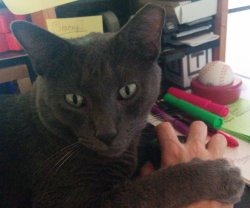
     

    Chat2Mr. Chat is a valued employee, part of the security and pest control division at The Wellness Club. He mostly works the night shift, ensuring that our facilities are well-patrolled and free of mice or other vermin. It must be a lonely job, and when we see Mr. Chat in the daytime he is quite vocal – which is how he came to be called Mr. Chat. Dr. Myatt named him Chat when she first met him and that tickled my funny bone since “Chat” is also the French word for cat.  Chat is a grey cat with a clipped ear, proving that he is a veteran of the Feral Cat Program. This feral cat appeared on Dr. Myatt’s balcony (yes, he climbed a tree to get there), and promptly adopted her. He has been a much-loved member of our family for the past two years. So imagine our concern when he stopped eating and turned yellow (jaundiced).

    This didn’t happen overnight. At first we noticed him losing weight but we attributed this to seasonal weight change. Working cats who partly hunt for a living and are not overfed often slim down a bit in the heat of summer. Then we noticed that he wasn’t eating and wasn’t hunting. He stopped eating entirely, and more telling, he stopped "chatting" to us. Finally we noticed that he was jaundiced. (Much easier to see in a human than a gray cat with yellow eyes!)  Jaundice indicates liver failure and it is a serious matter for man and beast.

    We aren’t veterinarians (nor have we ever played one on T.V.,) but we diagnosed Chat with feline hepatic lipidosis (feline fatty liver syndrome) which is a common liver disease in cats. Unlike humans who do quite well with intermittent fasting, several days of not eating in cats can cause this condition. Left unchecked it can be fatal.

    The disease has no known cause but it almost always begins when a cat loses appetite and stops eating, forcing the liver to convert body fat into usable energy. Humans do this easily; it is normal human physiology. Unlike human livers though the cat liver is not well-adapted for this task. Under fasting conditions, a cat’s liver soon becomes stressed and can even fail. In cats as in humans, liver failure can lead to what Dr. Myatt and I call a “negative wellness outcome.”

    We don’t know why Chat lost his appetite but we knew he was in serious trouble when we noticed the jaundice. He was going downhill quickly, barely moving from the same spot all day. Something had to be done to support his liver and it needed to be done now. Unfortunately there is nothing in conventional veterinary or human medicine that offers significant liver support. Lucky for him, Big Cat Momma (Dr. Myatt) is a specialist in herbal medicine and mentioned that the herb milk thistle is one of her most trusted herbs, performing miracles on the human liver. This benefit is well-documented and supported in the conventional medical literature. In addition, Dr. Myatt has had nearly thirty years of clinical experience with milk thistle. She knows and trusts what it can do.

    Here’s the "short course" on milk thistle from our website:

    Milk thistle (silybum marianum) has been the subject of hundreds of clinical trials, primarily exploring its role in liver disease but more recently looking at its effects on cancer, diabetes, and cardiovascular disease. It powerfully protects the liver from the effects of environmental toxins (such as carbon tetrachloride, acetaminophen, iron overload, mushroom poisoning). It is used in Emergency Room medicine in Europe for exposure to liver-toxic agents. Milk thistle is a powerful antioxidant, especially to the liver. It also stimulates liver cell regeneration. It has been proven useful for all types of liver disease, including alcoholic liver sclerosis, hepatitis, protection from environmental toxins, and protection from the liver-toxic effects of many drugs.

    Dr. Myatt said that in human liver failure, she would put a patient on a fairly high dose of milk thistle (1,000-1,500mg, 4 times per day) and expect to see fast and impressive results. In her words, she would tell a patient with a sick liver to "bathe it in milk thistle." Would it work for Chat the cat?

    Humans have different metabolisms than cats and dogs. A cat does not tolerate going without food for very long, yet fasting is OK and even healthy for humans.  We did some research to find out if milk thistle would be safe for a cat.  A quick search of the veterinary literature reassured us that milk thistle would be safe and beneficial. (Please always do such research before giving your pet something that would be good for humans. Some things that humans do well with can be toxic to our fur-babies).

    We started with a vigorous dose of milk thistle, one capsule 4 times per day. We used Dr. Myatt’s Milk Thistle Plus formula of course!

    In only 24 hours, Chat was noticeably better. He was moving more and looking perkier.  We were optimistic. We continued the same dose on day two and his  improvement continued. Today is the fourth day. Chat is eating, going up and down stairs and looks fairly close to normal. Cats typically aren’t happy swallowing capsules and while at first Chat didn’t have the energy to put up much fuss, he is now objecting much more strenuously to the four times per day dosing! That’s a good sign. The surest proof of his improvement is that he is talking — "chatting"— with us again.

    We hope and believe that Chat  will continue to improve and make a full recovery.  Time will tell, but for now it appears that the Milk Thistle snapped him out of liver failure and helped him regain his appetite. He now has a chance to recover from whatever stole his appetite in the first place.

    Are we telling you this so you will know how to treat a cat with liver failure?  Heck no, although if it is lifesaving for your cat one day, that’s great.

    We Want You To Know What Milk Thistle Can Do For You

    Your Liver – A Few Quick Facts

    What is it?
    Supporting almost every other organ in the body, this largest solid organ weighs about 3 pounds and is actually classified as a gland.

    What does it do?
    The liver carries out more than 500 functions! – Here are just a few:

    • One of its most well-known and important functions is the breakdown and removal of toxins from the body
    • Metabolizes many substances, including drugs and proteins
    • Breaks down carbohydrates and stores as glycogen
    • Manufactures glucose via neogenesis and works to regulate our blood sugar and manage our energy needs
    • Manufactures cholesterol, a substance vital to life
      Makes bile, an important digestive component
      Makes important blood clotting substances such as albumen, the most abundant protein in blood serum
    • Stores vitamins and minerals: Vitamins A, D, K, and B12, and iron and copper
    • Plays an important role in immunity
    • Synthesizes the hormone angiotensin, vital to maintaining our blood pressure

    Liver disease affects 30 million  Americans. An estimated three million alone have hepatitis C, just one of the many human liver diseases. Drug companies have responded with fantastically expensive treatments – upwards of $1000 per pill or $168,000 for a full course of treatment. Despite these crazy costs, this is still a cheaper option than liver transplant and subsequent life-long anti-rejection drugs.

    It isn’t just hepatitis C that damages the liver – environmental toxins and many drugs (such as  acetaminophen, aka Tylenol) can be damaging. Alcohol is one of the most common liver insults and though Milk Thistle has been touted as a “hangover cure,” it is really more beneficial for its ability to prevent the alcohol-induced damage in the first place.

    Many of our patients take Milk Thistle every day. Dr. Myatt swears by it and we take it ourselves.  It is one of those incredible herbs that doesn’t have a “too much” dose. Its safety profile is excellent. Recent experimental and clinical studies suggest that milk thistle also has anticancer, antidiabetic, and cardio-protective effects. These benefits have been published in conventional medical journals. (see the reference list at the end of this article). 

    If you want to show your liver some love — and you should love your live if you like being alive — then consider adding a high quality milk thistle formula to your daily supplement protocol. And for SURE take milk thistle if you ever have liver disease of any kind. It just might save your liver — or your life.


    References and further reading:

    WebMD, Nearly 3 Million Americans Living With Hepatitis C . http://www.webmd.com/hepatitis/news/20140303/nearly-3-million-americans-living-with-hepatitis-c?src=RSS_PUBLIC

    Tamayo C, Diamond S (2007). "Review of clinical trials evaluating safety and efficacy of milk thistle (Silybum marianum [L.] Gaertn.)" (PDF). Integrative Cancer Therapies. 6 (2): 146–57. doi:10.1177/1534735407301942. PMID 17548793. http://www.medmelon.gr/files4users/files/Tamayo%20and%20Diamond%20ICT%206%202.pdf  “Milk thistle extracts are known to be safe and well tolerated, and toxic or adverse effects observed in the reviewed clinical trials seem to be minimal.”

    Brandon-Warner E, Sugg JA, Schrum LW, McKillop IH. Silibinin inhibits ethanol metabolism and ethanol-dependent cell proliferation in an in vitro model of hepatocellular carcinoma. Cancer Lett. 2010 May 1;291(1):120-9. Epub 2009 Nov 8.

    Chen CH, Huang TS, Wong CH, Hong CL, Tsai YH, Liang CC, Lu FJ, Chang WH. Synergistic anti-cancer effect of baicalein and silymarin on human hepatoma HepG2 Cells. Food Chem Toxicol. 2009 Mar;47(3):638-44. Epub 2008 Dec 25.

    Cheung CW, Gibbons N, Johnson DW, Nicol DL. Silibinin–a promising new treatment for cancer. Anticancer Agents Med Chem. 2010 Mar;10(3):186-95.

    Comelli MC, Mengs U, Schneider C, Prosdocimi M. Toward the definition of the mechanism of action of silymarin: activities related to cellular protection from toxic damage induced by chemotherapy. Integr Cancer Ther. 2007 Jun;6(2):120-9.

    Momeny M, Khorramizadeh MR, Ghaffari SH, Yousefi M, Yekaninejad MS, Esmaeili R, Jahanshiri Z, Nooridaloii MR. Effects of silibinin on cell growth and invasive properties of a human hepatocellular carcinoma cell line, HepG-2, through inhibition of extracellular signal-regulated kinase 1/2 phosphorylation. Eur J Pharmacol. 2008 Sep 4;591(1-3):13-20. Epub 2008 Jun 7.

    Post-White J, Ladas EJ, Kelly KM. Advances in the use of milk thistle (Silybum marianum). Integr Cancer Ther. 2007 Jun;6(2):104-9.

    Ramakrishnan G, Lo Muzio L, Elinos-Báez CM, Jagan S, Augustine TA, Kamaraj S, Anandakumar P, Devaki T. Silymarin inhibited proliferation and induced apoptosis in hepatic cancer cells. Cell Prolif. 2009 Apr;42(2):229-40.

    Ramasamy K, Agarwal R. Multitargeted therapy of cancer by silymarin. Cancer Lett. 2008 Oct 8;269(2):352-62. Epub 2008 May 9. Cancer Lett. 2008 Oct 8;269(2):352-62. Epub 2008 May 9.

  • An Interlude Of The Arts: Cine Culture Of France

    The French are well-known for their film-making skills. They are able to express emotion, pathos, and the pain of a banal existence perhaps better than any other culture. Their films are particularly evocative and poignant, often drawing the viewer in and causing the very soul to experience the suffering and anguish of the actors. Even though we may not speak the language of the actors the French are gracious enough to give us simple dialogue and effective subtitles so that we may better understand the complexities and subtle nuances of the actors interactions and expressions.

    In the spirit of offering a small cultural gift from our friends from France, we present the following short film – a brief glimpse into the fine art that the French gift the world with. Although only a couple of minutes in length it displays a depth of emotion and is sure to leave you deeply moved.

    Enjoy:

  • Pets And Toxic Treats

    Onions, Chocolate, And Other People Treats Can Be Poison To Your Pet!


    By Nurse Mark


    We often are asked questions about pet health, and even though we are not trained in the veterinary arts we do our best to provide a well-researched answer. Sometimes conventional veterinary medicine, like conventional human medicine, runs out of drugs to throw at a problem and pet owners turn to us for alternative solutions.

    Friends recently asked Dr. Myatt what she would do for what appeared to be an allergic reaction in one of their dogs. Dr. Myatt suggested Grape Seed Extract which she has used successfully in our own animals. Our Border Collie used to suffer from occasional asthma attacks, and Dr. Myatt would give the dog a Grape Seed Extract capsule in a ground meat treat for very prompt relief of this. A neighbor had a cat who was put on steroids for allergies and was still miserable. We suggested Grape Seed Extract and Fish Oil sprinkled over the cat’s food. Sure enough, this provided what our neighbor described as “miraculous” relief returning the cat from misery to it’s former happy affectionate self.  We told our friends of this, and sent them home with a few capsules to try.

    Being conscientious folk, they thought about what they were going to give their dog and remembered something troubling: There have been reports of dogs becoming ill and even dying after eating grapes, raisins, and sultanas. They emailed us, quite worried, to ask about this – and rightly so.

    Dr. Myatt explained that she was not aware of anything in grapes that should be toxic to dogs – in fact we have fed our own 3 dogs occasional grape treats without any ill effects.

    Grape Seed Extract should be quite non-toxic as the active ingredient is proanthocyanidin or pycnogenol. In fact, Grape Seed Extract has more of the active ingredient proanthocyanidins (“OPC’s,” are also called pycnogenols) than pine bark extract which also has a long history of safety and successful use in humans.

    Still, I wanted to be sure that we were not recommending something that could harm our friends or anyone’s pet, so I did more research. Please remember – we are not trained in the veterinary arts, so this must not be taken as veterinary advice. What follows is what I have discovered as I searched to find whether there was any fact to the reported Dog Poisonings By Grapes:

    Interestingly, this appears to be a relatively recent problem. The first cases of grape poisonings in dogs were reported in 1998, and it wasn’t until 2001 that the American Society for the Prevention of Cruelty to Animals Animal Poison Control Center (APCC) in Urbana, Illinois had enough solid reports to issue a warning about this. Further, a thorough review of available literature, reports, internet bulletin boards and chat forums and other sources indicates that not all dogs seem to be affected, or perhaps that not all grapes cause the problem, or that perhaps it is dose-related in some way. There are any number of theories being postulated, from pesticides to GMO’s to bacteria and more.

    One theory that did seem to make sense is that some grapes and raisins may become infected with Ochratoxin A, a nephrotoxic compound produced by the black aspergillus species of mold. It is quite toxic to humans. While most people would not likely eat moldy grapes, many dogs might devour them, especially if they are “chow-hounds” like ours.

    The biggest risk for people is related to grape juice consumption. Small children are at highest risk since they occasionally consume comparatively large quantities of juice and raisins.

    The toxin is more likely to be found in grape products from southern locations. The mold that produces this toxin might not even be noticeable on a grape or raisin, and it may be that dogs are even more sensitive to this toxin than people. It might also be well to remember that even though mold can be washed off a food, the toxins produced by that mold usually cannot – a moldy item should be discarded.

    Our Grape Seed Extracts are pharmaceutical grade preparations, and do not contain Ochratoxin or any other contaminant!

    Along with all this research into grapes I came across a number of other things that we humans can eat but that are toxic to dogs, cats, and other pets.

    Some of these things include:

    Xylitol – a common and healthy sweetener for humans is very toxic to dogs and other animals.

    Chocolate which contains theobromine, a compound that is a cardiac stimulant and a diuretic. (May also be sweetened with xylitol!)

    When affected by an overdose of chocolate, a dog can become excited and hyperactive. Due to the diuretic effect, it may pass large volumes of urine and it will be unusually thirsty. Vomiting and diarrhea are also common. The effect of theobromine on the heart is the most dangerous effect. Theobromine will either increase the dog’s heart rate or may cause the heart to beat irregularly. Death is quite possible, especially with exercise.

    After their pet has eaten a large quantity of chocolate, many pet owners assume their pet is unaffected. However, the signs of sickness may not be seen for several hours, with death following within twenty-four hours.

    Cocoa powder and cooking chocolate are the most toxic forms. A 22 lb dog can be seriously affected if it eats a quarter of an 8 oz package of cocoa powder or a 4 oz block of cooking chocolate. These forms of chocolate contain up to ten times more theobromine than milk chocolate. Thus, a chocolate cake could be a real health risk for a small dog. Even licking a substantial part of the chocolate icing from a cake can make a dog unwell.

    Semi-sweet chocolate and dark chocolate are the next most dangerous forms, with milk chocolate being the least dangerous. A dog needs to eat more than an 8 oz block of milk chocolate to be affected, though obviously, the smaller the dog the less it needs to eat to become ill.

    Onions and garlic are other dangerous food ingredients that cause sickness in dogs, cats and also livestock. Onions and garlic contain the toxic ingredient thiosulphate. Onions are more of a danger.

    Pets affected by onion toxicity will develop hemolytic anemia, where the pet’s red blood cells become damaged.

    At first, pets affected by onion poisoning show gastroenteritis with vomiting and diarrhea. They will show no interest in food and will be dull and weak. The red pigment from the damaged blood cells appears in an affected animal’s urine and it becomes breathless. The breathlessness occurs because the red blood cells that carry oxygen through the body are reduced in number.

    The poisoning occurs a few days after the pet has eaten the onion. All forms of onion can be a problem including dehydrated onions, raw onions, cooked onions and table scraps containing cooked onions and/or garlic. Left over pizza, Chinese dishes and commercial baby food containing onion, sometimes fed as a supplement to young pets, can cause illness.

    Onion poisoning can occur with a single ingestion of large quantities or with repeated meals containing small amounts of onion. A single ingestion of 1 to 1 1/2 lbs of raw onion can be dangerous and a 22 pound dog, fed 6 ounces of onion for several days, is also likely to develop anemia. The condition improves once the dog is prevented from eating any further onion

    While garlic also contains the toxic ingredient thiosulphate, it seems that garlic is less toxic and large amounts would need to be eaten to cause illness.

    [As a side note, Dr. Myatt has successfully used garlic cloves in treating a large breed dog that was suffering from “Valley Fever” (Coccidioidomycosis – a respiratory disease common in Arizona) and was unresponsive to conventional antibiotics. Garlic has long been recognized as a potent natural antibiotic, and cleared this dog’s problems up very quickly.]

    Macadamia nuts are another concern. A recent paper written by Dr. Ross McKenzie, a Veterinary Pathologist, points to the danger of raw and roasted macadamia nuts for pets.

    The toxic compound is unknown but the affect of macadamia nuts is to cause locomotor difficulties. Dogs develop tremors of the skeletal muscles, and weakness or paralysis of the hindquarters. Affected dogs are often unable to stand and are distressed, usually panting. Some affected dogs have swollen limbs and show pain when the limbs are manipulated.

    Dogs have been affected by eating as few as six macadamia nuts, while others had eaten approximately forty nuts. Some dogs had also been given macadamia butter.

    Luckily, the muscle weakness, while painful, seems to be of short duration and all dogs recovered from the toxicity. All dogs were taken to their veterinarian.

    Other potential dangers include:

    • The kernels (pits) of plums, peaches and apricots, and apple seeds (these contain cyanogenic glycosides which can resulting in cyanide poisoning)
    • Potato peelings and green looking potatoes
    • Rhubarb leaves
    • Moldy/spoiled foods
    • Alcohol
    • Yeast dough
    • Coffee grounds, beans & tea (caffeine)
    • Hops (used in home brewing)
    • Tomato leaves & stems (green parts)
    • Broccoli (in large amounts)
    • Cigarettes, tobacco, cigars

    Avocados and dried beans are dangerous to pet birds. The skin and pit of avocados had been known to cause cardiac distress and eventual heart failure in pet bird species and uncooked beans contain a poison called hemaglutin which is very toxic to birds.

    This is not an all-inclusive list – there are likely other foods that we humans enjoy that are not so healthy for your pet. Perhaps the best advice is to limit human foods to rare treats if at all. After all, your beloved dog or cat did not evolve to eat what we eat – they are carnivores, and are designed to eat mainly raw meats and fats with occasional raw veggies. A more appropriate treat for Fido the pooch is a lump of raw beef or a knuckle bone and Fluffy the cat would be better with a raw chicken or turkey giblet…

    References and resources:

    Canine renal pathology associated with grape or raisin ingestion: 10 cases. J Vet Diagn Invest 17:223–231 (2005) http://www.jvdi.org/cgi/reprint/17/3/223.pdf

    ASPCA Animal Poison Control Center: http://www.aspca.org/site/PageServer?pagename=pro_apcc_poisonsafe

  • Xylitol and Dogs – A Toxic Combination

    There has been an e-mail circulating recently regarding xylitol and dogs – we have had a number of these emails forwarded to us by people who either know that we have dogs or who want us to warn others of this danger.

    There is no doubt that this is a real danger – we reported on this in a HealthBeat article over a year ago: For Your Pet: Is That A Treat Or A Poison?

    Here is the information that the ASPCA gave out in a press release regarding xylitol:

    Urbana, Ill., August 21, 2006—The ASPCA Animal Poison Control Center cautions animal owners that xylitol, a sweetener found in certain sugar-free chewing gums, candies, baked goods and other products can potentially cause serious and even life-threatening problems for pets.

    “Last year, we managed more than 170 cases involving xylitol-containing products,” says Dana Farbman, CVT and spokesperson for the Center.  “This is a significant increase from 2004, when we managed about 70.”  Barely halfway into 2006, the Center has already managed about 114 cases.  Why the increase?  “It’s difficult to say,” Farbman states.  “Xylitol products are relatively new to the United States marketplace, so one possibility may be an increase in availability.”

    According to Dr. Eric Dunayer, veterinarian and toxicologist for the ASPCA Animal Poison Control Center, dogs ingesting significant amounts of items sweetened with xylitol could develop a fairly sudden drop in blood sugar, resulting in depression, loss of coordination and seizures.  “These signs can develop quite rapidly, at times less than 30 minutes after ingestion of the product. Therefore, it is crucial that pet owners seek veterinary treatment immediately.”  Dr. Dunayer also stated that there appears to be a strong link between xylitol ingestions and the development of liver failure in dogs.

    While it was previously thought that only large concentrations of xylitol could result in problems, this appears to no longer be the case.  “We seem to be learning new information with each subsequent case we manage,” says Dr. Dunayer.  “Our concern used to be mainly with products that contain xylitol as one of the first ingredients.  However, we have begun to see problems developing from ingestions of products with lesser amounts of this sweetener.”  He also says that with smaller concentrations of xylitol, the onset of clinical signs could be delayed as much as 12 hours after ingestion.  “Therefore, it is important to keep in mind that even if your pet does not develop signs right away, it does not mean that problems won’t develop later on.”

    The ASPCA Animal Poison Control Center strongly urges pet owners to be especially diligent in keeping candy, gum or other foods containing xylitol out of the reach of pets. As with any potentially toxic substance, should accidental exposures occur, it is important to contact your local veterinarian or the ASPCA Animal Poison Control Center for immediate assistance.

  • Onions, Dogs, and Toxicity Questions – Pets Are People Too!

    We often get questions about animal health topics – proving that "pets are people too!"

    Julio wrote to ask:

    I read you article on onions and garlic and how it can affect dogs. What about onion juice, is this also bad for dogs? It is sometimes added to oven roasted turkey breast. I know Foster Farms has it in their Turkey Breast.  Thanks

    Here is our answer:

    Hi Julio,

    As We mentioned in the article you read, we are NOT veterinarians – we are pet owners (our "pets" own us actually…) We are medics for humans who also research animal health issues that concern us and apply to our pets – so our advice is not to be taken as veterinary advice!

    The amount of onion required to cause hemolytic anemia in dogs is reported to be fairly large – on the order of an entire onion, or a cup of chopped onion. The size of the dog would of course have a bearing on the dangerous amount, and it is worth noting that garlic is also known to have this same effect.

    As with most things that can be toxic though, there are amounts or doses that can be tolerated without ill effect – if that were not so, then simply stealing a bite of hot dog garnished with chopped onions would be fatal and there would be far fewer dogs in this world – and we know that dogs are wonderful opportunists, ever-willing to snack down on an unattended human treat like pizza or the aforementioned onion-garnished hot dog. Fortunately, most seem to tolerate a few bites (or more) of onion fairly well…

    I cannot say how much onion juice might be added to roasted turkey breast, though I understand that onion, like garlic is a commonly used flavor enhancer. I can’t imagine that the total amount of onion available in a few small bites of this meat would amount to much, and I would guess that unless a dog were extremely sensitive there should not be a big concern about a small treat or two. More than that and all bets are off though…

    For a real, healthy treat for your dog, I would suggest you not give people-food scraps, but go and visit your local butcher and ask for bones and cutting scraps – knuckle bones are great and have a number of health benefits for your dog – and he (she) will love you for it!

    Hope this helps…

    Cheers,
    Nurse Mark