Category: Heart and Circulation

  • The Many Health Benefits of Donating Blood

    By Dr. Dana Myatt

    An estimated 40,000 pints of donor blood are needed each day in the U.S. for patients with cancer, those undergoing orthopedic surgeries, marrow transplants and cardio vascular surgeries, people being treated for inherited blood disorders and those with acute injuries resulting in blood loss. There are other reasons why a blood transfusion might be needed but these are some of the “biggies” that occur every day. The need is always there.

    If you donate blood, you will be a hero and may help save someone’s life. But there’s more to it than you being a “good doobie.”
    Blood donors are rewarded with at least 3 personal health benefits. You read that right. Donating blood is healthy for the donor, not just the recipient.

    Here’s the scoop.

    There are at least three benefits of blood donation:

    1.) You get a Mini Health Screen. They check your blood pressure, pulse and temperature every time you donate. Getting a B.P. check every 3-4 months is a good thing and can alert you to any changes.

    2.) You get free lab testing. There are some tests that blood donation centers perform every time you donate. These are things that are good to know about and things that your doctor is unlikely to order unless there is an obvious reason.

    As part of the donation process, your blood will be screened for any or all of the following:

    On your first visit you will be tested for:

    I.) ABO Typing – provides determination of Blood type: A, B, O, or AB.
    II.) Rh factor Determination – indicates positive or negative Blood type.
    III.) Blood Group Antibodies – indicates unexpected antibodies that may be a result of prior transfusion, pregnancy or other factors.
    And at every visit you will be tested for these minimums:
    I.) Hepatitis B Surface Antigen – indicates a present infection (hepatitis) or carrier state of hepatitis B virus.
    II.) Antibody to Hepatitis B Core – additional test that detects a present or past infection with the hepatitis B virus.
    III.) Antibody to Hepatitis C Virus – indicates antibody to a virus that causes hepatitis C (responsible for non-A non-B hepatitis.) The mean incubation time is six to eight weeks.
    IV.) Antibody to HTLV – 1 and 2 – indicates the antibody to a virus that causes adult T-cell leukemia, among other things.
    V.) Antibody to HIV 1 and 2 – indicates an infection with Human Immune deficiency Virus. (virus that causes AIDs)
    VI.) Syphilis – screens for this venereal disease.
    VII) iron levels. (ferritin, or storage iron, is tested only in young adults)
    VIII.) Hemoglobin and hematocrit (this tells if you have enough red blood cells and iron)
    IX.) Nucleic acid testing (NAT) is a molecular technique for screening blood donations to reduce the risk of transfusion transmitted infections (TTIs) in the recipients, thus providing an additional layer of blood safety
    X.) total cholesterol

    Some donation centers also test for:

    I.) Alanine Aminotransferase (ALT) – identifies a liver enzyme that, when increased, may indicate undetectable forms of hepatitis.
    II.) West Nile Virus
    III.) Chagas disease
    IV.) Zika virus
    V.) Babesiosis – a tick-born virus

    Hepatitis B, Hep C and HTLV can be transmitted without sexual contact, so don’t believe that these tests are only useful for those who practice unprotected sex with multiple partners. In fact, Hep C is an epidemic among Baby Boomers, in part because of previous blood transfusions before donor blood testing was performed and also because older folks are just as likely to practice unprotected sex as younger folks.

    West Nile and Zika are mosquito-transmitted diseases and Chagas disease is transmitted by “kissing bugs.” These “bug transmitted” diseases can be mild or can cause symptoms and problems up to and including death.

    Discussing each of these diseases is beyond the scope of this article but Google them and you’ll see why they are worth knowing about.

    3.) You get to normalize / optimize your storage iron levels (ferritin). The donation center doesn’t check your serum ferritin levels (storage iron) unless you are a young adult. They do evaluate circulating iron in your blood to make sure you are not anemic on the day you donate. Giving blood decreases storage iron and that’s a good thing. Here’s why.

    Ferritin is an iron storage protein that is a measure of body iron stores. High levels (even “high normal” within the normal range) increases free radical production and is highly associated with increased risk of atherosclerosis and peripheral vascular disease.

    Serum ferritin is one of the strongest risk predictors of overall progression of atherosclerosis.(1-10). This is big and because of the evidence, I consider ferritin one of the four most important anti-aging/longevity tests that can be performed.

    The degree to which ferritin will be lowered varies among individuals, so I recommend periodic testing (say, 6 weeks after donation) to help gauge how often to donate.

    On the other hand, if you are anemic without a known reason (you’re not a female of menstrual age, for example), finding this out might save your life. Unseen (occult) bleeding from the colon, for example, can be a sign of polyps or cancer. Unexplained anemia needs to be followed up, and you’ll have benefit of this information more frequently when you are a 3-4 times per year blood donor.

    Wouldn’t it be great to know that you were helping yourself and also helping someone else?

    Bottom line: “Hero points” aside, most people should be donating blood 2-4 times per year for health reasons. You can help save a life while benefitting your own health. There are very few medical “treatments” that offer such a “win-win”!

    Ask your doctor if you are a candidate for donating blood (most people are), then call one of the local blood drives and get yourself signed up. Your “future self” will thank you.

    References:

    1. Alissa EM, Ahmed WH, Al-Ama N, Ferns GA. Relationship between indices of iron status and coronary risk factors including diabetes and the metabolic syndrome in Saudi subjects without overt coronary disease. J Trace Elem Med Biol. 2007;21(4):242-54. Epub 2007 Aug 7

    2. Ahluwalia N, Genoux A, Ferrieres J, Perret B, Carayol M, Drouet L, Ruidavets JB. Iron status is associated with carotid atherosclerotic plaques in middle-aged adults. J Nutr. 2010 Apr;140(4):812-6. Epub 2010 Feb 24.

    3. de Godoy MF, Takakura IT, Machado RD, Grassi LV, Nogueira PR. Serum ferritin and obstructive coronary artery disease: angiographic correlation. Arq Bras Cardiol. 2007 Apr;88(4):430-3.

    4. Depalma RG, Hayes VW, Chow BK, Shamayeva G, May PE, Zacharski LR. Ferritin levels, inflammatory biomarkers, and mortality in peripheral arterial disease: a substudy of the Iron (Fe) and Atherosclerosis Study (FeAST) Trial. J Vasc Surg. 2010 Jun;51(6):1498-503. Epub 2010 Mar 20

    5. Kiechl S, Willeit J, Egger G, Poewe W, Oberhollenzer F.Body iron stores and the risk of carotid atherosclerosis: prospective results from the Bruneck study.Circulation. 1997 Nov 18;96(10):3300-7.

    6. Lee KR, Sweeney G, Kim WY, Kim KK. Serum ferritin is linked with aortic stiffness in apparently healthy Korean women. Crit Pathw Cardiol. 2010 Sep;9(3):160-3

    7. Mainous AG 3rd, Diaz VA. Relation of serum ferritin level to cardiovascular fitness among young men. Am J Cardiol. 2009 Jan 1;103(1):115-8. Epub 2008 Oct 17.

    8. Menke A, Fernández-Real JM, Muntner P, Guallar E. The association of biomarkers of iron status with peripheral arterial disease in US adults. BMC Cardiovasc Disord. 2009 Aug 3;9:34.

    9. Valenti L, Swinkels DW, Burdick L, Dongiovanni P, Tjalsma H, Motta BM, Bertelli C, Fatta E, Bignamini D, Rametta R, Fargion S, Fracanzani AL. Serum ferritin levels are associated with vascular damage in patients with nonalcoholic fatty liver disease. Nutr Metab Cardiovasc Dis. 2011 Aug;21(8):568-75. Epub 2010 Apr 13.

    10. Zacharski LR, Shamayeva G, Chow BK. Effect of controlled reduction of body iron stores on clinical outcomes in peripheral arterial disease. Am Heart J. 2011 Nov;162(5):949-957.
     

  • 9 Easy Heart Health Hacks For February

    By Nurse Mark

    It’s Heart Health month again, and a healthy heart and circulatory system, all those miles of veins and arteries, doesn’t have to be difficult. Let’s look at some simple things you can do to improve and ensure your best possible cardiovascular health.

    Remember a time when you had absolutely no worries about your heart?

    As a younger person in your 20′s or 30′s you just knew that heart disease was not an issue for you. Your life wasn’t focused around living close to a hospital, avoiding physical activity out of fear of chest pain or worse, or even thinking at all about your heart, which just ticked along perfectly from day to day, week to week, and year to year.

    Would you like to return to that liberated, confident feeling, knowing that your heart is healthy, and enjoying the physical and emotional freedom that dependable, healthy heart function brings?

    Why not give yourself the gift of healthy heart confidence by following these simple, proven, protective measures that can lower your risk of heart disease to that of a 20-year-old? Your heart is a very forgiving muscle and can be rejuvenated. Here’s how:

    1. Stop smoking. Most of our readers already know that smoking is one of the single biggest causes of heart disease. But if you do still smoke and you need a good reason to quit, dramatically lowering your risk of heart disease should be that reason!
    2. Eat a heart-healthy diet. High carbohydrate diets lead to overweight and high blood sugar levels, and diabetes. As you continue to read this list, you’ll see that these factors are each independent risk factors for heart disease. A VLC diet (Very Low Carbohydrate diet), high in Omega-3 Essential Fatty Acids, is the fastest, surest way to lower insulin and blood sugar levels, lose weight, decrease dangerous inflammation and slash heart disease risk at least four-fold. Diets higher in “good fats” (NOT low-fat diets!) and low in carbs have proven to be the heart-healthiest. Carbs means all starches, grains, pastas, and so on, even the ones promoted as “healthy.” And sugars – there are NO “healthy sugars” – surely you have read our article “But I Only Use Organic Natural Sugars!”
    3. Get optimal doses of heart-healthy nutrients. Many nutrients essential to healthy heart function are often missing in the Standard American Diet (S.A.D.). Maxi Multi is the best Optimal Dose Daily Multiple Vitamin available and will provide proper amounts of vitamins minerals, and trace minerals to keep you and your heart healthy. Maxi Multi includes optimal daily amounts of the following heart-health essentials:
      • B complex vitamins, needed for normal nerve function and homocysteine levels.
      • magnesium, the relaxing, anti-arrhythmic mineral that is absolutely necessary for normal heart function. Unfortunately, magnesium is one of the most common nutrient deficiencies in the S.A.D. diet.
      • antioxidant nutrients (especially vitamins C, E, and beta-carotene). Studies have shown that people with higher blood levels of antioxidants have a lower incidence of heart disease. Among people who have a heart attack, higher levels of antioxidants decrease free radical formation and reduce heart damage.

      Other Heart-Health supplements include:

      • Omega-3 fatty acids (fish oils) are so well-known to decrease inflammation and heart arrhythmias that the FDA now allows Heart Health label claims for fish oil. Allopathic cardiologists now also have an incredibly expensive prescription fish oil for their heart patients – many of whom would have less stress on their hearts if they bought over-the-counter fish oil for $20 instead of prescription for $200!
      • soluble fiber helps keep blood fats, including cholesterol, at a happy level, although high cholesterol is not the big heart disease risk factor it has been portrayed to be by Big Pharma.
      • Berberine is emerging as a highly valuable herb for heart health – we have patients who tell us it has quelled long-standing heart arrhythmias (palpitations) that have resisted every other drug tried by their conventional doctors. Learn more about this amazing herb here: Berberine: The “Swiss Army Knife” Of Supplements
      • Vitamin K: A large European study, The Rotterdam Study, has shown that even modest amounts of vitamin K2 fight heart disease by controlling calcium-regulating proteins in vascular tissue, which helps to keep calcium out of the arteries(and in the bones where it belongs) and thus prevents the formation of dangerous calcified plaques.
      • CoQ10 is beneficial for nearly every type of Heart Disease (angina, arrhythmia, atherosclerosis, cardiomyopathy, heart failure, congestive heart failure, and myocardial infarction and we consider it an essential part of any heart-health maintenance or improvement program. Are you taking statin drugs for cholesterol? Then you must take C0Q10 as statin drugs seriously deplete the body’s natural CoQ10!
    4. Increase physical activity. If you don’t use it, you’ll lose it. Make your heart work harder than just getting up from your easy chair and going to the refrigerator once in a while. This doesn’t mean you need to train for a marathon. As little as ten minutes of brisk walking per day, especially if this is more than you currently do, will improve heart function. New to exercising? Start easy, work up.
    5. Lower body-wide inflammation. Subtle inflammation, as measured by a hs-CRP test (“highly sensitive C-Reactive Protein”, a simple blood test), is a more sensitive measure of heart disease risk than cholesterol or other elevated blood fats. This type of inflammation, which is often so minor that you may not feel it but which irritates the blood vessel lining and sets the atherosclerotic process in motion, can be corrected by simple diet changes, nutritional supplements and anti-inflammatory herbs. Decreasing inflammation also lowers your risk of cancer, arthritis, Alzheimer’s and other “age related” diseases. hs-CRP and a number of other important cardiovascular health markers can be tested with Dr. Myatt’s OptiPlus test panel.
    6. Lower your blood pressure naturally. There’s a lot of evidence that higher blood pressures (especially systolic B.P.’s consistently over 140) are associated with higher risk of heart disease. But, there are a number of big, long-range studies which show NO BENEFIT to lowering B.P. with drugs. People with “normal” blood pressures who were only “normal” because of medications are still at significantly higher risk of heart disease. As naturopathic as this conclusion sounds, these studies point to the fact that lowering blood pressure naturally, by correcting the cause of the elevation, is life-saving where chemical control is not.
    7. Curb depression, anxiety and stress. The emotional factor doesn’t get much “press” or discussion in the cardiologists office, but there are numerous studies showing that negative emotional states increase subtle inflammation. Possibly because depression and stress (or more accurately described as our reaction to stress) increase inflammation, these emotional states are associated with higher risk of heart disease and poorer prognosis in people with already-existing heart disease or who are recovering from heart surgery. If you suffer from depression, be sure to get help. And remember that depression isn’t caused by a Prozac deficiency!
    8. Lower high blood sugar levels. High blood sugar levels, high insulin levels or outright type II diabetes are major risk factors for heart disease. The sad part of this connection is that type II diabetes is almost always correctable through diet alone, usually in under three months. Even more sadly, I find that many diabetics prefer to live with the risk (and worry about their risks), rather than make a few healthy diet changes that would erase this major danger. Go figure.
    9. Achieve and maintain a normal weight. Overweight increases subtle inflammation, which as you should know by now (if you’ve been paying attention!) is an important risk factor for not only heart disease but also cancer, arthritis, Alzheimer’s and more. When an overweight person loses weight, their hs-CRP (that inflammatory marker) also comes down, corresponding to a lower heart disease risk. Of course, the low-carb, high Omega-3 fat diet that lowers blood sugar and corrects diabetes also leads to weight loss, making it easy to correct several problems at once through diet changes alone.

    These same measures that dramatically lower your risk of heart disease also increase natural immunity, slash your risk of cancer, diabetes, arthritis, depression, Alzheimer’s and senile dementia and a host of other diseases that we fall prey to with age. Even at advanced age or stages of disease, much improvement and protection is possible (in other words, you can reclaim a lot of healthy ground), by turning a few habits around in a healthier direction.

    Are you worried about your heart and want to know more about how you can live better and longer with a healthy heart? Consider starting your journey to heart-happiness with a Brief Telephone Consultation with Dr. Myatt!


    References:

    Lydia A. Bazzano, MD, PhD, MPH et.al. Effects of Low-Carbohydrate and Low-Fat Diets: A Randomized Trial, 2 September 2014
    http://annals.org/aim/article-abstract/1900694/effects-low-carbohydrate-low-fat-diets-randomized-trial

    Geleijnse JM, Vermeer C, Grobbee DE, et al. Dietary intake of menaquinone is associated with a reduced risk of coronary heart disease: the Rotterdam Study. J Nutr. 2004 Nov;134(11):3100-5.
    https://academic.oup.com/jn/article/134/11/3100/4688389

    Additional references are found on linked pages.

  • Have a Healthy Heart: 9 Simple Steps

    It’s Heart Health month again, and we’ll be featuring a few Heart-Health articles this month. Let’s start with some simple things you can do to improve and ensure your best possible heart-health.

    Remember a time when you had absolutely no worries about your heart? As a younger person in your 20′s or 30′s you just knew that heart disease was not an issue. Your life wasn’t focused around living close to a hospital, avoiding physical activity out of fear of chest pain or worse, or even thinking at all about your heart, which just ticked along perfectly from day to day, week to week, and year to year.

    Would you like to return to that liberated, confident feeling, knowing that your heart is healthy, and enjoying the physical and emotional freedom that dependable, healthy heart function brings?

    Why not give yourself the gift of healthy heart confidence by following these simple, proven, protective measures that can lower your risk of heart disease to that of a 20-year-old? Your heart is a very forgiving muscle and can be rejuvenated. Here’s how:

    1. Stop smoking. Smoking is one of the single biggest causes of heart disease. If you need a good reason to quit, dramatically lowering your risk of heart disease should be that reason!
    2. Eat a heart-healthy diet. High carbohydrate diets lead to overweight and high blood sugar levels, and diabetes. As you continue to read this list, you’ll see that these factors are each independent risk factors for heart disease. A VLC diet (Very Low Carbohydrate diet), high in Omega-3 Essential Fatty Acids, is the fastest, surest way to lower insulin and blood sugar levels, lose weight, decrease dangerous inflammation and slash heart disease risk at least four-fold. Diets higher in “good fats” (NOT low-fat diets!) and low in carbs have proven to be the heart-healthiest.
    3. Get optimal doses of heart-healthy nutrients. Many nutrients essential to healthy heart function are often missing in the Standard American Diet (S.A.D.). They include:
      • B complex vitamins, needed for normal nerve function and homocysteine levels.
      • magnesium, the relaxing, anti-arrhythmic mineral that is absolutely necessary for normal heart function. Unfortunately, magnesium is one of the most common nutrient deficiencies in the S.A.D. diet.
      • antioxidant nutrients (especially vitamins C, E, and beta-carotene). Studies have shown that people with higher blood levels of antioxidants have a lower incidence of heart disease. Among people who have a heart attack, higher levels of antioxidants decrease free radical formation and reduce heart damage.
      • chromium helps stabilize and lower blood sugar levels, thereby lowering sugar-associated heart disease risk.
      • Omega-3 fatty acids (fish oils) are so well-known to decrease inflammation and heart arrhythmias that the FDA now allows Heart Health label claims for fish oil. We now also have an incredibly expensive prescription fish oil for heart patients – many of whom would have less stress on their hearts if they bought over-the-counter fish oil for $20 instead of prescription for $200!
      • soluble fiber helps keep blood fats, including cholesterol, at a happy level, although high cholesterol is not the big heart disease risk factor it has been portrayed to be by Big Pharma.
      • Maxi Multi is the best Optimal Dose Daily Multiple Vitamin available and will provide proper amounts of vitamins minerals, and trace minerals to keep you and your heart healthy.
      • Berberine is emerging as a highly valuable herb for heart health – we have patients who tell us it has quelled long-standing heart arrhythmias (palpitations) that have resisted every other drug tried by their conventional doctors. Learn more about this amazing herb here: Berberine: The “Swiss Army Knife” Of Supplements
    4. Increase physical activity. If you don’t use it, you’ll lose it. Make your heart work harder than just getting up from your easy chair and going to the refrigerator once in a while. This doesn’t mean you need to train for a marathon. As little as ten minutes of brisk walking per day, especially if this is more than you currently do, will improve heart function. New to exercising? Start easy, work up.
    5. Lower body-wide inflammation. Subtle inflammation, as measured by a hs-CRP test (“highly sensitive C-Reactive Protein”, a simple blood test), is a more sensitive measure of heart disease risk than cholesterol or other elevated blood fats. This type of inflammation, which is often so minor that you may not feel it but which irritates the blood vessel lining and sets the atherosclerotic process in motion, can be corrected by simple diet changes, nutritional supplements and anti-inflammatory herbs. Decreasing inflammation also lowers your risk of cancer, arthritis, Alzheimer’s and other “age related” diseases.
    6. Lower your blood pressure naturally. There’s a lot of evidence that higher blood pressures (especially systolic B.P.’s consistently over 140) are associated with higher risk of heart disease. But, there are a number of big, long-range studies which show NO BENEFIT to lowering B.P. with drugs. People with “normal” blood pressures who were only “normal” because of medications are still at significantly higher risk of heart disease. As naturopathic as this conclusion sounds, these studies point to the fact that lowering blood pressure naturally, by correcting the cause of the elevation, is life-saving where chemical control is not.
    7. Curb depression, anxiety and stress. The emotional factor doesn’t get much “press” or discussion in the cardiologists office, but there are numerous studies showing that negative emotional states increase subtle inflammation. Possibly because depression and stress (or more accurately described as our reaction to stress) increase inflammation, these emotional states are associated with higher risk of heart disease and poorer prognosis in people with already-existing heart disease or who are recovering from heart surgery. If you suffer from depression, be sure to get help. And remember that depression isn’t caused by a Prozac deficiency!
    8. Lower high blood sugar levels. High blood sugar levels, high insulin levels or outright type II diabetes are major risk factors for heart disease. The sad part of this connection is that type II diabetes is completely curable through diet alone, usually in under three months. Even more sadly, I find that many diabetics prefer to live with the risk (and worry about their risks), rather than make a few healthy diet changes that would erase this major danger. Go figure.
    9. Achieve and maintain a normal weight. Overweight increases subtle inflammation, which as you should know by now (if you’ve been paying attention!) is an important risk factor for not only heart disease but also cancer, arthritis, Alzheimer’s and more. When an overweight person loses weight, their hs-CRP (inflammatory marker) also comes down, corresponding to a lower heart disease risk. Of course, the low-carb, high Omega-3 fat diet that lowers blood sugar and corrects diabetes also leads to weight loss, making it easy to correct several problems at once through diet changes alone.

    These same measures that dramatically lower your risk of heart disease also increase natural immunity, slash your risk of cancer, diabetes, arthritis, depression, Alzheimer’s and senile dementia and a host of other diseases that we fall prey to with age. Even at advanced age or stages of disease, much improvement and protection is possible (in other words, you can reclaim a lot of healthy ground), by turning a few habits around in a healthier direction.

    Are you worried about your heart and want to know more about how you can live better and longer with a healthy heart? Consider starting your journey to heart-happiness with a Brief Telephone Consultation with Dr. Myatt!

  • That Fried Stuff’ll Kill You! Right?

    By Nurse Mark


    Everybody knows that all those fried foods are bad for you, right?

    Well, not so fast… It turns out that not all fried foods are created equal. Some fried foods are bad for you – really, really bad while others may even be good for you. It turns out that it’s all about how and what they were fried in.

    We have talked many times before about the differences in oils, and especially in cooking oils. Polyunsaturated Fatty Acids (PUFAs) are the real culprit here, despite the incessant preaching of the powerful Edible Oils industry.

    You see, beginning back in the ‘60’s and ‘70’s, we have been bombarded with slick ads telling us how wonderful and healthy canola oil, corn oil, cottonseed oil and other similar PUFAs were for us. Living longer, having a healthy heart, growing smarter children, smelling better in your kitchen, leading you to spiritual enlightenment, and so on.

    Your mom and mine knew no better – they saw the ads on TV and they believed them – after all, it was the same TV that brought the truth by Mike Wallace and Walter Cronkite, right? So began the near-religious belief that Crisco is better than lard, and that margarine is better than butter, and that corn oil or canola oil is so much better than coconut or palm kernel oil for deep frying…

    Well, what the edible oil industry failed to mention was that their PUFAs are fragile – even just processing them can damage them, turning them rancid; turning them into trans fatty acids or “trans-fats.”

    They also forgot to mention that even if these wonder-oils manage to make it to you relatively undamaged, heating them, as you might when you fry with them, promptly alters their structure – oxidizing them, creating free radicals, toxic lipid peroxides, carcinogens and mutagensOxygen and heat cause PUFA oils to form much more of these toxins than what’s found in saturated or monounsaturated oils.

    Finally, in all their preachy advertising, these big Edible Oil manufacturers conveniently forget to tell us that besides the rancidity caused by heat and oxygen,  PUFAs have another problem: They are inflammatory, because of their high Omega 6 content. That “Heart-Healthy” butter-like spread you just slathered on your whole wheat toast may actually be contributing to the subtle body-wide inflammation that is contributing to the atherosclerosis that your doctor wants to give you drugs for!

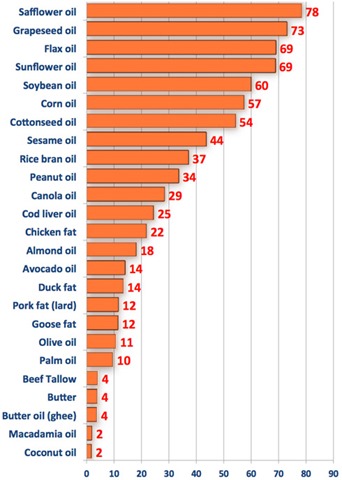
    Here’s a look at the PUFA content of commonly used cooking oils: (Source: USDA Nutrition Database.)

    Omega-6-and-Omega-3-Polyunsaturated-fatty-acid-content-of-food-oils


    Looking at this list it is easy to see that the much-reviled “saturated fats’ like butter, beef tallow, and coconut oil contain very little of the potentially toxic PUFAs. Of course they do – they are saturated fats. Because they are “saturated” they are highly heat stable, and not easily damaged or turned rancid.

    So, where is all this leading to?

    To the conclusion that perhaps deep fried foods need not be unhealthy – if they are cooked carefully, using oils low in PUFAs.

    Unfortunately, research published in 2010 shows that the most common commercially used deep frying oil is not healthy coconut, or even the less-expensive but still healthy palm oil, it is corn oil – often blended with soybean or safflower oil.

    Worse, restaurants reuse their oil over and over and over – reheating it each day anew, and occasionally filtering out the chunks – but the toxic trans fats cannot be “filtered out” and they just keep building up until the oil becomes so damaged and rancid that it begins to affect food flavors and the restaurants must reluctantly throw it away, fit only for use as “Bio-Diesel” fuel.

    Readers, you can do better – much better.

    You have the choice when you cook (and yes, frying and deep-frying ARE healthy cooking choices) of using a health-safe cooking oil such as coconut oil or butter or beef tallow.  Want to know the secret to the tastiest French fries you have ever encountered? Beef tallow – a chef’s “secret”!

    Even if you insist on using corn oil, using it once at relatively low heat and then discarding it can be safe.

    Well then, let’s suppose for a moment that I have persuaded you that deep-fried is not necessarily synonymous with poison (if done right) yet you are still worried by all those warnings about the artery-clogging effects of evil saturated fats. (If you really do believe this, please take a few minutes to read our article “Saturated Fats – Another Big Fat Lie”)

    Wouldn’t it be great if there were a pill that could mitigate all the ill effects of saturated fats and make it OK to indulge – maybe even good to indulge?

    Well, it turns out that such a pill might not be entirely fantasy.

    Scientists are researching a substance called alphacyclodextrin, a soluble fiber derived from corn. This novel fiber has shown promise for its ability to preferentially adsorb and bind up both saturated and polyunsaturated fats, while leaving valuable Omega 3 and Omega 6 fatty acids relatively unaffected.

    Results of recent research are very positive, with researchers concluding that the substance:

    “…has beneficial effects on weight management in obese individuals with type 2 diabetes, and that it preferentially reduces blood levels of saturated and trans fats…”

    And

    “These results suggest that α-CD [alphacyclodextrin] exerts its beneficial health effects on body weight and blood lipid profile in healthy non-obese individuals, as previously reported in obese individuals with type 2 diabetes.”

    Does this sound too good to be true? Possibly – which is why Dr. Myatt has not chosen to make it available to you just yet. She is researching it intensively though, and as soon as she is convinced of the safety and efficacy of the substance, and of her ability to offer you a pure, potent, top-quality product she will consider making it available.

    So, stay tuned!

    References

    learn more about coconut oil: https://www.drmyattswellnessclub.com/CoconutOil.htm

    Deep Fry Oils in commercial use; Jahren, A. Proceedings of the National Academy of Sciences, published online Jan. 18, 2010. http://www.pnas.org/content/107/5/2099.full

    Alphacyclodextrin research: Comerford KB, The beneficial effects of α-cyclodextrin on blood lipids and weight loss in healthy humans. Obesity, 2011 Jun;19(6):1200-4. doi: 10.1038/oby.2010.280. Epub 2010 Dec 2. http://www.ncbi.nlm.nih.gov/pubmed/21127475

  • Nutrient Deficiencies You Can’t Fix with Food

    By Dr. Myatt


    Getting a full complement of vitamins, minerals and trace minerals — all the "essential" nutrients — from food alone is tough for a number of reasons.

    First, many people don’t consistently eat a well-balanced, highly nutritious diet. "On again, off again" healthy eating does not provide the same caliber and quantity of nutrients as a true daily fare of good foods. See our recent article about how small choices add up to have big effects.

    Secondly, many foods today are not what they were even ten or twenty years ago. Modern agricultural practices have resulted in vegetables with lower nutrient values and higher levels of contaminants. That, plus our daily exposure to environmental pollutants increases the requirements for certain nutrients especially antioxidants.

    So, a good multiple vitamin/mineral supplement is highly recommended. (Remember, a "One-a-Day" multiple is "pixie dust," with not enough of anything to help except to prevent severe deficiency disease. We wrote about this in last week’s HealthBeat News.

    Even with a decent diet and a good quality multiple supplement program, there are still four nutrients that almost no one gets enough of without additional supplementation.

    The Four Missing Nutrients That Can Scuttle Your Good Health

    There are four nutrients that numerous studies show we do not get enough of from diet. Even if you take a great "multiple," you still aren’t getting enough of these four critical nutrients. Here they are; why you need them, and how much to take.

    VITAMIN K1 and K2: Normal Blood Clotting, Healthy Bones and So Much More

    There are more than a dozen subtypes of Vitamin K; one of the most important of the subtypes for good health is known as menaquinone or vitamin K-2.

    Vitamin K-1 is found in plant foods primarily vegetables. Vitamin K-2 is found in meat, eggs and dairy.

    Vitamin K2 is a fat-soluble micronutrient. Together, K2 and K1, known as phylloquinone, are necessary for normal blood coagulation. A deficiency of either K1 or K2 can lead to uncontrolled bleeding. However, K2 also has other significant health benefits beyond the coagulation process.

    New research has found that vitamin K2 participates in many functions beyond the clotting process including normal bone formation, cancer prevention, healthy brain function and prevention of calcification of arteries. Vitamin K2 has so many additional functions not associated with vitamin K1 that some researchers recommend that K1 and K2 should be considered two different vitamins.

    Vitamin K-2 helps put calcium into bone — thereby strengthening bone — while simultaneously keeping it from building up in the arteries. It does this by activating osteocalcin, a protein that binds calcium to bone. Without osteocalcin, calcium doesn’t stay in bones and instead deposits in arteries where it increases the risk of a heart attack or stroke.

    In a large epidemiological study from the Netherlands, it was found that people with the lowest blood levels of vitamin K-2 had a 57% greater risk of dying from heart disease than those with the highest levels. People with the highest vitamin K2 levels were 52 percent less likely to develop severe calcification of the arteries, 41 percent less likely to develop heart disease, and 57 percent less likely to die from it heart disease.(1) The intake of vitamin K1 did not affect cardiovascular disease outcomes – Vitamin K1 is most important for normal blood clotting where Vitamin K2 is important for preventing osteoporosis and coronary heart disease.

    How to Take: I personally take and recommend Life Extension’s Super K, one soft gel capsule per day taken with a meal that contains fat. Remember that vitamin K-2 is fat soluble.

    Caution: If you take warfarin (Coumadin), consult with your doctor before taking vitamin K-2 because it can alter the drug’s effectiveness. Vitamin K-2 is safe to take with other more modern blood thinners.

    COENZYME Q10 – A Source Of Cellular Energy

    Coenzyme Q10 (ubiquinone) is needed for the production of adenosine triphosphate (ATP), the main "energy currency" of the body. Although produced internally, CoQ10 levels tend to drop with age. Other causes of lowered CoQ10 levels include statin drugs, exposure to air pollutants and chronic disease states. Decreased levels of CoQ10 are linked to heart disease, Parkinson’s disease, type 2 diabetes, fibromyalgia and infertility to name just a few.

    Although CoQ10 is found in such foods such as broccoli, nuts, beef and fatty fish, it is present only in small amounts.

    How to Take: I personally take 100-mg of CoQ10 daily. Higher doses are recommended if you take a statin drug, have a chronic disease such as heart disease. Please see our page on CoQ10 for a full list of health concerns associated with CoQ10 deficiency.

    As to the "ubiquinone" versus "ubiquinol" controversy, we’ve interviewed several leading CoQ10 researchers and written about this question here: CoQ10 – Fact, Fiction, Hype, And Hocus-Pocus.

    OMEGA-3 Essential Fatty Acids (Fish OIl) – The Oil That Reduces Inflammation

    Omega-3 essential fatty acids—found in fatty fish, such as salmon, mackerel and tuna, and in oil-rich plant foods, such as walnuts and flaxseeds—are anti-inflammatory. Chronic, low-grade inflammation is believed to contribute to many chronic diseases including cancer, heart disease, congestive heart failure, type 2 diabetes, obesity, arthritis, autoimmune disease, and Alzheimer’s.

    In contrast, omega-6 essential fatty acids—found in most vegetable oils (corn, cottonseed, sunflower, canola, peanut oil) and therefore in most processed foods which contain these oils—are pro-inflammatory. The Standard American Diet (S.A.D.) is quite high in omega-6 and typically deficient in omega–3 fatty acids.

    NOTE: Although plant products such as walnuts and flax seed contain a "plant version" of Omega-3, this is not the same as fish oil. This is because a conversion is required. Assuming normal conversion, a dose comparison would be 14 grams of flax oil = 1 gram of fish oil.

    How to Take: Based on current best scientific evidence, a dose of 750-1500mg per day seems prudent. Take this with a fatty meal. Also note that this dose is the amount of EPA and DHA in the capsule, NOT just the total amount of oil (which will be higher) in the capsule.

    MAGNESIUM The Calming Mineral

    According to the U.S. government, eight of 10 Americans are deficient in magnesium. This is an extreme problem because magnesium is part of over 300 enzymes in the human body. Magnesium deficiency is associated with fatigue, high blood pressure, fibromyalgia, asthma, anxiety, stroke, diabetes, glaucoma, hearing loss, kidney stones, gallbladder stones, migraine, muscle cramps, pregnancy complications (toxemia, premature delivery), premenstrual syndrome, heart disease (arrhythmia, CHF, angina, acute MI), osteoporosis, cancer and insomnia. Whew!

    How to Take: Women take 400 mg to 500 mg daily and men 500 mg to 600 mg daily. NOTE: Maxi Multi contains 500mg of magnesium when taken at the recommended dose of 9 caps per day. Or, supplement with additional magnesium.

    Also, magnesium oil is a fast-acting way to get magnesium. This is especially good for muscle cramps.

    References

    1.) Geleijnse JM1, Vermeer C, Grobbee DE, Schurgers LJ, Knapen MH, van der Meer IM, Hofman A, Witteman JC. Dietary Intake of Menaquinone Is Associated with a Reduced Risk of Coronary Heart Disease: The Rotterdam Study. J Nutr. 2004 Nov;134(11):3100-5.

    See linked product pages for additional references and related information.