Category: Family Health

  • Easy Health Resolutions Worth Keeping

    By Dr. Dana Myatt


    It’s that time of year again – when we make all sorts of “good resolutions,” promising ourselves to do better by our health. Often we set noble but unrealistic goals and then end up not achieving anything more than feeling disappointment in ourselves.

    With that reality in mind here are some easy, achievable health resolutions for you to consider this year.

    1.) Sleep. Get enough; which means 7 to 8 hours for most folks. Studies show that sleep performs many functions including allowing the brain to detoxify, and creating melatonin (a potent antioxidant for the brain) which also serves to regulate the release of many other important hormones, from cortisol to the sex hormones.

    Easy start: if you are not getting at least 7 hours of sleep per night, resolve to go to bed just 15 minutes earlier than your regular bedtime, but do this consistently. After a week or two, turn back the clock a bit more. Continue until you have a regular bedtime that allows you to get your minimum 7 hours or whatever allows you to feel your best during the day time. Oh, and that time earlier in bed? It doesn’t count if you just use it to watch late-night TV… Lights Out kids!

    2.) Exercise. Going from couch to refrigerator doesn’t count. “Running around” as required by work doesn’t provide as much exercise as you might think unless you’re a ditch-digger. Being on your feet all day doesn’t really count as exercise – it just gives you tired, sore feet.

    Easy start: Resolve to do something (walk, jog, bike, strength training with simple weight, body weight exercise (push-ups, squats, etc.) for just 15 minutes per day. Do this consistently. After a few weeks, you’ll notice improvement and will probably decide to add a second 15 minutes per day just because it makes you feel so good.

    3.) Breathe. Silly, right? Of course you already breathe. I mean deep breathe. Your belly should move outward as air enters your lungs. Then exhale completely. Repeat this several times.

    Easy start: take 3 slow deep breaths several times during the day, especially when you are feeling stressed or anxious. Deep breathing changes the acid-alkaline balance of the body in a favorable direction (more alkaline) and stimulates the parasympathetic nervous system for a calming effect.

    4.) Get some sun (or take some vitamin D): To get the full story, visit our medical white paper on Vitamin D here: Vitamin D deficiencies are common, even in the Southwestern US, especially during winter. Low vitamin D levels are associated with increases in cognitive decline, depression, diabetes, cardiovascular disease and even cancer. Optimal levels correlate to improved immunity, reduced risk of heart failure and cardiovascular disease, reduced inflammation and neuropathy in diabetics, and even reduced risk of Parkinson’s disease.

    Easy start: add 5,000IU of vit D daily to your supplement routine, especially in the winter. This is a conservative dose that is highly unlikely to result in excess levels. You can start at this dose and then test your blood levels in 2 to 3 months in order to know if you should go up or down on dosing. Vitamin D is an inexpensive, broad-spectrum health-saver. Vitamin D testing is an easy, inexpensive, way to find out what your levels really are.

    5.) Stress less. I know, I know… it’s easier said than done. But learning mental patterns than respond to stimuli in a positive and productive manner IS possible. If it weren’t, there would be no such thing as emergency room physicians, airline pilots or combat soldiers.

    Chronic stress causes elevated cortisol levels and increases in blood glucose levels which are related to inflammation, altered immune function, hormonal imbalances, impaired sleep, and of course “metabolic syndrome” and Type II diabetes.

    Easy start: try deep breathing as described above. Consider learning meditation and practicing it for just a few minutes — even as little as 5 minutes at a time is reported to help reduce stress. Go for a quick walk in nature, call a friend and chat for 5 minutes, or enjoy some happy-time with your dog or cat.

    6.) Get real. (Real food, that is). Man-made and altered fats, grains, sugars and chemical-ized foods contribute to weight gain, low thyroid function, altered gut bacteria and a host of other ill effects like digestive and immune impairment and body-wide inflammation. Foods closer to how nature delivered them, such as fresh vegetables, unadulterated meats, eggs, cheese and whole grains contain more nutrition and fewer anti-nutrients than their processed counterparts.

    Easy start: resolve to have just one serving of vegetable or salad with lunch and another with dinner. Experiment with vegetables and salads you like so the addition is sustainable and remember that if you add a bunch of highly processed, trans-fat salad dressing to your salad, you are largely undoing the good it offers. Try flax or olive oil with balsamic vinegar and spices for a refreshing dressing.

    7.) Kick that soda can to the curb.  Pop is slop.  Regular soda is high in sugar – around 44 grams or 10 teaspoons in a regular sized can of pop – and is associated with liver and kidney problems, heart disease, and digestive issues such as acid reflux. But even diet soda is unhealthy and related to everything from bone mineral loss to weight gain. We’ve talked about this before – Pop Is Slop.

    Easy start: decrease your soda intake by one can per day for a week. Repeat next week and continue until you’ve kicked the habit. Oh, and remember – those “sports drinks” and “energy drinks”? They really are just pop, with all the problems and dangers of regular and diet pop – read those labels!

    8.) Drink more. Coffee, tea, and water that is. You don’t need to float a boat, but many folks do not get sufficient daily fluid intake. Why do you care? Mild dehydration results in highly concentrated urine which can strain the kidney and make urinary tract infections more likely. Joint and disc material is gelatin-like and requires sufficient fluid to stay hydrated, so mild dehydration is associated with back and joint pain. Skin requires hydration and mild water deficiencies increase the appearance of wrinkles. Regular and healthy bowel function is dependent on adequate water intake and dehydration can quickly lead to constipation and a buildup of toxins that would normally be eliminated by a healthy bowel.

    Easy start: Begin you day with a cup of hot water, tea or coffee. Make it a point to have several more during the day and remember that adding sugar, cream, artificial flavored syrups and other stuff to your beverage can undo some or all of the benefits.

    So, will you do all of these healthy things consistently this year?

    Maybe not. But if you do even a few of these things consistently you will feel better for it – and an amazing thing will happen: As you feel better from doing just one healthy thing for yourself, it will be easier to do another. Suddenly, you’ll feel even better, and adding yet another good health habit will be easy – and you’ll feel better – and you’ll want to try more healthy things, and so on.

    Try it: Remember, no matter where you are starting from, your journey to good health begins with just a single step.
  • That Fried Stuff’ll Kill You! Right?

    By Nurse Mark


    Everybody knows that all those fried foods are bad for you, right?

    Well, not so fast… It turns out that not all fried foods are created equal. Some fried foods are bad for you – really, really bad while others may even be good for you. It turns out that it’s all about how and what they were fried in.

    We have talked many times before about the differences in oils, and especially in cooking oils. Polyunsaturated Fatty Acids (PUFAs) are the real culprit here, despite the incessant preaching of the powerful Edible Oils industry.

    You see, beginning back in the ‘60’s and ‘70’s, we have been bombarded with slick ads telling us how wonderful and healthy canola oil, corn oil, cottonseed oil and other similar PUFAs were for us. Living longer, having a healthy heart, growing smarter children, smelling better in your kitchen, leading you to spiritual enlightenment, and so on.

    Your mom and mine knew no better – they saw the ads on TV and they believed them – after all, it was the same TV that brought the truth by Mike Wallace and Walter Cronkite, right? So began the near-religious belief that Crisco is better than lard, and that margarine is better than butter, and that corn oil or canola oil is so much better than coconut or palm kernel oil for deep frying…

    Well, what the edible oil industry failed to mention was that their PUFAs are fragile – even just processing them can damage them, turning them rancid; turning them into trans fatty acids or “trans-fats.”

    They also forgot to mention that even if these wonder-oils manage to make it to you relatively undamaged, heating them, as you might when you fry with them, promptly alters their structure – oxidizing them, creating free radicals, toxic lipid peroxides, carcinogens and mutagensOxygen and heat cause PUFA oils to form much more of these toxins than what’s found in saturated or monounsaturated oils.

    Finally, in all their preachy advertising, these big Edible Oil manufacturers conveniently forget to tell us that besides the rancidity caused by heat and oxygen,  PUFAs have another problem: They are inflammatory, because of their high Omega 6 content. That “Heart-Healthy” butter-like spread you just slathered on your whole wheat toast may actually be contributing to the subtle body-wide inflammation that is contributing to the atherosclerosis that your doctor wants to give you drugs for!

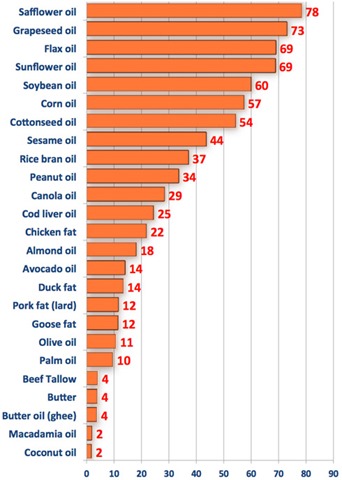
    Here’s a look at the PUFA content of commonly used cooking oils: (Source: USDA Nutrition Database.)

    Omega-6-and-Omega-3-Polyunsaturated-fatty-acid-content-of-food-oils


    Looking at this list it is easy to see that the much-reviled “saturated fats’ like butter, beef tallow, and coconut oil contain very little of the potentially toxic PUFAs. Of course they do – they are saturated fats. Because they are “saturated” they are highly heat stable, and not easily damaged or turned rancid.

    So, where is all this leading to?

    To the conclusion that perhaps deep fried foods need not be unhealthy – if they are cooked carefully, using oils low in PUFAs.

    Unfortunately, research published in 2010 shows that the most common commercially used deep frying oil is not healthy coconut, or even the less-expensive but still healthy palm oil, it is corn oil – often blended with soybean or safflower oil.

    Worse, restaurants reuse their oil over and over and over – reheating it each day anew, and occasionally filtering out the chunks – but the toxic trans fats cannot be “filtered out” and they just keep building up until the oil becomes so damaged and rancid that it begins to affect food flavors and the restaurants must reluctantly throw it away, fit only for use as “Bio-Diesel” fuel.

    Readers, you can do better – much better.

    You have the choice when you cook (and yes, frying and deep-frying ARE healthy cooking choices) of using a health-safe cooking oil such as coconut oil or butter or beef tallow.  Want to know the secret to the tastiest French fries you have ever encountered? Beef tallow – a chef’s “secret”!

    Even if you insist on using corn oil, using it once at relatively low heat and then discarding it can be safe.

    Well then, let’s suppose for a moment that I have persuaded you that deep-fried is not necessarily synonymous with poison (if done right) yet you are still worried by all those warnings about the artery-clogging effects of evil saturated fats. (If you really do believe this, please take a few minutes to read our article “Saturated Fats – Another Big Fat Lie”)

    Wouldn’t it be great if there were a pill that could mitigate all the ill effects of saturated fats and make it OK to indulge – maybe even good to indulge?

    Well, it turns out that such a pill might not be entirely fantasy.

    Scientists are researching a substance called alphacyclodextrin, a soluble fiber derived from corn. This novel fiber has shown promise for its ability to preferentially adsorb and bind up both saturated and polyunsaturated fats, while leaving valuable Omega 3 and Omega 6 fatty acids relatively unaffected.

    Results of recent research are very positive, with researchers concluding that the substance:

    “…has beneficial effects on weight management in obese individuals with type 2 diabetes, and that it preferentially reduces blood levels of saturated and trans fats…”

    And

    “These results suggest that α-CD [alphacyclodextrin] exerts its beneficial health effects on body weight and blood lipid profile in healthy non-obese individuals, as previously reported in obese individuals with type 2 diabetes.”

    Does this sound too good to be true? Possibly – which is why Dr. Myatt has not chosen to make it available to you just yet. She is researching it intensively though, and as soon as she is convinced of the safety and efficacy of the substance, and of her ability to offer you a pure, potent, top-quality product she will consider making it available.

    So, stay tuned!

    References

    learn more about coconut oil: https://www.drmyattswellnessclub.com/CoconutOil.htm

    Deep Fry Oils in commercial use; Jahren, A. Proceedings of the National Academy of Sciences, published online Jan. 18, 2010. http://www.pnas.org/content/107/5/2099.full

    Alphacyclodextrin research: Comerford KB, The beneficial effects of α-cyclodextrin on blood lipids and weight loss in healthy humans. Obesity, 2011 Jun;19(6):1200-4. doi: 10.1038/oby.2010.280. Epub 2010 Dec 2. http://www.ncbi.nlm.nih.gov/pubmed/21127475

  • Free (or Cheap) and Easy "Health Hacks"

    By Dr. Dana Myatt


    Here are a half-dozen of my favorite free (or really cheap) “Health Hacks” – How you can stay healthy without spending a lot o’ bucks…

    1.) Deodorant. Aluminum and other unsavory ingredients in most deodorants pose a potential health concern. What to do instead? Diaper rash cream. Or more specifically, zinc oxide ointment which is not just used on babies bottoms but also on wounds and infections.

    Just dab a pea-sized amount under each arm after bathing. The effect lasts many people for several days.

    Why does this work? Because zinc — an essential mineral for humans — is toxic to bacteria. It is bacteria that cause under arm odors.

    We like the simplest cream, zinc and nothing else. No fragrances. Creams seem to rub in easier than ointments. Here is one that we like:  https://www.emersonecologics.com/Products/EmersonMain/PID-W96652.aspx that can be purchased directly from our distributor, Emerson Ecologics. (You will need to create an account, and use the password ‘ health ‘ to access these doctor-grade products.)

    Or check your local pharmacy. Zinc ointment is cheap, cheap, cheap and highly effective.

    2.) Free Vitamin D. Vitamin D is essential for immunity, bone health, cancer prevention, diabetes prevention, strokes prevention and reduced risk of all cause mortality! To get the full story, visit our medical white paper on Vitamin D here.

    The good news? Vitamin D is a "freebie." Scientists have found that the skin produces approximately 10,000 IU of Vitamin D in response to as little as 30 minutes of unprotected summer sun exposure.

    But what if you live in Minnesota and its winter? Vitamin D supplements are inexpensive insurance. Get the good stuff since vitamin D is a fat soluble vitamin and stores in the tissues. (I always recommend getting "the good stuff" anyway). You can take 5,000IU per day for many months without getting anywhere near "too much." Obese people need even more, around 10,000IU. Go read the vitamin D paper at the link above for exact doing guidelines. But whatever you do, get enough vitamin D!

    3.) Donate blood. Give up some red, lower your risk of heart disease. Ferritin is the storage form of iron. High (even "high normal”) iron levels increase free radical production and is highly associated with increased risk of atherosclerosis and peripheral vascular disease. Serum ferritin is one of the strongest risk predictors of overall progression of atherosclerosis. Healthy levels are between 25-80; around 50 may be optimal. These levels are well below the "normal reference range" of conventional medicine.

    To see my references and learn more about how and why this works, visit this our Longevity Lab Test page.

    The easy way to lower ferritin is to donate blood 3-4 times per year. Blood donors have a significantly lower risk of cardiovascular events, making this simple hack a "win-win."

    4.) Get enough sleep. Your body produces the powerful antioxidant hormone melatonin during sleep. Melatonin is one of the only antioxidants that crosses and protects the brain. Other antioxidants are helpful but do not cross the "blood-brain barrier" and so do not help protect the nervous system.

    So, set yourself a regular, reasonably early bedtime and stick with it – no late-night TV or other distractions. Aim for a good solid 8 hours of sleep each night – sleep deprivation results in hormonal imbalances which can lead to weight gain, mood disorders, higher risk of cancer and increased risk of neurological disease to name just a few. “Sleep aids” (drugs) like Lunesta, Ambien, and others are dangerous. How dangerous? Try double the risk of death.

    We have written extensively on the dangers of these drugs, and your alternatives to achieve a good, drug-free sleep. Learn more at HealthBeat News.

    5.) Drink some Joe! In a recent study published in The American Heart Association’s medical journal Circulation, researchers found that people who drank three to five cups of coffee per day had about a 15 percent lower risk of premature death compared to people who didn’t drink coffee.
    Earlier research has shown that coffee helps prevent stroke and some types of cancer, reduces the risk of Type II Diabetes, improves cognition and mood, enhances physical performance, lowers risk of neurological disease (Alzheimer’s, dementia, Parkinson’s), and helps burn fat. What’s not to love?

    6.) Grow a healthy "gut garden." Supercharge your immunity with a plentiful garden of good bacteria. Gut flora is essential to a healthy immune system. Conventional medicine has finally recognized what holistic docs have known for years: a healthy population of good bacteria in the gut is a powerful immune modulator. Learn more about that here in our previous HealthBeat News article.

    A general immune-enhancing dose (especially important over the Winter months) would be 1-2 caps of 35 Billion Probiotics taken with meals.


    References:

    vit D

    1. Melamed ML, et al. 25-Hydroxyvitamin D Levels and the Risk of Mortality in the General Population. Arch Intern Med 2008; 168: 1629-1637.

    2.Saliba W, Barnett O, Rennert HS, Rennert G. The risk of all-cause mortality is inversely related to serum 25(OH)D levels. J Clin Endocrinol Metab. 2012 Aug;97(8):2792-8. doi: 10.1210/jc.2012-1747. Epub 2012 May 30.

    3. Durup D, Jørgensen HL, Christensen J, Schwarz P, Heegaard AM, Lind B. A reverse J-shaped association of all-cause mortality with serum 25-hydroxyvitamin D in general practice: the CopD study. J Clin Endocrinol Metab. 2012 Aug;97(8):2644-52. doi: 10.1210/jc.2012-1176. Epub 2012 May 9.

    Ferritin

    1 Alissa EM, Ahmed WH, Al-Ama N, Ferns GA. Relationship between indices of iron status and coronary risk factors including diabetes and the metabolic syndrome in Saudi subjects without overt coronary disease. J Trace Elem Med Biol. 2007;21(4):242-54. Epub 2007 Aug 7

    2. Ahluwalia N, Genoux A, Ferrieres J, Perret B, Carayol M, Drouet L, Ruidavets JB. Iron status is associated with carotid atherosclerotic plaques in middle-aged adults. J Nutr. 2010 Apr;140(4):812-6. Epub 2010 Feb 24.

    3.de Godoy MF, Takakura IT, Machado RD, Grassi LV, Nogueira PR. Serum ferritin and obstructive coronary artery disease: angiographic correlation. Arq Bras Cardiol. 2007 Apr;88(4):430-3.

    4. Depalma RG, Hayes VW, Chow BK, Shamayeva G, May PE, Zacharski LR. Ferritin levels, inflammatory biomarkers, and mortality in peripheral arterial disease: a substudy of the Iron (Fe) and Atherosclerosis Study (FeAST) Trial. J Vasc Surg. 2010 Jun;51(6):1498-503. Epub 2010 Mar 20

    5. Kiechl S, Willeit J, Egger G, Poewe W, Oberhollenzer F.Body iron stores and the risk of carotid atherosclerosis: prospective results from the Bruneck study.Circulation. 1997 Nov 18;96(10):3300-7.

    6. Lee KR, Sweeney G, Kim WY, Kim KK. Serum ferritin is linked with aortic stiffness in apparently healthy Korean women. Crit Pathw Cardiol. 2010 Sep;9(3):160-3

    7. Mainous AG 3rd, Diaz VA. Relation of serum ferritin level to cardiovascular fitness among young men. Am J Cardiol. 2009 Jan 1;103(1):115-8. Epub 2008 Oct 17.

    8. Menke A, Fernández-Real JM, Muntner P, Guallar E. The association of biomarkers of iron status with peripheral arterial disease in US adults. BMC Cardiovasc Disord. 2009 Aug 3;9:34.

    9. Valenti L, Swinkels DW, Burdick L, Dongiovanni P, Tjalsma H, Motta BM, Bertelli C, Fatta E, Bignamini D, Rametta R, Fargion S, Fracanzani AL. Serum ferritin levels are associated with vascular damage in patients with nonalcoholic fatty liver disease. Nutr Metab Cardiovasc Dis. 2011 Aug;21(8):568-75. Epub 2010 Apr 13.

    10. Zacharski LR, Shamayeva G, Chow BK. Effect of controlled reduction of body iron stores on clinical outcomes in peripheral arterial disease. Am Heart J. 2011 Nov;162(5):949-957.

    Sleep

    1. Jie Liu, Fang Huang, and Hong-Wen He. Melatonin Effects on Hard Tissues: Bone and Tooth. Int J Mol Sci. May 2013; 14(5): 10063–10074.
    Suzen S. Recent developments of melatonin related antioxidant compounds. Comb Chem High Throughput Screen. 2006 Jul;9(6):409-19.

    2. Cardinali DP, Furio AM, Reyes MP. Clinical perspectives for the use of melatonin as a chronobiotic and cytoprotective agent. Ann NY Acad Sci. 2005 Dec;1057:327-36.

    3. Srinivasan V, Pandi-Perumal S, Cardinali D, Poeggeler B, Hardeland R. Melatonin in Alzheimer’s disease and other neurodegenerative disorders. Behav Brain Funct. 2006;2(1):15.

    4. Reiter RJ, Tan DX, Leon J, Kilic U, Kilic E. When melatonin gets on your nerves: its beneficial actions in experimental models of stroke. Exp Biol Med (Maywood.). 2005 Feb;230(2):104-17.

    5. Scheer FA, Van Montfrans GA, van Someren EJ, Mairuhu G, Buijs RM. Daily nighttime melatonin reduces blood pressure in male patients with essential hypertension. Hypertension. 2004 Feb;43(2):192-7.

    6. Cagnacci A, Cannoletta M, Renzi A, et al. Prolonged melatonin administration decreases nocturnal blood pressure in women. Am J Hypertens. 2005 Dec;18(12 Pt 1):1614-8.

    Coffee

    1. Chrysant SG1. Coffee Consumption and Cardiovascular Health. Am J Cardiol. 2015 Sep 1;116(5):818-21.

    2. Loftfield E1, Freedman ND2, Graubard BI2, Hollenbeck AR2, Shebl FM2, Mayne ST2, Sinha R2. Coffee drinking and cutaneous melanoma risk in the NIH-AARP diet and health study. J Natl Cancer Inst. 2015 Jan 20;107(2).

    3. Crippa A, Discacciati A, Larsson SC, Wolk A, Orsini N. Coffee consumption and mortality from all causes, cardiovascular disease, and cancer: a dose-response meta-analysis. Am J Epidemiol. 2014 Oct 15;180(8):763-75Higdon JV, Frei B. Coffee and its consumption: benefits and risks. Crit Rev Food Sci Nutr. 2011 Apr;51(4):363-73.

    4. O’Keefe JH1, Bhatti SK, Patil HR, DiNicolantonio JJ, Lucan SC, Lavie CJ.Effects of habitual coffee consumption on cardiometabolic disease, cardiovascular health, and all-cause mortality. J Am Coll Cardiol. 2013 Sep 17;62(12):1043-51.

    5. Whayne TF Jr1. Coffee: A Selected Overview of Beneficial or Harmful Effects on the Cardiovascular System? Curr Vasc Pharmacol. 2015;13(5):637-48.

    6. Cano-Marquina A1, Tarín JJ, Cano A. The impact of coffee on health. Maturitas. 2013 May;75(1):7-21.

    Probiotics

    1.) Man AL, Bertelli E, Rentini S, Regoli M, Briars G, Marini M, Watson AJ, Nicoletti C. Age-associated modifications of intestinal permeability and innate immunity in human small intestine. Clin Sci (Lond). 2015 Oct;129(7):515-27. doi: 10.1042/CS20150046. Epub 2015 May 7.

    2.) Sassone-Corsi M., Raffatellu M. No vacancy: how beneficial microbes cooperate with immunity to provide colonization resistance to pathogens. J Immunol. 2015 May 1;194(9):4081-7. doi: 10.4049/jimmunol.1403169.

    3.) Bermon S, Petriz B, Kajeniene A, Prestes J, Castell L, Franco OL. The microbiota: an exercise immunology perspective.Exerc Immunol Rev. 2015;21:70-9.

    4.) Yoon MY, Lee K, Yoon SS. Protective role of gut commensal microbes against intestinal infections. J Microbiol. 2014 Dec;52(12):983-9. doi: 10.1007/s12275-014-4655-2. Epub 2014 Nov 29.

    5.) Bermudez-Brito M., Plaza-Díaz J, Muñoz-Quezada S., Gómez-Llorente C., Gil A. Probiotic Mechanisms of Action. Ann Nutr Metab 2012;61:160–174.

  • The Most Important Immune Supplement Ever

    By Dr. Dana Myatt


    It’s a "big news day" when holistic and conventional medicine agree on something.

    Nurse Mark and I attend a LOT of continuing medical education conferences so we can stay on the leading edge of health and medicine. Two recent conferences — one, a naturopathic conference on Infectious Diseases and the other a conventional medical conference on Managed Care — surprisingly both gave the same message on what is probably the most important immune supplement known right now: Probiotics. It turns out that holistic and conventional medicine currently completely agree on a natural substance and its importance to health. Here’s the "short course."

    Probiotics are the bacteria that inhabit the small and large intestine. Humans carry around three pounds of these organisms in the gut. When we’ve got "the good stuff" (lactobacillus and bifidobacterium species), these bacteria perform a number of important and health-maintaining functions for us including:

    • preventing bad bacteria from colonizing the gut
    • helping the body recognize "safe" versus "non safe" substances and directing the appropriate immune response
    • protecting the GI barrier so that foreign substances are not absorbed
    • assisting digestion
    • immune modulation: helping keep the "right amount" of immunity — not too much, not too little


    Having a large population of these good bacteria plays a huge role in normal immune function. If the gut has lots of good bacteria then we’ve got on our armor against many diseases and insults. This effect is so strong that medicine is looking at "vaccinating" against infectious disease simply by ensuring a healthy gut bacterial population.

    Many factors can alter the population of good gut bacteria, decreasing numbers of The Good Guys and/or increasing numbers of The Hoodlums. These factors start at birth. Vaginal-birthed babies are more likely to have "good bacteria" colonizing the gut whereas babies delivered by C-section are tend to have unfavorable strains colonizing the gut. This is important because it sets the tone for lifelong immunity.

    Other factors that effect the gut micro flora include diet, antibiotics both in food and when used medically, and aging.

    The take home points from my two recent conferences are as follows:

    • maintain a bountiful "garden" of good gut bacteria in order to keep the immune system strong and prevent disease
    • lactobacilli and bifidobacterium of various strains are the "good bacteria"
    • taking a probiotic supplement might be one of the most powerful things we can do to protect ourselves from disease including wintertime infectious diseases like colds and flu
    • we need to take a LOT (high bacterial count) of "The Good Guys" in order to get the desired effect


    For this reason, I am discontinuing our regular Supremadophilus and offering my 35 Billion Probiotic formula exclusively. Although it looks more expensive, it isn’t because you need to take less.

    For general immune support: 1-2 capsules per day (divide the dose if you are taking two caps). Take with a meal.

    When taking antibiotics: 2-3 caps per day with meals. Continue for 6-8 weeks after discontinuing the antibiotic.

    I have started taking 35 Billion Probiotics twice per day with meals and will do so at least all Winter and Spring long. While those around me are dropping like flies, succumbing to colds, flu and the like, I’m willing to wager that I won’t be among the fallen this season.


    REFERENCES

    1.) Man AL, Bertelli E, Rentini S, Regoli M, Briars G, Marini M, Watson AJ, Nicoletti C. Age-associated modifications of intestinal permeability and innate immunity in human small intestine. Clin Sci (Lond). 2015 Oct;129(7):515-27. doi: 10.1042/CS20150046. Epub 2015 May 7.
    2.) Sassone-Corsi M., Raffatellu M. No vacancy: how beneficial microbes cooperate with immunity to provide colonization resistance to pathogens. J Immunol. 2015 May 1;194(9):4081-7. doi: 10.4049/jimmunol.1403169.
    3.) Bermon S, Petriz B, Kajeniene A, Prestes J, Castell L, Franco OL. The microbiota: an exercise immunology perspective.Exerc Immunol Rev. 2015;21:70-9.
    4.) Yoon MY, Lee K, Yoon SS. Protective role of gut commensal microbes against intestinal infections. J Microbiol. 2014 Dec;52(12):983-9. doi: 10.1007/s12275-014-4655-2. Epub 2014 Nov 29.
    5.) Bermudez-Brito M., Plaza-Díaz J, Muñoz-Quezada S., Gómez-Llorente C., Gil A.
    Probiotic Mechanisms of Action. Ann Nutr Metab 2012;61:160–174.

  • Vitamin K – A Longevity Vitamin

    By Nurse Mark


    Vitamin K is well known for its role in blood clotting. So much so that otherwise well-meaning but under-informed doctors sometimes warn their patients away from Vitamin K and from foods containing Vitamin K out of fear that it might somehow make them have blood clots. Those are invariably the doctors who are also quick to prescribe Coumadin (AKA “Warfarin” – the rat poison) at the least hint of a DVT (Deep Vein Thrombosis) or atrial fibrillation.

    But did you know that Vitamin K – “the clotting vitamin’ – can also help you to live longer, have stronger bones, and have less risk of  “hardening of the arteries” (arterial calcification) as you age? Not only that, there are studies that show Vitamin K improves insulin sensitivity in both healthy subjects and in those with Type II Diabetes and that Vitamin K has a powerful cancer-preventative effect!

    Here are some quick facts about Vitamin K:

    Discovered in 1935 it is actually two related substances: Vitamin K1 (phylloquinone) is the main form of the vitamin that we get from diet. Vitamin K2 (menaquinone-7 and menaquinone-4) is obtained in lesser amounts from diet and is mostly a product of our bodies conversion of Vitamin K1 to Vitamin K2. It is becoming clear to researchers that each of these forms of Vitamin K is vital to our health, and that each form has very different actions.

    How important is Vitamin K?

    In one study published in 2014, in a group of more than 7,000 people at high risk for cardiovascular disease, the people with the highest intake of vitamin K were 36 percent less likely to die from any cause at all, compared with those having the lowest intake. (1)

    In another study, researchers found that people with the highest intake of vitamin K2 were 57 percent less likely to die of coronary heart disease compared with those with the lowest intake (2) showing the importance of both forms of Vitamin K.

    In yet another study, women with the highest intake of vitamin K2 were found to be at a 20 percent lower risk for coronary artery calcification (hardening of the arteries)  than women with the lowest intake. Interestingly, that same study found that vitamin K1 had no significant impact – once again showing the importance of obtaining both forms of Vitamin K. (3)

    Vitamin K has been recognized by the European Food Safety Authority (Europe’s version of our FDA) as being important to bone, heart and blood vessel health. (4)

    Along with its proven effect at lessening arterial calcification, Vitamin K has been shown in study after study to reduce osteoporosis and bone loss, and to increase bone density (and thus strength) in the spine and in hip bones – two places where osteoporosis is most likely to hit aging people, especially aging women, the hardest.  (5, 6, 7, 8)

    Diabetes is a condition that is often characterized by high levels of body-wide inflammation. In addition to being at lower risk for fractures related to osteoporosis, diabetics with the highest Vitamin K1 intakes show reduced inflammatory markers related to diabetes. (9) Additional studies related to diabetes have shown increased insulin sensitivity and improved blood glucose control even in non-diabetic, healthy people and even a reduced risk of ever developing Type II diabetes! (10, 11, 12, 13, 14)

    Cancer is a threat to anyone, young or old – but as we age we run an ever-increasing risk of developing some form of this dread disease. Can Vitamin K come to the rescue? While it is not a “silver bullet” against cancer, Vitamin K was shown in a large European study to slash the risk of death from cancer by a whopping 28 percent for those taking the higher amounts of Vitamin K versus people taking the lowest amounts. (15)

    Men, Vitamin K is for you too: A related European study found an amazing 63 percent lower risk of advanced prostate cancer in men taking higher doses of Vitamin K2. (16)

    Colon cancer may prove to be vulnerable to the health-giving effects of Vitamin K: a study that placed human colon cancer cells into laboratory mice found that Vitamin K induced apoptosis (cell death) and suppressed the growth of the implanted tumors. (17, 18)

    And liver cancer, often a tragic result of AIDS or alcoholism or an infection with the hepatitis B or C virus, can be helped: several human studies have shown that supplementation with Vitamin K after the surgical removal of the hepatocellular carcinoma cancer lesion reduces the recurrence and improves survival in those stricken with this aggressive and deadly cancer. (19, 20)

    But is it safe? In a word, YES.

    Even for people using blood thinners, Vitamin K supplementation is safe.

    The blood thinner warfarin (Coumadin) actually works by suppressing the normal, healthy effects of Vitamin D, and recent studies are proving that those using this antiquated “blood thinner” are actually at increased risk for developing arterial calcification – actually putting them at increased risk of having the very cardiac or cardiovascular disasters that the drugs were meant to prevent! (21, 22)

    The effects of more modern blood thinners  like Pradaxa (dabigatran) and Eliquis (apixaban) are not affected by vitamin K intake and so it is safe and appropriate to take full-dose vitamin K without worry of counteracting the desired anticoagulant effects of the drugs.

    In any event – DO NOT stop taking any anticoagulant drug without talking with your doctor first!

    You can find a very high quality Vitamin K supplement that provides both the Vitamin K1 and Vitamin K2 (Vitamin K2 in both the longer-acting menaquinone-7 and more immediate-acting menaquinone-4 sub-types. Yes, that is very important!) at Dr. Myatt’s Wellness Club. Dr. Myatt recommends one softgel capsule daily of Super K, or as directed by your health care practitioner.

    For any of us, and especially those of us who are getting a little older and concerned with atherosclerosis, osteoporosis, diabetes, and cancer, Vitamin K is a great way to help address and minimize many of the leading causes of death facing us in today’s modern American.


    Find Dr. Myatt’s recommended Vitamin K supplement here:


    References:

    1.)    Juanola-Falgarona M, Salas-Salvado J, Martinez-Gonzalez MA, et al. Dietary Intake of Vitamin K Is Inversely Associated with Mortality Risk. J Nutr. 2014 May;144(5):743-50.
    2.)    Geleijnse JM, Vermeer C, Grobbee DE, et al. Dietary intake of menaquinone is associated with a reduced risk of coronary heart disease: the Rotterdam Study. J Nutr. 2004 Nov;134(11):3100-5.
    3.)    Beulens JW, Bots ML, Atsma F, et al. High dietary menaquinone intake is associated with reduced coronary calcification. Atherosclerosis. 2009 Apr;203(2):489-93.
    4.)   
    http://www.efsa.europa.eu/en/efsajournal/pub/1228
    5.)    Braam LA, Knapen MH, Geusens P, et al. Vitamin K1 supplementation retards bone loss in postmenopausal women between 50 and 60 years of age. Calcif Tissue Int. 2003 Jul;73(1):21-6.
    6.)    Purwosunu Y, Muharram, Rachman IA, Reksoprodjo S, Sekizawa A. Vitamin K2 treatment for postmenopausal osteoporosis in Indonesia. J Obstet Gynaecol Res. 2006 Apr;32(2):230-4.
    7.)    Knapen MH, Schurgers LJ, Vermeer C. Vitamin K2 supplementation improves hip bone geometry and bone strength indices in postmenopausal women. Osteoporos Int. 2007 Jul;18(7):963-72.
    8.)    Knapen MH, Drummen NE, Smit E, Vermeer C, Theuwissen E. Three-year low-dose menaquinone-7 supplementation helps decrease bone loss in healthy postmenopausal women. Osteoporos Int. 2013 Sep;24(9):2499-507.
    9.)    Juanola-Falgarona M, Salas-Salvado J, Estruch R, et al. Association between dietary phylloquinone intake and peripheral metabolic risk markers related to insulin resistance and diabetes in elderly subjects at high cardiovascular risk. Cardiovasc Diabetol. 2013;12:7.
    10.) Yoshida M, Booth SL, Meigs JB, Saltzman E, Jacques PF. Phylloquinone intake, insulin sensitivity, and glycemic status in men and women. Am J Clin Nutr. 2008 Jul;88(1):210-5.
    11.) Ibarrola-Jurado N, Salas-Salvado J, Martinez-Gonzalez MA, Bullo M. Dietary phylloquinone intake and risk of type 2 diabetes in elderly subjects at high risk of cardiovascular disease. Am J Clin Nutr. 2012 Nov;96(5):1113-8.
    12.) Yoshida M, Jacques PF, Meigs JB, et al. Effect of vitamin K supplementation on insulin resistance in older men and women. Diabetes Care. 2008 Nov;31(11):2092-6.
    13.) Choi HJ, Yu J, Choi H, et al. Vitamin K2 supplementation improves insulin sensitivity via osteocalcin metabolism: a placebo-controlled trial. Diabetes Care. 2011 Sep;34(9):e147.
    14.) Beulens JW, van der AD, Grobbee DE, Sluijs I, Spijkerman AM, van der Schouw YT. Dietary phylloquinone and menaquinones intakes and risk of type 2 diabetes. Diabetes Care. 2010 Aug;33(8):1699-705.
    15.) Nimptsch K, Rohrmann S, Kaaks R, Linseisen J. Dietary vitamin K intake in relation to cancer incidence and mortality: results from the Heidelberg cohort of the European Prospective Investigation into Cancer and Nutrition (EPIC-Heidelberg). Am J Clin Nutr. 2010 May;91(5):1348-58.
    16.) Nimptsch K, Rohrmann S, Linseisen J. Dietary intake of vitamin K and risk of prostate cancer in the Heidelberg cohort of the European Prospective Investigation into Cancer and Nutrition (EPIC-Heidelberg). Am J Clin Nutr. 2008 Apr;87(4):985-92.
    17.) Ogawa M, Nakai S, Deguchi A, et al. Vitamins K2, K3 and K5 exert antitumor effects on established colorectal cancer in mice by inducing apoptotic death of tumor cells. Int J Oncol. 2007 Aug;31(2):323-31.
    18.) Kawakita H, Tsuchida A, Miyazawa K, et al. Growth inhibitory effects of vitamin K2 on colon cancer cell lines via different types of cell death including autophagy and apoptosis. Int J Mol Med. 2009 Jun;23(6):709-16.
    19.) Kakizaki S, Sohara N, Sato K, et al. Preventive effects of vitamin K on recurrent disease in patients with hepatocellular carcinoma arising from hepatitis C viral infection. J Gastroenterol Hepatol. 2007 Apr;22(4):518-22.
    20.) Mizuta T, Ozaki I, Eguchi Y, et al. The effect of menatetrenone, a vitamin K2 analog, on disease recurrence and survival in patients with hepatocellular carcinoma after curative treatment: a pilot study. Cancer. 2006 Feb 15;106(4):867-72.
    21.) Price PA, Faus SA, Williamson MK. Warfarin causes rapid calcification of the elastic lamellae in rat arteries and heart valves. Arterioscler Thromb Vasc Biol. 1998 Sep;18(9):1400-7.
    22.) McCabe KM, Booth SL, Fu X, et al. Dietary vitamin K and therapeutic warfarin alter the susceptibility to vascular calcification in experimental chronic kidney disease. Kidney Int. 2013 May;83(5):835-44.