Category: Cancer

  • Cancer Scandal: Poison For Profit

    Is It Right For A Doctor To Profit From The Misery Of Cancer?

    Opinion by Nurse Mark


    Dum Vivimus, Vivamus


    Doctors are not allowed to profit from selling drugs, right? Everybody knows that – doctors just write a prescription for whatever medicine is best for the patient, and that’s it – they don’t sell the drug or make profits from it, right?

    Wrong!

    There is one kind of doctor who is allowed, even encouraged to profit from the sale of drugs, and those profits are often so large as to be obscene.

    Those doctors are cancer doctors – oncologists – and they are allowed by law to buy chemotherapy drugs from the drug companies and to re-sell them to desperate cancer victims at a “set” profit. That profit is regulated, supposedly to keep doctors from charging whatever the market will bear. To get around this restriction, chemo doctors usually get deep discounts off the “wholesale price” and then bill the insurance companies (or the unfortunate patient without insurance) for the retail sticker price.

    With many chemotherapy treatments costing thousands of dollars per day, and with little or no solid proof that the treatment is doing anything more than making the poor patient miserable, this might be called “quackery” – a name that oncologists give to natural treatments with far better proof of effectiveness – yet it is perfectly legal.

    Most chemotherapy is outright toxic – it works under the supposition that because cancer cells grow more rapidly than healthy, normal cells they take up (absorb or ingest) substances more quickly than normal cells. This is not far off the mark for many cancers, and most early (and many current) anti-cancer drugs – “chemo drugs” – are toxins that exploit this characteristic of cancer. The idea is that the toxin can be given and will kill the cancer before it can terminally poison the patient.

    Sometimes it works.

    Often it doesn’t.

    Chemo drugs that are claimed (usually based on “research” done by or funded by the drug companies) to statistically extend “mean survival time” by some amount – usually mere weeks or months – more often really just makes the patient’s life seem longer with horrid side-effects.

    Is it possible that the best function of many of these drugs is to extend life long enough for the patient’s wallet (and probably the life savings of the patient’s entire family, including future generations!) to be completely emptied?

    We understand the fear that a diagnosis of cancer brings to someone. The fear of illness, of disability, of disfigurement, of pain, of death.

    We understand that life is precious – invaluable. No mere coin has greater value than a human life – no price can be set.

    Yet oncologists set an exorbitant price on human life every day with their wildly profitable patented drugs.

    Could this be why un-patented natural treatments are not recommended by your oncologist? Could it be that treatments given freely to us by Mother Nature simply don’t generate the big profits that drugs do?

    If an oncologist knew of a simple, non-toxic, effective treatment that could stop many cancers in their tracks and even make them wither up and go into remission, should he tell his patients about it? Even if it doesn’t make him a profit?

    Should the oncologist trade thousands of dollars a day in profit by toxic chemicals for whatever reasonable amount can be charged for the teaching and coaching that will help a cancer victim learn the simple dietary changes that can cause a metabolic shift that puts cancer on the run and turns that patient from a victim into a survivor?

    Certainly an ethical cancer doctor should do those things – but will he?

    Let’s be honest – there are plenty of people who have been told they have cancer, given chemotherapy, and now are told they have been cured. There are some cancers for which chemotherapy is proven to be highly effective.

    Some cancers, in their early stages, will go away on their own.

    But there are also plenty of people who have endured the misery of chemotherapy and lived not a day longer than they would have lived without it.

    Even if a cancer patient elects to try the chemotherapy regimen (assuming they can afford it) that the oncologist is offering, there are natural (but un-profitable – read “inexpensive”) treatments and strategies that work synergistically with conventional treatment to improve outcomes and lessen or even eliminate the nasty side-effects of many conventional chemotherapies and that will often allow smaller, less toxic doses and regimens to be equally effective.

    Someone facing a diagnosis of cancer and the chemotherapy that will inevitably be offered might want to ask the oncologist about a proven dietary strategy which will cause a metabolic shift that will stop many cancers in their tracks. This metabolic state literally starves most cancers to death, while actually providing improved nutrition that will correct a host of other health problems too.

    Ask the oncologist about using a metabolic technique called Dietary Ketosis In The Treatment of Solid Tissue Malignancy – better yet, print out this free medical paper (references and all) and show it to your oncologist. If your oncologist gives you a blank look, or pooh-pooh’s it saying “that mumbo-jumbo diet stuff doesn’t work!” (or words to that effect – we’ve heard ’em all…) then just smile and nod your head and resolve to book a Brief Telephone Consultation with Dr. Myatt just as quickly as you can – for it is Dr. Myatt who wrote the paper and teaches other doctors on this subject!

    Why would Dr. Myatt offer an important scientific paper for free or make Brief Telephone Consultations available so inexpensively? Because she and all of us at The Wellness Club believe that it is morally wrong for cancer treatment to be a for-profit cash cow – especially when those for-profit treatments cause so much misery and provide so little benefit.

    And after all – if someone is willing to spend thousands of dollars a day and endless days in a treatment center having toxic chemotherapy drugs dripped into their veins don’t you suppose it might be worth it to them to spend 20 minutes in a telephone call with the doctor who wrote the paper on a simple and effective dietary change that could help turn the misery of that chemo treatment into a success in the battle against their cancer?

    Wouldn’t it be worth trying a diet that is easy to follow (no complicated juicing schemes or odd food “rotations”), delicious (no pond-scum tasting “health drinks” or monotonous rabbit-food), and inexpensive (no special, unobtainable, order-only-from-us specialty foods) if there was a chance that it could halt the cancer and enhance the effect of the chemotherapy?

    Finally, here is a “news-flash” for anyone who hadn’t figured it out: We are all terminal! We are all going to die of something, sometime. It is up to each of us to make the very best of what we have until that time comes.

    Dum Vivimus, Vivamus – Let Us Live While We Live

    Our goal at The Wellness Club is to help people to live while they live.


    The Latin phrase “dum vivimus, vivamus” is thought to have been an Epicurean motto, and has been attributed to the Latin poet Horace (QUINTUS HORATIUS FLACCUS 65-8 B.C.). It is generally translated as “While we live, let us live!”

    The meaning of this phrase was expanded on by the Puritan pastor, author and hymn writer Philip Doddridge (1702-1751) in an epigram on his family coat of arms, which included this motto:

    “Live whilst you live,”
    the Epicure would say,
    And seize the pleasures
    of the present day.
    “Live whilst you live,”
    the sacred preacher cries,
    And give to God each moment as it flies.
    Lord, in my views, let both united be;
    I live in pleasure whilst I live to Thee.


    Dum Vivimus, Vivamus – Let Us Live While We Live


    References:

    1. “How Medicare’s Payment Cuts For Cancer Chemotherapy Drugs Changed Patterns Of Treatment” Health Affairs, Published online ahead of print 6/17/10, content.healthaffairs.org
    2. “Medicare Cuts May Have Led Docs to Prescribe More Chemo” HealthDay News, 6/17/10, consumer.healthday.com
    3. “Medicare Cuts Increase Cancer Treatments, Study Finds” David Cameron, Harvard press release, 6/17/10, hks.harvard.edu
  • But I Only Eat Good Natural Sugars!

    What About The “Good Sugars?”


    By Nurse Mark


    “You advise that consumption of sugar is a no-no for someone with cancer. I eat a lot of fruit which of course is high in sugar, I know there are different types of sugar: glucose, fructose, sucrose, lactose, etc, so my question is which can I consume without feeding the cancer?”


    Whew! This is a really good question – and far more complicated than it might seem at first blush.


    You are right – we do caution our cancer patients that sugars are a no-no.

    This is because cancer cells are generally ill-equipped to get their energy from anything other than monosacchrides (simple sugars such as glucose, fructose, and galactose).

    Most cancer cells do not do well with ketones, which the rest of the body considers to be a fine energy source. Without energy, the cancer cells starve – they may cease to grow and may become more vulnerable to the body’s own healthy immune responses which “clean up” aberrant and damaged cells.

    On the other hand, providing cancer cells with a simple, ready energy source such as fructose, glucose, galactose or mannose is like throwing gasoline on a fire – and in our experience it almost always results in an explosive growth of cancers.

    Sugars are simple carbohydrates.

    The “sacchride” is the basic unit, and sugars include monosaccharides, disaccharides, trisaccharides and the oligosaccharides.

    In practical terms, most carbohydrates are converted by our bodies to glucose, fructose, or galactose. Monosaccharides include fructose, glucose, galactose and mannose. Disaccharides are found mostly as sucrose (cane or beet sugar), lactose (milk sugar) and maltose.

    So, in the “real world” of reading “Nutrition Facts Box” labels, which sugars are OK? The brief answer is “NONE OF THEM!”

    The longer answer is more complicated – there are certain “sugars” and “sugar alcohols” that are not readily absorbed by the body and generally do not get used by the body as an energy source. These are often used in “low carb” products.

    Other forms of sugars function as insoluble fiber and are found in good, low carb fiber supplements.

    Interestingly, even these forms of sugars, though not useable for energy, are still carbohydrates and contribute to the carbohydrate count on the label. This is where the “Effective Carbohydrates” calculations come into play – but that is an article for another HealthBeat!

    What should you be watching for when you look at “Nutrition Facts Box” labels?

    The first clue is the carbohydrate count. Next, look for “sugars” – if they are present they’ll be listed. Don’t be fooled by food manufacturers who may try to bamboozle or impress you by listing their sweeteners by different names – often trying to make them sound “natural” or “organic.”

    Some of these may include:

    • cane molasses
    • cane juice
    • Demerara
    • Florida Crystals
    • Jaggery
    • Muscovado
    • Panela (or pilloncillo)
    • Steen’s cane syrup
    • Sucanat
    • Turbinado sugar
    • sugar beet molasses and sugar beet syrup
    • Jallab
    • Pekmez
    • Amazake
    • barley malt syrup
    • brown rice syrup
    • corn syrup and high-fructose corn syrup
    • malt
    • Mizuame
    • agave syrup
    • birch syrup
    • maple sugar and maple syrup
    • palm sugar
    • honey
    • sweet sorghum and sorghum syrup
    • natural brown sugar
    • molasses

    That’s quite a list, and many of those sound very healthy indeed – but in truth they are all just sugar by another name.

    The starches – corn starch, tapioca starch, rice, wheat, potato, arrowroot and many more – are also metabolized promptly into sugars, so watch for these as well!

    For those who don’t already know, Dr. Myatt’s Super Fast Diet is the premier anti-cancer, health-restorative, weight-loss diet available today.

  • 7 Simple Ways to Decrease Your Cancer Risk

    By Dr. Dana Myatt


    7 Simple Ways to Decrease Your Cancer Risk


    Modern medical science knows a lot about the causes of cancer — much more, in fact, than we know about its cure. “Carcinogens,” or factors that cause cancer, abound in our environment. Avoiding them is one way to prevent cancer. Other factors are protective, helping shield us from getting cancer.

    Here are seven simple steps you can take to greatly reduce your cancer risk.

    1. Take a hike. Even modest amounts of weekly activity have been associated with decreased risk of breast, colon, prostate, kidney, esophageal and perhaps other types of cancers. So get out those walking shoes and take a brisk walk — or any other form of your favorite activity that gets your blood pumping — for at least 30 minutes, three times a week.
    2. Spice up your life. Many common spices have proven anti-cancer benefits. Liberal use of herbs and spices, especially turmeric, garlic and onions, cayenne pepper, ginger, caraway, orange and lemon zest (grated orange or lemon peel), basil, rosemary and mint will not only add more flavor to food, but also help keep cancer away.
    3. Let the sun shine in. Rates of skin cancer (malignant melanoma) are rising 7% per years in the U.S. Yet for thousands of years “B.S.” (before sunscreen), skin cancer was not a major problem. Skin cancers are NOT caused by moderate sun exposure. In fact, the vitamin D created in our bodies in response to sunlight is highly cancer-protective. For those who have trouble getting sufficient sunlight to manufacture a healthy dose of vitamin D (about 12 minutes of sunlight per day), vitamin D supplements appear to be nearly as protective. The recommended supplemental dose is 2,000-3,000IU of vitamin D3 per day.
    4. Kick butt. That’s right, don’t smoke (or chew) tobacco. Tobacco smoke (cigarettes, cigars, pipes) is associated with a LONG list of cancers, including oral cavity/pharynx, larynx, esophagus, bladder, bowel, stomach, pancreatic, cervical and uterine cancer — oh yes, and lung cancer. (See Smoking: Just the Facts on the Wellness Club website for a complete list of problems caused by exposure to tobacco smoke). Tobacco in any form (smoked, chewed) is a proven risk factor for cancer. Even second-hand smoke appears to increase risk of some cancers. Kick butt while the kickin’ is good.
    5. Stay “lean and keen.” Maintain a normal weight. Statistics released April 2003 by the American Cancer Society estimate that at least 90,000 cancer deaths annually are attributable to overweight and obesity. Cancers known to be associated with increased body (fat) weight include: breast, prostate, colon, endometrial, and multiple myeloma.
    6. Don’t over-expose yourself. (Avoid environmental exposure to carcinogens).

      Environmental exposure: cancer-causing agents are all around us; most are man-made but some are naturally occurring. Evaluate your surroundings for these known cancer-causing substances:

      A.) Radon: a naturally occurring, odorless gas that comes out of the ground and can infiltrate a house through the basement. If you have a basement in your home, inexpensive tests will tell you if your level is above 4 picocuries per liter (the minimum safe level). Correction is as easy as ensuring adequate ventilation. Radon causes lung cancer.

      B.) Asbestos: Homes built before 1980 may have asbestos insulation. Either leave it alone or have it removed by a qualified contractor. Asbestos causes lung cancer.

      C.) Workplace hazards: If you work with chemicals, including construction materials (paints, thinners, etc.), be sure to wear protective masks, gloves and other clothing. If you are unsure of your exposure, find out what chemicals you are handling and take appropriate precautions.

      D.) Water. I’ve said it before but I’ll say it again: water is a common source of carcinogens and other disease-causing contaminants. Check your water report yearly. If you use city-supplied water, ask for a water report that will be provided for free. If you use well water, have your water tested annually. Go to www.epa.gov/safewater/faq/sco.html to find a local lab for water testing. Read more about healthy water here.

      E.) Cosmetics: from shampoo to deodorant to face powder, cosmetics contain a wide array of cancer-causing substances. Even BABY SHAMPOOS and creams contain known carcinogens! Evaluate your cosmetic ingredients at this link: http://www.ewg.org/skindeep/

      F.) Minimize “food hazards,” including antibiotics and hormones in meat and dairy (organic is preferred). “Buy organic” for those fruits and vegetables on “The Dirty Dozen” list (produce that is highest in insecticides, herbicides and other carcinogenic chemicals). Review THE DIRTY DOZEN fruits and vegetables here: http://www.foodnews.org

    7. Eat “Super Foods.” Some foods are healthy, but others are super-healthy. Vegetables including broccoli, Brussels sprouts, cauliflower, cabbage, kale, onion and garlic contain potent anti-cancer substances. Pacific (wild) salmon and flax seed (and oil) are high in Omega-3 fatty acids. Flax seed also contains an anti-cancer form of fiber called lignin. Concentrated tomato products are high in lycopene, a protective carotene. Add these foods to your daily “must have” list of cancer prevention foods.

    Estimates suggest that 70-90% of all cancers are preventable by making these few lifestyle changes and taking simple precautions.


    References

    Exercise:
    * Physical activity in the prevention of cancer. Asian Pac J Cancer Prev. 2006 Jan-Mar;7(1):11-21.
    * Weight control and physical activity in cancer prevention: international evaluation of the evidence.Eur J Cancer Prev. 2002 Aug;11 Suppl 2:S94-100.
    * Physical activity and cancer: lessons learned from nutritional epidemiology.Nutr Rev.2001 Nov;59(11):349-57.
    * Health benefits of physical activity: the evidence.CMAJ. 2006 Mar 14;174(6):801-9.
    * Associations between physical activity and susceptibility to cancer: possible mechanisms.Sports Med. 1998 Nov;26(5):293-315.
    *Physical activity and cancer etiology: associations and mechanisms. Cancer Causes Control. 1998 Oct;9(5):487-509.
    * Lifetime physical activity and prostate cancer risk.Int J Cancer. 2005 Apr 20;114(4):639-42.
    * Long-term recreational physical activity and risk of invasive and in situ breast cancer: the California teachers study. Arch Intern Med. 2007 Feb 26;167(4):408-15.
    * Exercise and colon cancer: primary and secondary prevention. Curr Sports Med Rep. 2007 Apr;6(2):120-4. Links

    Spices:
    * Botanicals in cancer chemoprevention. Cancer Metastasis Rev. 2002;21(3-4):231-55.
    * Curcumin inhibits human colon cancer cell growth by suppressing gene expression of epidermal growth factor receptor through reducing the activity of the transcription factor Egr-1. Oncogene. 2006 Jan 12;25(2):278-87.
    * Mechanisms of curcumin- and EGF-receptor related protein (ERRP)-dependent growth inhibition of colon cancer cells.Nutr Cancer. 2006;55(2):185-94.
    * Multiple molecular targets in cancer chemoprevention by curcumin. AAPS J. 2006 Jul 7;8(3):E443-9.
    * Chemopreventive properties of curcumin. Future Oncol. 2005 Jun;1(3):405-14.
    * Garlic-derived organosulfides induce cytotoxicity, apoptosis, cell cycle arrest and oxidative stress in human colon carcinoma cell lines. Neoplasma. 2006;53(3):191-9.
    * Differential effects of allyl sulfides from garlic essential oil on cell cycle regulation in human liver tumor cells. Food Chem Toxicol. 2004 Dec;42(12):1937-47.
    * Cancer chemoprevention with garlic and its constituents.Cancer Lett. 2007 Mar 18;247(2):167-81. Epub 2006 Jun 21.
    * Garlic – A Natural Source of Cancer Preventive Compounds. Asian Pac J Cancer Prev. 2002;3(4):305-311.
    * Capsaicin inhibits growth of adult T-cell leukemia cells. Leuk Res. 2003 Mar;27(3):275-83.
    * Chemoprotective effects of capsaicin and diallyl sulfide against mutagenesis or tumorigenesis by vinyl carbamate and N-nitrosodimethylamine. Carcinogenesis. 1995 Oct;16(10):2467-71.
    * Chemoprotective properties of some pungent ingredients present in red pepper and ginger. Mutat Res. 1998 Jun 18;402(1-2):259-67.
    * Anti-tumor-promoting activities of selected pungent phenolic substances present in ginger. J Environ Pathol Toxicol Oncol. 1999;18(2):131-9.
    * Chemopreventive efficacy of ginger, a naturally occurring anticarcinogen during the initiation, post-initiation stages of 1,2 dimethylhydrazine-induced colon cancer. Clin Chim Acta. 2005 Aug;358(1-2):60-7.
    * Effect of dietary caraway (Carum carvi L.) on aberrant crypt foci development, fecal steroids, and intestinal alkaline phosphatase activities in 1,2-dimethylhydrazine-induced colon carcinogenesis. Toxicol Appl Pharmacol. 2006 Aug 1;214(3):290-6. Epub 2006 Feb 17.
    * Prevention and therapy of cancer by dietary monoterpenes. J Nutr. 1999 Mar;129(3):775S-778S.
    * Citrus peel use is associated with reduced risk of squamous cell carcinoma of the skin. Nutr Cancer. 2000;37(2):161-8.
    * Chemoprevention and therapy of cancer by d-limonene. Crit Rev Oncog. 1994;5(1):1-22.
    * Chemomodulatory efficacy of basil leaf (Ocimum basilicum) on drug metabolizing and antioxidant enzymes, and on carcinogen-induced skin and forestomach papillomagenesis. Phytomedicine. 2004 Feb;11(2-3):139-51.
    * Anticancer and radioprotective potentials of Mentha piperita. Biofactors. 2004;22(1-4):87-91.

    Sunshine (vit D)
    *Moan, J. & Dahlback, A. The relationship between skin cancers, solar radiation and ozone depletion. British Journal of Cancer, Vol. 65, No. 6, June 1992, pp. 916-21
    *Miller, Dena L. & Weinstock, Martin A. Nonmelanoma skin cancer in the United States: incidence. Journal of the American Academy of Dermatology, Vol. 30, No. 5, Pt. 1, May 1994, pp. 774-78
    *Garland, Cedric F., et al. Could sunscreens increase melanoma risk? American Journal of Public Health, Vol. 82, No. 4, April 1992, pp. 614-15
    * Vitamin D status and cancer: new insights. Curr Opin Clin Nutr Metab Care. 2007 Jan;10(1):6-11.
    * The epidemiology of vitamin D and colorectal cancer: recent findings. Curr Opin Gastroenterol. 2006 Jan;22(1):24-9.
    * Vitamin D and prevention of breast cancer: pooled analysis. J Steroid Biochem Mol Biol. 2007 Mar;103(3-5):708-11.
    * Cancer chemoprevention using natural vitamin D and synthetic analogs. Annu Rev Pharmacol Toxicol. 2001;41:421-42.
    * Vitamin D and vitamin D analogs as cancer chemopreventive agents. Nutr Rev. 2003 Jul;61(7):227-38.
    * Vitamin D and reduced risk of breast cancer: a population-based case-control study. Cancer Epidemiol Biomarkers Prev. 2007 Mar;16(3):422-9.

    Smoking
    * Cigar smoking in men and risk of death from tobacco-related cancers. J Natl Cancer Inst. 2000 Feb 16;92(4):333-7.
    * Cigarette smoking and bladder cancer in men: a pooled analysis of 11 case-control studies. Int J Cancer. 2000 Apr 15;86(2):289-94.
    * Cigarette smoking, use of other tobacco products and stomach cancer mortality in US adults: The Cancer Prevention Study II. Int J Cancer. 2002 Oct 1;101(4):380-9.
    * Cigarette smoking and colorectal cancer mortality in the cancer prevention study II. J Natl Cancer Inst. 2000 Dec 6;92(23):1888-96.
    * Smokeless and other noncigarette tobacco use and pancreatic cancer: a case-control study based on direct interviews.Cancer Epidemiol Biomarkers Prev. 2004 Jan;13(1):55-8.
    * Lung cancer among cigar and pipe smokers.Prev Med. 1988 Jan;17(1):116-28.
    * Risk of bladder cancer by source and type of tobacco exposure: a case-control study. Int J Cancer. 1989 Oct 15;44(4):622-8.
    * Tobacco use in relation to renal cell carcinoma. Cancer Epidemiol Biomarkers Prev. 1998 May;7(5):429-33.
    * Cigarette smoking and cervical cancer: Part I: a meta-analysis.Biomed Pharmacother. 2003 Mar;57(2):67-77.
    * Passive cigarette smoking is a risk factor in cervical neoplasia. Gynecol Oncol. 2004 Apr;93(1):116-20.
    * Can the number of cigarettes smoked predict high-grade cervical intraepithelial neoplasia among women with mildly abnormal cervical smears? Am J Obstet Gynecol. 1998 Aug;179(2):399-402.
    * Active and passive cigarette smoking and the risk of cervical neoplasia. Obstet Gynecol. 2005 Jan;105(1):174-81.
    * The fragile histidine triad gene: a molecular link between cigarette smoking and cervical cancer. Clin Cancer Res. 2005 Aug 15;11(16):5756-63.

    Weight:
    * Epidemiology and pathophysiology of obesity as cause of cancer.Swiss Med Wkly. 2007 Jan 27;137(3-4):50-6.
    * Obesity and cancer. Oncogene. 2004 Aug 23;23(38):6365-78.Summary: colon, female breast (postmenopausal), endometrium, kidney (renal cell), and esophagus (adenocarcinoma).
    * Overweight as an avoidable cause of cancer in Europe. Int J Cancer. 2001 Feb 1;91(3):421-30.
    * Risk factors for breast cancer in elderly women.Am J Epidemiol. 2004 Nov 1;160(9):868-75.
    * Anthropometric characteristics and risk of multiple myeloma. Epidemiology. 2005 Sep;16(5):691-4.
    * Obesity, adipokines, and prostate cancer (review). Int J Oncol. 2006 Mar;28(3):737-45.
    * Obesity and colorectal cancer: epidemiology, mechanisms and candidate genes. J Nutr Biochem. 2006 Mar;17(3):145-56. Epub 2005 Oct 27.
    * Association of incident carcinoma of the endometrium with body weight and fat distribution in older women: early findings of the Iowa Women’s Health Study.Cancer Res. 1989 Dec 1;49(23):6828-31.
    * Body size and breast cancer risk: findings from the European Prospective Investigation into Cancer And Nutrition (EPIC).Int J Cancer. 2004 Sep 20;111(5):762-71.

    Environmental Toxins
    * Lung cancer risk associated to exposure to radon and smoking in a case-control study of French uranium miners.Health Phys. 2007 Apr;92(4):371-8.
    * Asbestos-related lung disease. Am Fam Physician. 2007 Mar 1;75(5):683-8.
    * Worker exposure and health risks from volatile organic compounds utilized in the paint manufacturing industry of Kenya. Appl Occup Environ Hyg. 2001 Nov;16(11):1035-42.
    * Drinking water and cancer incidence in Iowa. III. Association of cancer with indices of contamination. Am J Epidemiol. 1985 Jun;121(6):856-69.
    * Tetrachloroethylene-contaminated drinking water in Massachusetts and the risk of colon-rectum, lung, and other cancers. Environ Health Perspect. 1999 Apr;107(4):265-71.
    * EWG’s interactive product safety guide to find cosmetics free of cancer-causing impurities.
    * From Campaign for Safe Cosmetics – Read about Dr. David Steinman’s new product tests for a cancer-causing impurity [PDF] called 1,4-dioxane, including tests of children’s products.
    * Branched fatty acids in dairy and beef products markedly enhance alpha-methylacyl-CoA racemase expression in prostate cancer cells in vitro. Cancer Epidemiol Biomarkers Prev. 2003 Aug;12(8):775-83.
    * Estrogen: one of the risk factors in milk for prostate cancer. Med Hypotheses. 2004;62(1):133-42.
    * The possible role of female sex hormones in milk from pregnant cows in the development of breast, ovarian and corpus uteri cancers. Med Hypotheses. 2005;65(6):1028-37. Epub 2005 Aug 24.
    * Diet and cancer prevention: where we are, where we are going. Nutr Cancer. 2006;56(2):225-31.
    * Dietary isothiocyanate iberin inhibits growth and induces apoptosis in human glioblastoma cells. J Pharmacol Sci. 2007 Feb;103(2):247-51.
    * Tea and lycopene protect against prostate cancer. Asia Pac J Clin Nutr. 2007;16 Suppl 1:453-7.
    * A prospective study of dietary flavonoid intake and incidence of epithelial ovarian cancer. Int J Cancer. 2007 Apr 30; [Epub ahead of print].
    * Nutrition and cancer: the current epidemiological evidence. Br J Nutr. 2006 Aug;96 Suppl 1:S42-5.

  • Breast Cancer Prevention: Dr. Myatt’s Recommendations

    Breast Cancer Prevention


    Dr. Myatt’s Recommendations


    Mammograms are NOT Prevention


    Mammograms are not prevention; they are “early detection.”


    In addition to the 30-50% of women who have unnecessary biopsies for “false negative results,” several large metanalysies have shown NO DECREASE IN BREAST CANCER MORTALITY due to mammograms.(1)

    Even if mammography was effective in lowering breast cancer rates, the 5-year overall survival rates for women with stage II breast cancer is 83.6%. This means that 16.4% of women diagnosed with stage II breast cancer will not live for 5 years. (2)

    And guess what? A new study just out this “pink ribbon” month of Oct. has shown that previous use of conventional hormone replacement therapy is not only associated with a significant increase in breast cancer risk, but the type of breast cancer is the more advanced, more difficult to treat kind, already metastasized to lymph nodes. (3)

    More Problems with “Early Diagnosis”

    An unbelievable 59% of women who die from breast cancer don’t actually die from the cancer, they die as a result of complications of surgery, typically within the first 30 days. These deaths are not currently counted in the “cancer-related deaths” statistics.(4)

    If you read my “Why the Little Pink Ribbon Has Me Seeing Red” article, you already know that conventional diagnosis and treatment of breast cancer have lowered the mortality rate by a whopping 1.7% in the last decade or so, and all of this benefit appears due to women flocking away from conventional hormone replacement therapy (HRT) in 2002-2003, not from mammograms or new treatments.

    Instead of the “big deal” of 1.7%, let’s talk about some truly meaningful numbers — ways to reduce breast cancer risk by upwards of 50% or more, all natural.

    True Prevention

    1.) Maintain a normal weight. If you won’t do that, at least consider losing some of your extra fat. Fat cells manufacture estrogen, and excess estrogen is a “smoking gun” for breast cancer. How much can you lower your risk? A Whopping 57% decreased risk for 22 pounds lost, even if you have much more than 22 extra pounds of fat. Learn more about the huge prevention benefits of weight loss, including the numbers, in my “Little Pink Ribbon” article.

    2.) Exercise: even a little bit, which has many other health benefits besides, can dramatically lower your breast cancer risk. A total of 5 hours per week of moderate exercise, like walking, can lower breast cancer risk by an unbelievable 47%.

    3.) Correct hormone imbalances, especially high estrogen, and avoid use of conventional hormone replacement therapy (HRT) and birth control pills. (5,6) Get the full story here in my “Little Pink Ribbon” article:

    4.) Nutritional supplements:

    I.) Vit D: Women with vitamin D levels above 52 ng/ml have as much as a 50% reduction of breast cancer rates.(7)

    Vitamin D testing is simple and inexpensive. So are vitamin D supplements.

    II.) Essential Fatty Acids (EFA’s – a.k.a. fish oil): One study found a 32% lower incidence of breast cancer in women taking fish oil supplements. (8,9) Because fish oil (specifically, EPA and DHA) are also beneficial to the heart, brain and bones, supplementation for every reason is recommended. Recommended dose: Maxi Marine O-3: 2 caps per day. “Regular” fish oil (lower potency): 6 caps per day.

    III.) Lignans are a special type of fiber found in certain plants including flaxseed, pumpkin, sunflower and poppy seeds, whole grains (rye, oats, barley), fruits (especially berries) and vegetables. Flax seed is one of the highest sources of lignans.

    Lignans inhibits estrogen production, blocks estrogen receptors in a manner similar to tamoxifen, increases 2-OH estrone (considered a “good” kind of estrogen because it does not stimulate the growth of breast cancer), and lowers the risk of metastasis.(10,11)

    An easy way to get high lignans in the diet is to consume ground flax seeds (flax seed meal). Try Dr. Myatt’s Bread recipe or Dr. Myatt’s Blueberry muffins for a quick, delicious way to get a big dose of nutrients, including flax seed meal, into your diet.

    IV.) DIM’s: Diindolemethanes, the “magic” found in cauliflower, broccoli, Brussels sprouts and other cruciferous veggies, helps the body process and clear excess estrogen. (12,13)

    It is difficult to get enough DIM’s from diet alone, both because you would need to eat a large amount of cruciferous vegetables AND because heat destroys the active ingredient. Also, high doses of crucifers can lower thyroid function. Obtaining DIM’s from supplements is an easy way to achieve meaningful levels of DIMs without lowering thyroid function or turning into a Brussels sprout.

    V.) Turmeric. Research has shown that turmeric inhibits breast cancer cell growth, prevents tumors from invading surrounding tissue, causes cancer cell death and increases effectiveness of chemotherapy while protecting against negative side effects. (14-17)

    Other natural substances which show promise in breast cancer prevention: green tea, medicinal mushrooms, calcium glucarate.

    Summary: Maintenance of a healthy weight, moderate exercise and a good diet supplemented with a few simple nutrients is far more powerful at preventing breast cancer than 100 mammograms and billions of dollars spent on cancer research.

    References:

    1.) Gotzsche PC, Nielsen M. Screening for breast cancer with mammography. Cochrane Database of Systematic Reviews 2006, Issue 4. Art. No.: CD001877. DOI: 10.1002/14651858.CD001877.pub2.

    2.) National Cancer Institute; http://seer.cancer.gov/statfacts/html/breast.html#incidence-mortality (see “Stage and Survival).

    3.) Chlebowski, R. TheJournal of the American Medical Association, Oct. 20, 2010; vol 304: pp 1684-1692.News release, American Medical Association.Bach, P. The Journal of the American Medical Association, Oct. 20, 2010; vol 304: pp 1719-1720.

    4.) H. Gilbert Welch and William C. Black. Are Deaths Within 1 Month of Cancer-Directed Surgery Attributed to Cancer? JNCI J Natl Cancer Inst (2002) 94 (14): 1066-1070. doi: 10.1093/jnci/94.14.1066.

    5.) Farmer, P. “Xenobiotics and Cancer. Implications for Chemical Carcinogenesis and Cancer Chemotherapy.” Br J Cancer. 1992 December; 66(6): 1208.

    6.) Gottleib, S. “FDA insists oestrogen products for menopause carry a warning.” BMJ. 2003 January 18; 326(7381): 126.

    7.) Garland, C.F., et al. 2007. Vitamin D and prevention of breast cancer: pooled analysis., J Steroid Biochem Mol BiolMar;103(3-5):708-11.

    8.) Brasky TM, Lampe JW, Potter JD, Patterson RE, White E. Specialty supplements and breast cancer risk in the VITamins And Lifestyle (VITAL) Cohort. Cancer Epidemiol Biomarkers Prev. 2010 Jul;19(7):1696-708.

    9.) Kim J, Lim SY, Shin A, Sung MK, Ro J, Kang HS, Lee KS, Kim SW, Lee ES. Fatty fish and fish omega-3 fatty acid intakes decrease the breast cancer risk: a case-control study. BMC Cancer 2009 Jun 30;9(1):216.

    10.) Marina S. Touillaud, Anne C. M. Thiébaut, Agnès Fournier, Maryvonne Niravong, Marie-Christine Boutron-Ruault and Françoise Clavel-Chapelon. Dietary Lignan Intake and Postmenopausal Breast Cancer Risk by Estrogen and Progesterone Receptor Status. JNCI J Natl Cancer Inst (2007) 99 (6): 475-486.

    11.) American Association for Cancer Research (AACR) 2008 Annual Meeting: Abstract 4162. Presented April 15, 2008.

    12.) Wong, G,. et al., “Dose-ranging study of I-3-C for breast cancer prevention,” J. Cell Biochem 1997; 29-29:111-116.

    13.) Fishman J., Schneider J., Hershcope RJ., Bradlow HL. Increased estrogen 16-alpha-hydroxylase activity in women with breast and endometrial cancer. J Steroid Biochem. 1984; 20(4B): 1077-1081.

    14.) 14. Holy JM. Curcumin disrupts mitotic spindle structure and induces micronucleation in MCF-7 breast cancer cells. Mutat Res. 2002 Jun 27;518(1):71-84.

    15.) Shao ZM, Shen ZZ, Liu CH, et al. Curcumin exerts multiple suppressive effects on human breast carcinoma cells. Int J Cancer. 2002;98:234-40.

    16.) Choudhuri T, Pal S, Agwarwal ML, Das T, Sa G. Curcumin induces apoptosis in human breast cancer cells through p53- dependent Bax induction. FEBS Lett. 2002;512:334-40.

    17.) Ramsewak RS, DeWitt DL, Nair MG. Cytotoxicity, antioxidant and antiinflammatory activities of curcumins I-III from Curcuma long Phytomedicine. 2000;7:303-8.

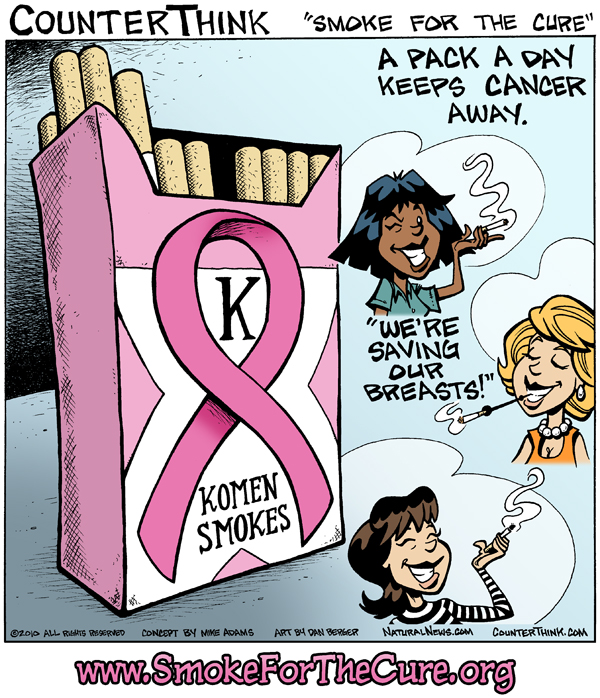
  • Smoking For ‘The Little Pink Ribbon’

    In keeping with this month’s theme of breast cancer prevention, we offer this view of “The Little Pink Ribbon” campaigns by Mike Adams of www.NaturalNews.com – Mike has some insightful thoughts to share on this subject.

    Click on the cartoon to read more on the subject by Mike.