Category: Nutrition and Health

  • That Fried Stuff’ll Kill You! Right?

    By Nurse Mark


    Everybody knows that all those fried foods are bad for you, right?

    Well, not so fast… It turns out that not all fried foods are created equal. Some fried foods are bad for you – really, really bad while others may even be good for you. It turns out that it’s all about how and what they were fried in.

    We have talked many times before about the differences in oils, and especially in cooking oils. Polyunsaturated Fatty Acids (PUFAs) are the real culprit here, despite the incessant preaching of the powerful Edible Oils industry.

    You see, beginning back in the ‘60’s and ‘70’s, we have been bombarded with slick ads telling us how wonderful and healthy canola oil, corn oil, cottonseed oil and other similar PUFAs were for us. Living longer, having a healthy heart, growing smarter children, smelling better in your kitchen, leading you to spiritual enlightenment, and so on.

    Your mom and mine knew no better – they saw the ads on TV and they believed them – after all, it was the same TV that brought the truth by Mike Wallace and Walter Cronkite, right? So began the near-religious belief that Crisco is better than lard, and that margarine is better than butter, and that corn oil or canola oil is so much better than coconut or palm kernel oil for deep frying…

    Well, what the edible oil industry failed to mention was that their PUFAs are fragile – even just processing them can damage them, turning them rancid; turning them into trans fatty acids or “trans-fats.”

    They also forgot to mention that even if these wonder-oils manage to make it to you relatively undamaged, heating them, as you might when you fry with them, promptly alters their structure – oxidizing them, creating free radicals, toxic lipid peroxides, carcinogens and mutagensOxygen and heat cause PUFA oils to form much more of these toxins than what’s found in saturated or monounsaturated oils.

    Finally, in all their preachy advertising, these big Edible Oil manufacturers conveniently forget to tell us that besides the rancidity caused by heat and oxygen,  PUFAs have another problem: They are inflammatory, because of their high Omega 6 content. That “Heart-Healthy” butter-like spread you just slathered on your whole wheat toast may actually be contributing to the subtle body-wide inflammation that is contributing to the atherosclerosis that your doctor wants to give you drugs for!

    Here’s a look at the PUFA content of commonly used cooking oils: (Source: USDA Nutrition Database.)
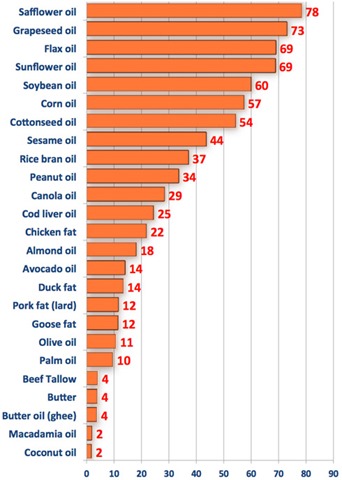
    Omega-6-and-Omega-3-Polyunsaturated-fatty-acid-content-of-food-oils


    Looking at this list it is easy to see that the much-reviled “saturated fats’ like butter, beef tallow, and coconut oil contain very little of the potentially toxic PUFAs. Of course they do – they are saturated fats. Because they are “saturated” they are highly heat stable, and not easily damaged or turned rancid.

    So, where is all this leading to?

    To the conclusion that perhaps deep fried foods need not be unhealthy – if they are cooked carefully, using oils low in PUFAs.

    Unfortunately, research published in 2010 shows that the most common commercially used deep frying oil is not healthy coconut, or even the less-expensive but still healthy palm oil, it is corn oil – often blended with soybean or safflower oil.

    Worse, restaurants reuse their oil over and over and over – reheating it each day anew, and occasionally filtering out the chunks – but the toxic trans fats cannot be “filtered out” and they just keep building up until the oil becomes so damaged and rancid that it begins to affect food flavors and the restaurants must reluctantly throw it away, fit only for use as “Bio-Diesel” fuel.

    Readers, you can do better – much better.

    You have the choice when you cook (and yes, frying and deep-frying ARE healthy cooking choices) of using a health-safe cooking oil such as coconut oil or butter or beef tallow.  Want to know the secret to the tastiest French fries you have ever encountered? Beef tallow – a chef’s “secret”!

    Even if you insist on using corn oil, using it once at relatively low heat and then discarding it can be safe.

    Well then, let’s suppose for a moment that I have persuaded you that deep-fried is not necessarily synonymous with poison (if done right) yet you are still worried by all those warnings about the artery-clogging effects of evil saturated fats. (If you really do believe this, please take a few minutes to read our article “Saturated Fats – Another Big Fat Lie”)

    Wouldn’t it be great if there were a pill that could mitigate all the ill effects of saturated fats and make it OK to indulge – maybe even good to indulge?

    Well, it turns out that such a pill might not be entirely fantasy.

    Scientists are researching a substance called alphacyclodextrin, a soluble fiber derived from corn. This novel fiber has shown promise for its ability to preferentially adsorb and bind up both saturated and polyunsaturated fats, while leaving valuable Omega 3 and Omega 6 fatty acids relatively unaffected.

    Results of recent research are very positive, with researchers concluding that the substance:

    “…has beneficial effects on weight management in obese individuals with type 2 diabetes, and that it preferentially reduces blood levels of saturated and trans fats…”

    And

    “These results suggest that α-CD [alphacyclodextrin] exerts its beneficial health effects on body weight and blood lipid profile in healthy non-obese individuals, as previously reported in obese individuals with type 2 diabetes.”

    Does this sound too good to be true? Possibly – which is why Dr. Myatt has not chosen to make it available to you just yet. She is researching it intensively though, and as soon as she is convinced of the safety and efficacy of the substance, and of her ability to offer you a pure, potent, top-quality product she will consider making it available.

    So, stay tuned!

    References

    learn more about coconut oil: https://www.drmyattswellnessclub.com/CoconutOil.htm

    Deep Fry Oils in commercial use; Jahren, A. Proceedings of the National Academy of Sciences, published online Jan. 18, 2010. http://www.pnas.org/content/107/5/2099.full

    Alphacyclodextrin research: Comerford KB, The beneficial effects of α-cyclodextrin on blood lipids and weight loss in healthy humans. Obesity, 2011 Jun;19(6):1200-4. doi: 10.1038/oby.2010.280. Epub 2010 Dec 2. http://www.ncbi.nlm.nih.gov/pubmed/21127475
  • Separating Real Science From B.S. – The Dr. Myatt Way

    By Nurse Mark


    Of all the video presentations Dr. Myatt has made, her presentation on Magnesium Stearate is arguably one of the most popular.

    We have heard from countless customers and patients who are grateful to have the hype and B.S. (that’s Bad Science) cleared away for them.

    We have heard from supplement manufacturers who have told us that this video presentation is now required watching for their employees as a part of their continuing education because Dr. Myatt has made a complicated subject understandable, even for those without biochemistry degrees.

    And we hear from people who probably do have biochemistry degrees, who like to challenge us with all sorts of “have you seen this information that says you are wrong” questions.

    Here is a most recent question of the latter sort – this fellow thought that with this information he surely had us:

    Dear Dr. Myatt,
    I watched your youtube video regarding magnesium stearate. The only thing that wasn’t discussed is the absorption issue. Several studies show that mg stearate lowers the absorption of the supplement drastically.
    Here are some studies plus a video which shows an experiment showing the reduced absorption: http://www.ncbi.nlm.nih.gov/pubmed/3735097 , http://www.ncbi.nlm.nih.gov/pubmed/903855 , https://youtu.be/qP8i3_EfP7M
    This would make mg stearate not an ideal filling substance or do you see this differently?
    Best regards,
    Mark , The Netherlands


    Dr. Myatt answered Mark with the following information (we are quite familiar with all 3 of the “references” that he provided.):

    The two studies you cite are "in vitro," meaning in a test tube.

    Absorption will be much different in an actual human ("in vivo") since humans have hydrochloric acid and multiple enzymes to aid digestion and assimilation.

    Magnesium stearate is a naturally occurring component of many foods as I discuss in my video. No problems have been seen with decreased assimilation due to ingestion of magnesium stearate containing foods.

    If you find any studies that show decreased absorption in humans, I’d be most interested to see them. Until then, I do not have any data or studies or even a theoretical basis to suggest that "mg stearate lowers the absorption of the supplement drastically."


    Mark surprised us by emailing back his thanks:

    Thanks for the quick response.
    I think you are right about the in vitro studies. I haven’t seen in vivo studies yet claiming the same thing. So that’s cleared up for now then!
    Thanks again.
    Best regards, Mark


     A quick review:

    We do cover this in the Magnesium Stearate presentation, but it is worth covering again since the third “reference” Mark provided was a “chemistry experiment” offered by someone who should have known better. The doctor presenting this flawed “experiment” has obviously forgotten his anatomy and physiology from his schooling, but he has certainly not forgotten all about marketing. He shamelessly pushes his own brand of supplements at the end of the video, claiming them to be superior because they do not contain mg stearate.

    Here is what he forgot to mention in describing his “experiment.”

    Distilled vinegar as he used is actually quite a weak acid. Distilled vinegar also contains no other enzymes to aid in the breakdown of mg stearate. He also did not agitate or stir his “experiment” in any way – even though a human stomach is in constant mixing, stirring motion.

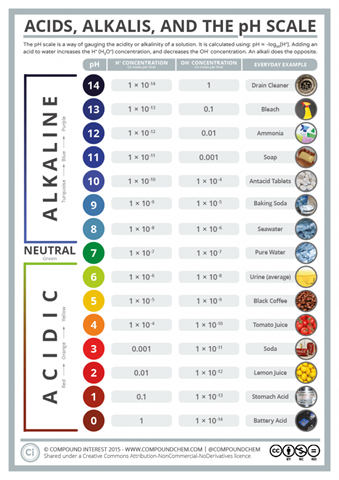
    pH is a bit of a tough concept – the pH “scale” is logarithmic meaning that for every one point on the scale there is a 10-fold increase or decrease from the next point. This means that the difference between, say, pH 2 and pH 3 is Huge – not minor, and the difference between the pH 1.5 of your stomach acid and the pH 2.4 of vinegar is likewise a Huge difference!

    The purest HCL (hydrochloric or ‘sulphuric’ acid) has a pH of 0 – it is as acid as anything can be.

    Battery acid, like in your car battery, has a pH of between 0 and 1.

    Human gastric acid, as produced by your stomach (if it is healthy) has a pH of around 1 to 1.5.

    Distilled vinegar has a pH of around 2.4 and cola has a pH around 2.5.

    Pure water has a pH of 7.0 and is considered ‘’neutral.’

    Your blood has a pH of 7.4 normally – and that is considered to be very slightly alkaline.AcidAlkaliScale

    How The B.S. happens:

    As you can see, it is easy to get B.S. started. Find a few “experiments” or in vitro (test-tube) studies, mix it all together to prove whatever you want to prove, and let the magic and viral power of the internet do the rest as one person quotes it to another, who quotes it to 10 more, who each then quote it to hundreds… suddenly B. S. has become “truth” since so many people have said it is so!

    Why would a doctor use a flawed experiment like this?

    It is what is known in marketing as a U.S.P. – a Unique Selling Proposition. It’s the thing that makes this product “special.”

    Why is this important?

    Let’s face it – when it comes to supplements, there is not much truly “new.” Vitamin C is Vitamin C, no matter how wonderful it’s flavor or packaging.

    In order to sell otherwise common vitamins and supplements, marketers need to somehow make their brand more “special” that all the others.

    Nano-particles, micronized, hyper-absorbable, energy-infused, and, yes, “free of the evil magnesium stearate.” All these claims are used in an attempt to set one otherwise fairly common product apart from all the others that are just like it.

    So, don’t fall for B.S. and grand claims. Be sure to actually verify references and make sure that references are relevant to human beings, not just test tubes.

    And please be sure to refresh your memory regarding the B.S. surrounding the Magnesium Stearate “controversy”:

  • The Myth of "Multi Nutrient" Formulas

    The "Lots of Stuff" Formula Hoax

    By Dr. Dana Myatt


    There are a lot of "Pixie Dust" formulas on the market. There are formulas for a specific condition like "eye health" or memory that contain long lists of ingredients. Nutritional supplement insiders know that laymen will favor products with "a lot of stuff."

    So, in order to increase sales, it is popular to create formulas and put in a little bit of everything that has ever been suggested to be beneficial for a particular condition. Then the formula is marketed as being the next great miracle by describing the wonderful results claimed for each individual ingredient.

    This sounds good in theory — put in “everything but the kitchen sink" — but it is more beneficial for the sellers than it is for those taking the supplement. If you’re smart, you won’t fall for this marketing ploy.

    First, most multiple formulas don’t contain enough of the individual ingredients to do much good –– the capsules just aren’t big enough –– and that is why we refer to them as "Pixie Dust." (This used to be called "Fairy Dust" but has been updated in the interest of continuing political correctness). For example, if ginko has been found to help memory at a minimum of dose of 240mg per day and the "formula" contains only 20mg, we have no reason to think this dose of ginko will be beneficial.

    Secondly, many of these products are "proprietary," meaning they don’t disclose the amount of each ingredient on their label. This means that educated consumers who are looking for dosing amounts cannot do so.

    Also, just because ten natural substances have been mentioned for one condition doesn’t mean their level of proof or efficacy is the same. For example, someone recently asked about a "formula" for brain health that included a long list of ingredients — ginkgo, bacopa, vinpocetine, Acetyl-l-carnitine, phosphatidylserine and more. Several of these nutrients have shown to be helpful IF taken in particular doses. But all of these ingredients together do not have as much research as the single nutrient citicholine that we have written about. Still, people tend to gravitate toward products "with more stuff."

    I recommend going with products that have the most good human research, not necessarily the longest ingredient list. The uneducated crowd looks for "more stuff"; the savvy consumer looks for products with "more proof."

  • Nutrient Deficiencies You Can’t Fix with Food

    By Dr. Myatt


    Getting a full complement of vitamins, minerals and trace minerals — all the "essential" nutrients — from food alone is tough for a number of reasons.

    First, many people don’t consistently eat a well-balanced, highly nutritious diet. "On again, off again" healthy eating does not provide the same caliber and quantity of nutrients as a true daily fare of good foods. See our recent article about how small choices add up to have big effects.

    Secondly, many foods today are not what they were even ten or twenty years ago. Modern agricultural practices have resulted in vegetables with lower nutrient values and higher levels of contaminants. That, plus our daily exposure to environmental pollutants increases the requirements for certain nutrients especially antioxidants.

    So, a good multiple vitamin/mineral supplement is highly recommended. (Remember, a "One-a-Day" multiple is "pixie dust," with not enough of anything to help except to prevent severe deficiency disease. We wrote about this in last week’s HealthBeat News.

    Even with a decent diet and a good quality multiple supplement program, there are still four nutrients that almost no one gets enough of without additional supplementation.

    The Four Missing Nutrients That Can Scuttle Your Good Health

    There are four nutrients that numerous studies show we do not get enough of from diet. Even if you take a great "multiple," you still aren’t getting enough of these four critical nutrients. Here they are; why you need them, and how much to take.

    VITAMIN K1 and K2: Normal Blood Clotting, Healthy Bones and So Much More

    There are more than a dozen subtypes of Vitamin K; one of the most important of the subtypes for good health is known as menaquinone or vitamin K-2.

    Vitamin K-1 is found in plant foods primarily vegetables. Vitamin K-2 is found in meat, eggs and dairy.

    Vitamin K2 is a fat-soluble micronutrient. Together, K2 and K1, known as phylloquinone, are necessary for normal blood coagulation. A deficiency of either K1 or K2 can lead to uncontrolled bleeding. However, K2 also has other significant health benefits beyond the coagulation process.

    New research has found that vitamin K2 participates in many functions beyond the clotting process including normal bone formation, cancer prevention, healthy brain function and prevention of calcification of arteries. Vitamin K2 has so many additional functions not associated with vitamin K1 that some researchers recommend that K1 and K2 should be considered two different vitamins.

    Vitamin K-2 helps put calcium into bone — thereby strengthening bone — while simultaneously keeping it from building up in the arteries. It does this by activating osteocalcin, a protein that binds calcium to bone. Without osteocalcin, calcium doesn’t stay in bones and instead deposits in arteries where it increases the risk of a heart attack or stroke.

    In a large epidemiological study from the Netherlands, it was found that people with the lowest blood levels of vitamin K-2 had a 57% greater risk of dying from heart disease than those with the highest levels. People with the highest vitamin K2 levels were 52 percent less likely to develop severe calcification of the arteries, 41 percent less likely to develop heart disease, and 57 percent less likely to die from it heart disease.(1) The intake of vitamin K1 did not affect cardiovascular disease outcomes – Vitamin K1 is most important for normal blood clotting where Vitamin K2 is important for preventing osteoporosis and coronary heart disease.

    How to Take: I personally take and recommend Life Extension’s Super K, one soft gel capsule per day taken with a meal that contains fat. Remember that vitamin K-2 is fat soluble.

    Caution: If you take warfarin (Coumadin), consult with your doctor before taking vitamin K-2 because it can alter the drug’s effectiveness. Vitamin K-2 is safe to take with other more modern blood thinners.

    COENZYME Q10 – A Source Of Cellular Energy

    Coenzyme Q10 (ubiquinone) is needed for the production of adenosine triphosphate (ATP), the main "energy currency" of the body. Although produced internally, CoQ10 levels tend to drop with age. Other causes of lowered CoQ10 levels include statin drugs, exposure to air pollutants and chronic disease states. Decreased levels of CoQ10 are linked to heart disease, Parkinson’s disease, type 2 diabetes, fibromyalgia and infertility to name just a few.

    Although CoQ10 is found in such foods such as broccoli, nuts, beef and fatty fish, it is present only in small amounts.

    How to Take: I personally take 100-mg of CoQ10 daily. Higher doses are recommended if you take a statin drug, have a chronic disease such as heart disease. Please see our page on CoQ10 for a full list of health concerns associated with CoQ10 deficiency.

    As to the "ubiquinone" versus "ubiquinol" controversy, we’ve interviewed several leading CoQ10 researchers and written about this question here: CoQ10 – Fact, Fiction, Hype, And Hocus-Pocus.

    OMEGA-3 Essential Fatty Acids (Fish OIl) – The Oil That Reduces Inflammation

    Omega-3 essential fatty acids—found in fatty fish, such as salmon, mackerel and tuna, and in oil-rich plant foods, such as walnuts and flaxseeds—are anti-inflammatory. Chronic, low-grade inflammation is believed to contribute to many chronic diseases including cancer, heart disease, congestive heart failure, type 2 diabetes, obesity, arthritis, autoimmune disease, and Alzheimer’s.

    In contrast, omega-6 essential fatty acids—found in most vegetable oils (corn, cottonseed, sunflower, canola, peanut oil) and therefore in most processed foods which contain these oils—are pro-inflammatory. The Standard American Diet (S.A.D.) is quite high in omega-6 and typically deficient in omega–3 fatty acids.

    NOTE: Although plant products such as walnuts and flax seed contain a "plant version" of Omega-3, this is not the same as fish oil. This is because a conversion is required. Assuming normal conversion, a dose comparison would be 14 grams of flax oil = 1 gram of fish oil.

    How to Take: Based on current best scientific evidence, a dose of 750-1500mg per day seems prudent. Take this with a fatty meal. Also note that this dose is the amount of EPA and DHA in the capsule, NOT just the total amount of oil (which will be higher) in the capsule.

    MAGNESIUM The Calming Mineral

    According to the U.S. government, eight of 10 Americans are deficient in magnesium. This is an extreme problem because magnesium is part of over 300 enzymes in the human body. Magnesium deficiency is associated with fatigue, high blood pressure, fibromyalgia, asthma, anxiety, stroke, diabetes, glaucoma, hearing loss, kidney stones, gallbladder stones, migraine, muscle cramps, pregnancy complications (toxemia, premature delivery), premenstrual syndrome, heart disease (arrhythmia, CHF, angina, acute MI), osteoporosis, cancer and insomnia. Whew!

    How to Take: Women take 400 mg to 500 mg daily and men 500 mg to 600 mg daily. NOTE: Maxi Multi contains 500mg of magnesium when taken at the recommended dose of 9 caps per day. Or, supplement with additional magnesium.

    Also, magnesium oil is a fast-acting way to get magnesium. This is especially good for muscle cramps.

    References

    1.) Geleijnse JM1, Vermeer C, Grobbee DE, Schurgers LJ, Knapen MH, van der Meer IM, Hofman A, Witteman JC. Dietary Intake of Menaquinone Is Associated with a Reduced Risk of Coronary Heart Disease: The Rotterdam Study. J Nutr. 2004 Nov;134(11):3100-5.

    See linked product pages for additional references and related information.

  • The Myth Of The One-A-Day Multiple Vitamin

    By Nurse Mark

    “But it’s so many pills…”

    We hear that refrain so often… People call us to bargain and wheedle and negotiate over how often and how many Maxi Multi capsules they can take and still get all the benefits.

    Believe me – if we could cram all the vitamins, minerals, trace minerals and other ingredients that go into making Maxi Multi the best available Optimal Dose daily multiple vitamin into fewer, smaller capsules, we sure would!

    But folks, there is no way that a full compliment of optimal-dose vitamins and minerals and trace minerals can be made to fit into one single tablet or capsule of any size that could possibly be consumed by you or me – it’s just not possible, no matter how hard you squeeze it! An Optimal Daily Dose multiple vitamin will require from six to nine capsules daily.

    To learn more about what an Optimal Dose Daily Multivitamin formula should look like please check out Dr. Myatt’s Maxi Multi – a standard by which you can judge your current multiple vitamin.

    “Well, gimme one good reason I should swallow that many capsules that often!” (Maxi Multi is 3 caps, 3 times daily – this is hard ? )

    Just One? Howzabout A Baker’s Dozen Proven Reasons to take a Good Multiple Vitamin…

    While conventional medicine and newspaper headlines continue to preach that nutritional supplementation isn’t important, the results of medical research shows just the opposite. Here are some medical findings that should convince you to keep taking a high-quality, optimal potency multiple vitamin/mineral supplement. If you’re not sure what an “optimal potency” formula consists of or what you should be taking for your age and sex, refer to The Wellness Club web site’s nutritional supplements page for an up-to-date ingredient list and optimal dose recommendations.

    1. Harvard researchers have found that sub-optimal levels of folic acid, vitamins B6 and B12 are a risk factor for heart disease and colon and breast cancers.
      (Journal of the American Medical Association (JAMA) June 19, 2002)
    2. A six-month study showing that folic acid, vitamin B12 and vitamin B6 helped prevent recurrence of blocked arteries in patients who have undergone coronary angioplasty.
      (Journal of the American Medical Association, August 28, 2002)
    3. Vitamin K is a critical nutrient for skeletal integrity, with evidence of vitamin K supplementation reducing bone loss in healthy postmenopausal women and a significant positive relationship between vitamin K status and indices of bone health in men.
      (24th Annual Meeting of the American Society of Bone and Mineral Research, September 20 – 24, 2002, San Antonio, Texas)
    4. Alzheimer’s disease: Association with zinc deficiency and cerebral vitamin B12 deficiency.
      (Journal of Orthol. Psychiatry (CANADA), 1984, 13/2 (97-104))
    5. Supplementation of the elderly with vitamin E has been shown to enhance immune response, delay onset of Alzheimer’s disease, and increase resistance to oxidative injury associated with exercise.
      (Proc Nutr Soc. 2002;61:165-171)
    6. Vitamin E intake, from foods or supplements, is associated with less cognitive decline with age.
      (Arch Neurol. 2002;59:1125-1132)
    7. Researchers at Cambridge University in England looked at serum vitamin C and how long people lived. People who had the lowest levels of vitamin C were twice as likely to die compared to those with the highest serum vitamin C levels. This study was based on the findings from over 19,000 people.
      (Lancet 2001; 357:657-63)
    8. 26.4% of esophageal and gastric cancers are attributable to low selenium levels.
      (Journal of the National Cancer Institute, Mark et al., 2000)
    9. Calcium supplementation is associated with a significant – though moderate – reduction in the risk of recurrent colorectal adenomas. The effect of calcium was independent of initial dietary fat and calcium intake.
      (N Engl J Med (United States) Jan 14 1999, 340 (2) p101-7.)
    10. Data from the Nurses’ Health Study conducted at the Harvard Medical School showed that long-term supplementation with folic acid reduces the risk of colon cancer by 75% in women! 90,000 women participated in the Nurses’ Health Study, making this an especially significant finding. The authors of this study explained that folic acid obtained from supplements had a stronger protective effect against colon cancer than folic acid consumed in the diet.
      (Annals of Internal Medicine (1998; 129:517-524)
    11. Regarding asthma, the lowest intakes of vitamin C and manganese (a trace mineral not to be confused with magnesium) were associated with more than five-fold increased risks of bronchial reactivity. Decreasing intakes of magnesium were also significantly associated with an increased risk of hyper-reactivity.
      (Thorax (United Kingdom), 1997, 52/2 (166-170))
    12. Antioxidant supplements reduce the risk of cataract. One study evaluated 410 men for 3 years to ascertain the association between serum vitamin E and the development of cortical lens opacities (cataracts). The men with the lowest level of serum vitamin E had a 3.7 times greater risk of this form of cataract compared to men with the highest serum level of vitamin E.
      (American Journal of Epidemiology Sept. 1996)
    13. Encouraging moderate exercise and dietary supplementation with calcium and vitamin D are the major nonpharmacological management measures used to prevent and treat osteoporosis.
      (Drugs and Aging (New Zealand), 1996, 9/6 (472-477)
    14. Nutrient intake of patients with rheumatoid arthritis is deficient in pyridoxine (vitamin B-6), zinc, copper, and magnesium.
      (Journal of Rheumatology (Canada), 1996, 23/6 (990-994))

    OK, OK… a “Baker’s Dozen” is thirteen, and I just listed fourteen good reasons to take an Optimal Dose Daily Multiple Vitamin. So how many good reasons do you need?